
Irregular practices in the United Kingdom and other countries are no excuse!
Partyforumseasia: The old Romans had a couple of expressions for a basic social strategy which is common until today: “Do ut des” (I give you something so that you give me something back), “quid pro quo” (this for that), or “manus manum lavat” (one hand washes the other). The more popular modern expression in English is “palm greasing” which sounds much nicer than bribery, while the latter is widespread in East and West despite all attempts to fight political corruption.
In the case of party politics in Southeast Asia, the dilemma is that membership and membership fees are not common. Basic funding by members is practically unknown, unlike in Europe, where the traditional parties can still count on contributing members. Meanwhile, election campaigns are getting more expensive year on year, and suitable PR-companies and their helpers have to be paid in cash. Like in the U.S., rich donors help the parties, or more dubious in Southeast Asia, political parties can be bought by rich donors who, of course, expect a return on their investment. “Do ut des…”
These practices are not part of the democratic textbooks but may be stepping stones for a cleaner future with more concern for the voters and the interests of the countries.
Recommended reading, especially for Malaysians:
Party Funding Scandals – UK vs Malaysia (Sarawak Report)
The Conservative party’s biggest donor told colleagues that looking at Diane Abbott makes you “want to hate all black women” and said the MP “should be shot”, the Guardian can reveal.
Frank Hester, who has given £10m to the Tories in the past year, said in the meeting that he did not hate all black women. But he said that seeing Abbott, who is Britain’s longest-serving black MP, on TV meant “you just want to hate all black women because she’s there”….
… Hester, a businessman from West Yorkshire, runs a healthcare technology firm, the Phoenix Partnership (TPP), which has been paid more than £400m by the NHS and other government bodies since 2016, primarily to look after 60m UK medical records. He has profited from £135m of contracts with the Department of Health and Social Care (DHSC) in less than four years.
Hester gave £5m to the Conservatives in May 2023 and announced this month a further £5m donation, which had been accepted by the party from his company in November last year. With months to go before the next general election, a party spokesperson confirmed he was now its “biggest ever donor”.
Source: UK Guardian
Our comment
Obnoxious views aside, the emergence of Mr Hester as the largest ever donor to the Conservatives in the UK is reminiscent of much that SR has criticised in Malaysia.
Thankfully for electors in Britain, there are levels of transparency that make matters of such blatant concern more accessible for journalists to draw to public attention.
However, this does not negate the need to confront an apparent perception of over-inflated public contracts being recirculated to the party of government that presided over the issuance of those very contracts. That’s the sort of thing whispered for years in Malaysia.
According to the Guardian, Mr Hester’s wealth has derived from the enormous profits obtained by his company from contracts to supply software services to the publicly funded National Health Service.
Latest recored results show the Phoenix Partnership (Leeds), had a turnover of £75m, with profit before tax of £47m in the year to March 2022.
As the owner, Hester received dividends during the year of £10m on top of a salary of £515,000 which he pays himself as the director.
If Mr Hester is making such enormous margins from these public contracts the immediate concern is that they would appear to be over-inflated. Competitors could surely have been found to perform the same work cheaper.
There is also a potential danger this flamboyant and opinionated businessman may have concluded that generosity towards the ruling party would secure further lucrative work.
Either way, there is a clear reform required to preclude companies in receipt of government contracts, or their owners, from making donations to the party whose ministers signed off on them for at least the duration of that parliament or contract.
If £10 million of public money is to be circled back into party political donations, the money should at least be divided amongst all citizens equally to contribute to the party of their choice: not funnelled through one entity which has just benefitted from an overpriced contract.
After all, this is public money and the public have a right to decide through a majority who gets the most support.
Malaysia is starting its clean up from an even more questionable state of affairs and in order to do so major steps towards transparency, which has regressed in recent years, should be addressed.
The CIDB website, which registers all awards of public contracts and has been made deliberately inaccessible since 2015, ought to be restored to public scrutiny as a first crucial step.
For now, newspapers cannot even report on the sort of matters the Guardian has just shocked its readers within Britain.
11 Mar 2024 Link: Party Funding Scandals – UK vs Malaysia | Sarawak Report
For an overview of party funding practices in Southeast Asia see:
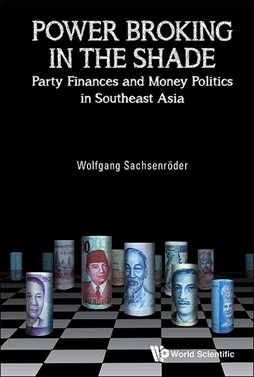

 Political Party Forum Southeast Asia