
Fragmented Party Systems
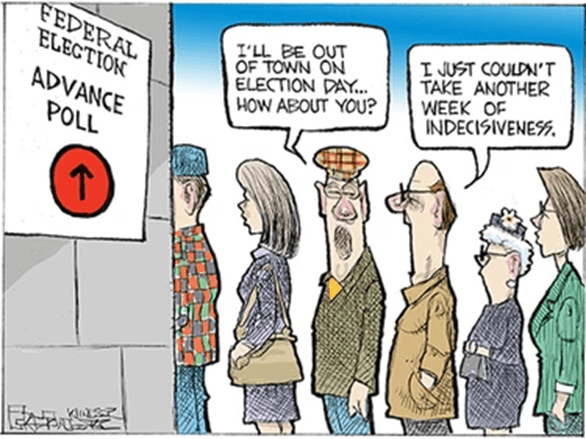
In most of the so-called mature democracies the party systems are increasingly fragmented. Britain and the U.S. are an exception, mainly due to the First-Past-The-Post election system in Britain and presumably due to the sky-high campaign costs in the U.S. which discourage the formation and rise of new parties. In Europe the traditional party landscapes, if they are still visible, are falling apart at a fast rate. After WWII, Germany wanted to build a model democracy. One of the results was the ease of establishing and registering a new party, including the right (!) to get a downpayment for campaign cost reimbursement even before an election. So far so fair, but as an unintended result, there were new parties without a realistic potential, even as small coalition partners. In the last Federal Election in 2021 there were parties like “Free Voters” (vote share 2.4%), “The Animal Welfare Party (1.5%), “Pirate Party” (.4%), “Christians for Germany” (.1%), “Vegan Party” (.1%), and many others without votes. The threshold for entering the Bundestag is 5%. Combined with the decline of the old ideological parties, namely Social and Christian Democrats and Liberals, the European party systems show a tendency to splinter and make coalition building increasingly difficult.
Splinter Parties in Southeast Asia
In many countries in Southeast Asia, the party landscapes resemble the European ones in terms of complexity and lack of ideological differentiation. Highly visible, popular, or towering leadership figures may make up for the deficits, at least for a while, sometimes even for decades. But today it is more urgent than ever to convince and win over new voters. Since the era of “safe vote banks” seems to be over, it is even more important for the parties to come up with a convincing program and attractive leaders. But most of all, they should have a strategic concept of how to define the type of voters they can hope to convince. This is why their campaign plans need to focus on who can be convinced and how!
For concepts of “selling points” and “selling techniques” there is more than enough literature available. Voter’s opinions can change and can be changed, even to the opposite conviction if done the right way. Here is a link to the first example of a toolbox:
How Political Opinions Change | Scientific American
“In a recent experiment, we showed it is possible to trick people into changing their political views. In fact, we could get some people to adopt opinions that were directly opposite of their original ones. Our findings imply that we should rethink some of the ways we think about our own attitudes, and how they relate to the currently polarized political climate. When it comes to the actual political attitudes we hold, we are considerably more flexible than we think.” And so are voters…
 Political Party Forum Southeast Asia