

In an article published by the Straits Times on 18 December, Wahyudi Soeriaatmadja, the Indonesia Correspondent of Singapore’s flagship daily, describes in detail his observations during the ongoing presidential election campaign. (LINK: Hired crowds in demand for Indonesia political rallies | The Straits Times). These observations are so interesting because the phenomenon of more and more professional and commercialized election campaigning and party politics is spreading to many places and continents. What is especially exciting here is the fabulous Indonesian creativity in this field.
The article describes how Mr Lukman, a 45-year-old parking attendant, runs his “rent-a-crowd” service. Once hired by a candidate or party, Lukman gathers at least 200 persons and brings them by bus to the event. He charges 100.000 rupiah (6,5 USD) per “supporter” plus food and bus transport.
Great care must be taken to pick people who look like real and enthusiastic supporters. Lukman selects the ones “who wear tidy clothes, those who look like college students, the 18-year-olds, the zillennials.” Obviously, many of the 200 million voters are already suspicious of the fake supporters, so the hired ones must act up real enthusiasm, cheer and dance. Since the salary is paid only after the event, not sufficiently convincing supporters risk a part of their pay.
Often enough, the hired troops don’t know who they are supposed to cheer until they arrive at the venue. For them, of course, it does not matter, they are like the extras in mass scenes film shootings. So, the “industry” is facing an increasing demand for sincere and convincing cheering support. A spokesman for the ruling Indonesian Democratic Party of Struggle (PDI-P), told The Straits Times that the party does not use and has never tolerated such services. True or not, it is a basic fact, that money is a decisive requirement of election campaigning, of course not only in Indonesia. But the democratic development of the country has seen several creative solutions to candidacy and electoral success, up to the phenomenon that rich candidates can choose among competing parties for a promising slot.
In Europe with a century-long history of political parties and the corresponding political theory, the developments are comparable to the ones in Southeast Asia, except for the fake cheering crowds, hired for the occasion. Campaign events, even with prominent speakers, ministers and prime ministers, risk looking bad on pictures and TV videos because, often enough, the expected crowds are not materializing. And most of the traditional campaign features are provided by PR agencies anyway. The party members sacrificing evenings and nights for hanging campaign posters are practically history. That is being accompanied by shrinking party membership in most European countries. The once dominating Christian Democrats of Italy have disappeared, once struggling right-wing parties are growing and booming in many countries, like recently in the Netherlands, mainly because voters are frightened by uncontrolled immigration. In Germany, the 160-years-old Social Democratic Party, is continuously shrinking in membership and polling results, though still in an uneasy coalition with Greens and Liberals under a social-democratic chancellor. A workers’ party for most of its life, the SPD is no longer seen as fighting for the working class or the little man on the street. Consequently, during the last few decades, the internal social coherence of the party has changed dramatically. Still some fifty or seventy years ago, the small local branches offered a sort of family bonding, the members knowing each other, and the local treasurer visiting the members at home to collect the monthly membership fees. All that is history, of course, and that has direct repercussions for the ideological and programmatic consistency of the SPD and many similar parties. Probably, the changing party landscapes are less based on values, programs, and group-interest but more dependent on professional management, financial resources, political psychology, and the real or media-hyped charisma of the leaders.
For Southeast Asia see: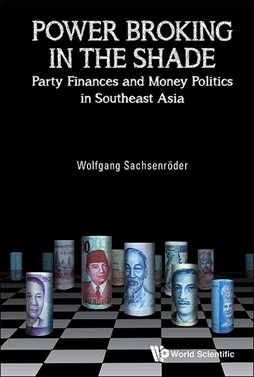


 Political Party Forum Southeast Asia