
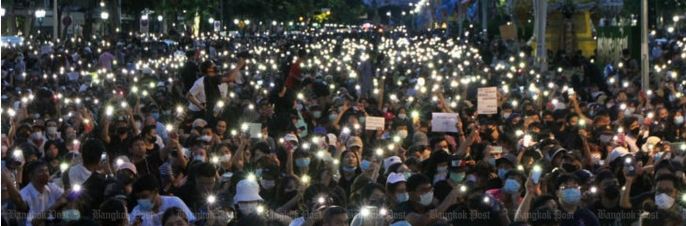
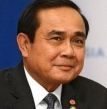
Partyforumseasia: Fancy slogans can turn into a battle-cry when the time is ripe and the mood contagious. The European student movements in the late 1960 had them all and they were already spreading like wildfires without handphones. All that is technically so much easier and faster today, and especially so in East and Southeast Asia. The new phenomenon is the networking across borders by student-led pro- democracy initiatives and movements.  Their coordination and their hashtag #MilkTeaAlliance crystallized in April this year after a Thai celebrity couple was attacked by netizens in China for allegedly supporting the Hongkong protests and independence for Taiwan. There is certainly a clear anti-China element in the regional youth movement, including Thailand, where China at least is not seen as a role model or pop culture pioneer like Korea and Taiwan. And the authoritarian style of government may compare too easily with the military dominated administration in Thailand and their law and order style. Since the Prayut government modified the 2019 election results by eliminating the successful Future Forward Party and its leader Thanathorn Juangroongruangkit who garnered seventy per cent of the first-time votes, the young generation as well as academics and intellectuals are getting less cautious and asking for change. It is evident and unforgotten that the political parties of Thailand have not given a good example of democratic behavior in the past before the coup. Obviously, the feeling on the ground is asking for change despite the uncertainties. The 18th century German physicist and philosopher Lichtenberg had a suitable formulation for this: “I don’t know whether we make it better with change, but I know that things have to change to make it better.”
Probably the more important and innovative development of the #MilkTeaAlliance is the mutual exchange and encouragement between the protest movements in the three “theatres” and an exchange about tactics and strategies. The Hongkong activists have managed to reach and draw in big parts of the older citizens, something that seems to happen now in Thailand as well. And the challenge and danger for all authoritarian and dictatorial regimes is the point when the population is no longer intimidated and frightened by violence and imprisonment. The Belarus developments will be closely observed in Southeast Asia. And disagreements within the fragile Prayut coalition are also a warning signal which can only encourage the protesters. When the deputy prime minister Prawit Wongsuwon said last Monday that the demonstrations are justified if they are peaceful and that the constitution should be amended, he may think primarily of his and his party’s political survival. The king’s request not to apply the Lese-majesté law is of a different quality, though. That was probably the sharpest weapon of the traditionalist elite and its merciless application has undermined the image and moral authority of the monarchy as such. The king’s decisions and lifestyle, including his temporary retreats into a more informal private environment in Bavaria, are understandable but differ from the remembered aura of personal sacrifice, duty, dedication, and service for people and country first of his late father.
First joined demonstrations for democracy and against the authoritarian style of China in Taipei, with students from Hongkong and Thailand, signal a new trend in the region. One Thai student activist is being quoted by the Bangkok Post as saying: “We don’t want to just talk about it online. We want a pan-Asian alliance for democracy.”
If something is brewing up in Thailand, one can only hope that, after so much turmoil in the last decades, any transition will be smooth and peaceful.

 general. The problem of the party is the looming uncertainty whether the junta or the courts might dissolve it before the election, because they suspect the exiled former leader, Thaksin Shinawatra, to pull the strings from his exile in Dubai. Puea Thai and connected groups, supported by the so-called United Front for Democracy Against Dictatorship, or Red Shirts, have won the last five elections and were only stopped by the courts and the military,
 Political Party Forum Southeast Asia