
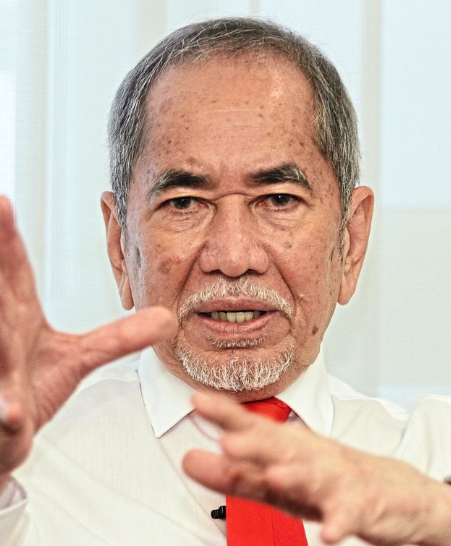
Partyforumseasia: We use the word catharsis, as it was coined by Aristotle in his Poetics about 2,300 years ago, as the purification and purgation of emotions through dramatic art. Since politics is sometimes even more dramatic than art, big scandals might trigger a catharsis in terms of policy and legal changes as well. After the purification of emotions, in this case the widespread indignation about the infamous 1MDB financial scandal in Malaysia, legal consequences might help to purify the cancer of money politics. With a quote worth remembering, “There will be no more unaccounted “stacks of cash” by politicians once laws on political funding are in place”, Datuk Seri Dr Wan Junaidi Tuanku Jaafar, Minister in the Prime Minister’s Office, announced the planned rather radical policy changes of the government concerning the funding of political parties and election campaigns. A Political Funding Bill is set to be tabled this October. Eradicating money politics and political corruption is a tall order, as their ubiquity in practically all political systems shows. One can only wish Malaysia good luck and success in reducing this national scourge.
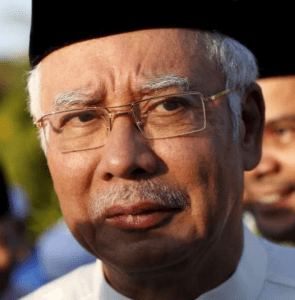
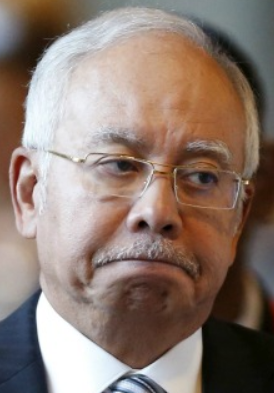
Though money politics is widespread in the region, Malaysia has ruined her reputation with the disappearance of 4.5 billion US$ from her 1MDB sovereign wealth fund, which were presumably syphoned away into political pockets and the numerous cronies who surrounded the ruling parties. The scandal started to erupt in 2015 and was declared “the largest kleptocracy case to date” by the US Department of Justice. Then Prime Minister Najib Razak, in whose personal accounts 700 million US$ were detected, lost the following election in 2018 together with his job and reputation. Accused of many related offenses, especially abuse of power, criminal breach of trust and money laundering, he was convicted to twelve years in jail and a fine of nearly 50 million US$ in July 2020. Nevertheless, he remained a member of parliament and continued to be popular among his former voters. He and his political friends managed to slow down the lawsuit with several legal manoeuvres until today.
Ironically, in parallel to the announcement of a stricter party funding law, Najib and his legal team are trying these same days, as a last straw, his final appeal at the Federal Court to avoid the incarceration. So far, his and his closest allies attempts to regain power and thus have a chance to squash the sentence have failed.

More information on the 1MDB scandal and money politics in Southeast Asia can be found in:

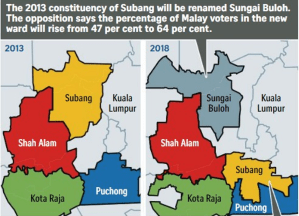
 Najib, in his cold-blooded style, declared the Election Commission (EC), which happens to be under his Prime Minister’s department, as impartial and the changes as only for the benefit of the Malaysian people. The critics, on the other hand, call it gerrymandering and they do have a valid point here. While the redelineation of electoral boundaries is common everywhere when demographic changes like urbanization make it necessary, the malapportionment in Malaysia is exceptional. In the 2013 election, the number of voters per precinct ranged from 15,700 for the smallest rural to 145,000 for the biggest urban one. And, not by chance, the most reliable voters for the ruling Bairsan Nasional (BN) coalition live in the small rural districts. This is why, in 2013, and also due to the first-past-the-post majoritarian election system, a shortfall of 4% in the popular vote was changed into a 20% majority of seats. On average, BN constituencies were won with 48,000 votes, while the opposition needed 79,000.







 Political Party Forum Southeast Asia