Trump or Biden? What matters in TV-duels.


“Many voters respond to style more than substance. The well-delivered quip lingers longer than the litany of facts, and the visual often trumps the verbal”. 

What most of us instinctively know, clarified here by a long-term observer of US election debates. Analyzing a debate point by point and fact-checking are useful but do not gauge the reactions of the voters.
If you’re a typical American voter in any party, allow me to let you in on a little secret: What matters most to you in a presidential debate probably isn’t the same thing that gets the most attention from the candidates, the campaigns and their allies in the immediate aftermath of those big televised showdowns.

I’ve learned this from studying American reactions to almost every general election presidential debate since 1992. I’ve sat with small groups of voters selected from pools of thousands of undecided voters nationally, watching more than two dozen presidential and vice-presidential debates in real time, and it still amazes me that minuscule moments, verbal miscues and misremembering little details can matter so much in the spin room and to partisan pundits afterward. Yet those things often have little to no discernible impact on the opinions of many people watching at home.

To be fair, some of the debates I watched with voters, like Bill Clinton and Bob Dole’s in 1996, had no major impact on the electorate’s mood. Others — like the three-way town hall debate with Mr. Clinton, George H.W. Bush and Ross Perot in 1992 and the first George W. Bush-Al Gore debate in 2000 and the three Donald Trump-Hillary Clinton collisions — arguably changed history.

As the first scheduled debate between President Biden and Mr. Trump unfolds this Thursday, the key moments that will have the greatest impact on the remaining undecided voters are those in which the candidates attack each other in defining ways or undermine the political case that each wants to present to Americans. Viewers will quickly decide whether the accusations are fair and the responses effective. From Ronald Reagan’s “Are you better off than you were four years ago?” in 1980 to Barack Obama emphasizing hope and change in 2008 to Mr. Trump telling Mrs. Clinton in 2016 that she would “be in jail” if he won, I think those key debate moments made a meaningful difference in shaping the opinions of undecided or wavering voters who related to what they heard; I certainly saw it in my focus groups and public opinion research. These moments mattered more than any candidate flub or gaffe.

And sometimes it’s a feeling rather than a specific moment that matters. The best examples are John Kerry in the 2004 debates and John McCain in the 2008 debates: Both men were good public servants with impressive personal narratives, and neither said anything wrong in their debates. But neither did they say anything especially or memorably right. Many voters were left feeling unmoved and therefore unaffected.

At the risk of offending every high school debate coach in America, many voters respond to style more than substance. The well-delivered quip lingers longer than the litany of facts, and the visual often trumps the verbal. It’s not just that the electorate tends to be drawn more to younger and more attractive candidates (like Mr. Obama, Mr. Clinton and John F. Kennedy) or to those with more commanding stage presence (which Mr. Reagan had over Jimmy Carter and Walter Mondale, and George H.W. Bush had over Michael Dukakis). While the 2016 and 2020 debates featuring Mr. Trump certainly upended our collective expectations about what exactly is presidential, listening to the voters describe each debate and their gut impressions of the candidates is more instructive about the eventual election winner than getting swept up in spin and punditry.

Perhaps the single best example of divergence between voter opinions and the views of politicos and pundits was the 1992 town hall debate. In the immediate aftermath, Mr. Bush was pilloried by the professional class for checking his watch during the debate — a moment that was completely missed by my focus group of American voters. To them, the biggest takeaways were Mr. Bush’s inability to explain what the federal deficit meant to him and then Mr. Clinton’s Oscar-worthy performance as he deftly stood up from his stool and approached an audience member with empathy and compassion, her head nodding in agreement with him throughout the encounter.

A similar misreading of a debate performance came from the first debate between George W. Bush and Mr. Gore, when a number of political analysts praised Mr. Gore for his command of the facts and intricacies of presidential decision making, while much of America seemed pleasantly surprised (shocked, actually) that Mr. Bush was able to string together complete sentences that were competent, coherent and compelling. Voters in my focus group were impressed with Mr. Bush’s comfort and command of the debate stage and disappointed with Mr. Gore’s stiffness and annoyed with what they saw as his dismissiveness toward his opponent.

In almost every presidential debate since 1992, voter expectations of a candidate’s performance also played a major role in determining perceptions of success and failure. Many had low expectations of Mr. Bush in 2000 and Mr. Trump in 2016 (and Mr. Biden now). The fact that they didn’t completely flop led at least some voters to see these candidates as surprisingly successful in the debates.

Many election observers believe that the incumbents start with some advantage because they have national debate experience and a command of governing. In Thursday’s case, both men have that experience, so voters will be looking at other factors — probably related to energy, sharpness and how they come across. While the specific circumstances were different, I think about the shock I felt watching Mr. Obama and Mitt Romney in their first debate in 2012. The widely held assumption was that Mr. Obama’s grace and charm would easily overwhelm Mr. Romney’s stiff and businesslike approach. But Mr. Obama was so chill in his approach that he came across as cold and uncaring to many voters. His performance was criticized by my focus group for lacking his customary passion and conviction — a surprising evaluation from a politician so popular for those qualities.

But here’s the surprising twist: In time, many voters came to see that first encounter with more nuance than that instant reaction suggested. In my Election Day 2012 focus groups, voters said they were left thinking that Mr. Obama truly understood them and their concerns but that he had no answers or solutions to their problems. Conversely, they felt that Mr. Romney had the better solutions to the challenges they faced but that he just didn’t fully understand their problems. Yes, policy solutions definitely matter in presidential debates. But personality, relatability and dignity matter more.

And it’s not just the candidate’s personal performance that leaves an impression. Sometimes forces that are less visible, like the debate rules, play a major role in determining the outcome. The length of time given to respond to questions from the moderator can reward or punish candidates, depending on their individual styles and ability to communicate succinctly. Nothing draws the ire of the average voter more than candidates speaking beyond their allotted time, my focus groups have shown. While most professional debate observers ignore candidates who run long, voters punish them mercilessly. It was a major reason many undecided voters turned so strongly against Mr. Trump after his undisciplined performance in the first debate in 2020.

That debate, the most consequential one in memory, was one in which many voters and political experts drew roughly the same conclusions. Mr. Trump entered the debate trailing Mr. Biden by just a couple of percentage points, but his questionable strategy to insult, badger and bully Mr. Biden was received so badly by the women in my focus group that they were as harsh about Mr. Trump as he was to Mr. Biden.

In contrast, there was one moment in the Trump-Clinton debates when voter opinion really struck me. It was Mr. Trump’s offhand comment that Mrs. Clinton belonged in jail. Many pundits and political experts hated it. My focus group loved it. For them, it was accountability in action for someone as important as her, a former secretary of state. To be sure, many political experts zeroed in on the moment as a striking instance of a presidential nominee threatening to weaponize the justice system against his opponent. But I think what they missed was a yearning among some voters to see a senior official held to account and not let off the hook by a system seen as protecting insiders.

This week brings us potentially one of the most consequential debates since Mr. Kennedy and Richard Nixon’s. The expectations are already high for Mr. Trump, who dared Mr. Biden to debate at any time or place of his choosing. It is quite possible that Mr. Trump will regret issuing such a public challenge, and Mr. Biden may regret accepting the offer.

To shape and sway voter opinion, the two opponents need to use the debate to do what Mr. Reagan, Mr. Obama and Mr. Trump did at their best: Crystallize the stakes of the race and the choice in November with a single memorable line that speaks to the feelings, instincts and perhaps even the fears of so many voters about America today.

Given that viewers are conditioned to see the 2024 debates as a mix of television entertainment and a war for America’s future, they will want to see passion, energy and even anger in service to the interests of the country. A self-controlled Mr. Trump or an adult Mr. Biden won’t be remembered, just as Mr. Kerry and Mr. McCain weren’t remembered. So much is at stake that both candidates need to let loose to make a lasting impression but not in a way that may alienate key groups like suburban women and swing voters.

In the end, it’s not the facts, the policies or even the one-upmanship that Mr. Biden and Mr. Trump offer in the debate that matters. It’s how they make voters feel.

Cambridge Analytica Malaysia


Partyforumseasia: The ongoing controversy around political data mining has catapulted the discreet services of Cambridge Analytica (CA) into the international limelight. CA has obviously played an important role in Donald Trump‘s victory over Hillary Clinton, and its utilization of Facebook data is now in the center of the storm. Whistleblower Christopher Wylie, one of the brilliant young data experts in CA, has made public the dubious methods applied by the company.

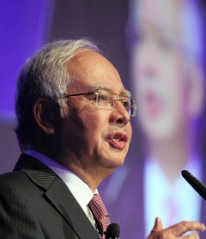
Having offices in New York, Washington, and London, in countries where election campaigns are known to be sophisticated and dirty, Brazil is another client country, and there is only one more: Malaysia! The looming election (GE14), expected to be called in May, hasCA 7 already triggered a heated exchange of suspicions and accusations, since CA had been hired by the ruling Barisan Nasional (BN) coalition in the 2013 election to win back the federal state of Kedah from the opposition. Obviously learning only now that the BN had hired CA, the opposition wants to know details about Prime Minister Najib‘s role in the deal. Najib, as usual, denies everything and directs all the blame on Mukhriz Mahathir, former chief minister of Kedah when he was still member of UMNO, and in charge of the 2013 campaign. Mukhriz, in turn, denies any involvement, even knowledge of Cambridge Analytica.
NajibMukhriz 2

Whatever will eventually come to the surface, a glimpse into the services of Cambridge Analytica must create respect, if not admiration, for the technical ingenuity of this company. It is indeed combining all sorts of campaign instruments and strategies with the new opportunities provided by social media and internet penetration, including the dirty tricks which have tarnished the lofty democratic ideals of the United States. What is the background of CA and its parent company SLC Group, a data giant with 25 years experience in helping governments and military organization in over 60 countries with “behavioral change programs” (SLC homepage)? Involved were controversial figures like Steve Bannon and Russian experts, and the funding was mainly provided by hedge fund billionaire Robert Mercer, one of the prominent supporters of Donald Trump.

For anybody who has participated in election campaigns, the services of CA Political, the campaign branch of CA, must look more than attractive. They have been paid with many millions world wide and are certainly affordable for potential clients like UMNO. The branch office in Kuala Lumpur is not there by accident. And the revelations might impact the coming campaign and the chances of the opposition.

Here are some excerpts from the CA homepage (LINK, which might disappear any time from now if the scandal widens):

Experience an end-to-end campaign service

POLLING
With one of the best track records of accuracy in the industry, we will provide you with in-depth polling to advise informed decision making.

PREDICTIVE ANALYTICS
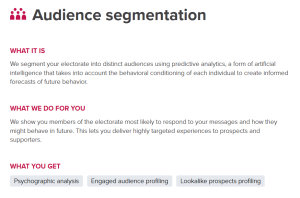
The global leader in predictive analytics, CA Political provides precise insights that will allow you to forecast voter behavior.

TV AND DIGITAL AD PLACEMENT
Through our detailed models, predictive analytics, and sophisticated ad-tech, you can find the most effective locations for ad placement and meaningfully impact your voters.

LIST BUILDING
Accumulate email addresses and an organic following in order to fundraise more efficiently and distribute campaign material.

EVENT PROMOTION, VOLUNTEER RECRUITMENT, APP PROMOTION
Rally supporters, promote your campaign events, and increase attendance through our creative and precisely targeted messaging.

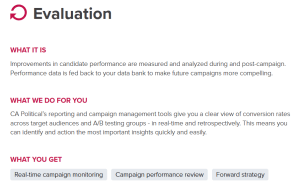
REAL-TIME REPORTING
With our up-to-date reports, you will stay informed on the progress of your campaign and assess your voters’ reactions to the campaign in real-time.

PERSUASION
More effectively engage and persuade voters using specially tailored language and visual ad combinations crafted with insights gleaned from behavioral understandings of your electorate.

GET OUT THE VOTE (GOTV)
Drive organized and methodical ballot initiatives, targeting the voters who could swing the election in your favor.

Some clients:

Electing Robin Hoods? The Voting Power of the Left Behind


Partyforumseasia: The presidential election in the United States has shown new levels of campaign spending. While Jeb Bush burned “only”  130 million $ without getting anything back, Hillary Clinton spent more tan 700 million $ on her campaign robin_shoots_with_sir_guy_by_louis_rhead_1912(Bloomberg, LINK). Donald Trump managed to win with a much smaller budget. Is this signalling that money is getting less important than the right target group? That a sort of Robin Hood candidate has better chances than big money? And what could that mean for the widespread addiction to money politics in Southeast Asia?

Francis Fukuyama, in an analysis  in Foreign Affairs (LINK) on 9 November, summarizes Donald Trump‘s victory success as follows: “He has identified two very real problems in American politics: increasing inequality, which has hit the old working class very hard, and the capture of the political system by well-organized interest groups.”

Let us look into some examples from our region where inequality is the norm:

In Thailand, especially in the North and Northeast, the farming population is similarly left behind or much worse than the old working class in America. With generous Thaksinhandouts and promises they were easy to be nudged into securing billionaire Thaksin Shinawatra’s and his sister’s victories which eventually triggered military coupsAnd the country’s many other billionaires were not just looking on but actively manipulating the political market place as well.
Conclusion: The disenfranchised could be mobilized though Thaksin was not exactly a Robin Hood type, but old “Bangkok” elite and military managed to stem the tide.

In the Philippines, landed family dynasties with their private armies, coercion and patronage, have monopolized political power over most of the rural areas and remote islands since independence. The recent surprise election of maverick candidateDuterte Rodrigo Duterte who won against all the money of the traditional elites, is probably due to better information of the poor and an advanced election system run by the Commission on Elections.
Conclusion: The disenfranchised masses have made it against elites and oligarchs, President Duterte  is seen as their Robin Hood and champion . As a former American colony, the Philippines is more similar to the US than other countries in the region.

In Malaysia, due to a sophisticated patronage system controlled by the ruling United Malays National Organization (UMNO) and a heavily gerrymandered election system, the left behind rural population provides the necessary majorities in the federal parliament.This vote bank, conservative Muslim Malays, as well as the public service, is being kept loyal by generous government handouts and the promise to safeguard theNajib Nov. Malay dominance against the Chinese and Indian minorities as it is enshrined in the constitution. The rural Malays’ loyalty seems rather  unshakeable despite  the rampant political corruption, culminating in the 1MDB scandal with billions disappearing from a sovereign wealth fund and hundreds of millions being found in the prime minister’s private accounts. Without radical changes in the electoral system the ruling party looks almost unassailable.
Conclusion: The ruling coalition has lost the popular vote but still enjoys decisive majorities in parliament, so it can be seen as a tactical and selective Robin Hood variety.

Indonesia has made remarkable progress in the development of her democratic procedures and institutions since the fall of strongman Suharto in 1998. But the huge Jokowiarchipelago has more than enough left behind rural areas and rural poor. The divided party landscape is characterized much more by rich and therefore winnable candidates and rich “party owners” than by programs and principles. Apart from ethnic and religious cleavages, money politics is a decisive factor in elections and governance.
Conclusion: President Joko Widodo was an outsider candidate who made it against the moneyed elites in the 2014 election. But the wannabe Robin Hoods are probably the Islamists.

Vietnam, one of the last communist one-party systems in the world, has developed quite interesting features of checks on party apparatchiks and performance of the party branches. But entrepreneurial space of maneuvering remains limited and the ruling party is still the best jumping board to get ahead. Competition for power positions and bribing in the widest sense are rampant. Whether daily corruption has been reduced by party policies is a question under debate.
Conclusion: The Robin Hoods by communist definition are in reality not helping the left behind.

The outlier in the regional comparison remains Singapore with very high ratings in rule of law, control of corruption, and good governance. As a city state there is no rural hinterland, but the economic development has of course left behind some groups which are targeted by social programs like housing and health care subsidies and many more. The political competition is not decided by money, but the ruling party, with support of its track record and the well organized administration, could increasingly contain protest votes and win elections.
Conclusion: The ruling party has skilfully institutionalized Robin Hood elements and shows its concern for the left behind in numerous support programs.

“Flamboyant” Presidential Candidates in the Philippines


The upcoming presidential campaigns in the Philippines and the USA

Partyforumseasia:
Self-confidence is certainly a prerequisite for candidates running for leadership posts. And as political psychologists have found out, even overblown self-confidence seems to signal competence and leadership qualities to the voters. In the USA the top job attracts surprising numbers of “wannabes” despite the grueling burden of responsibilities. C-Span website “Road to the White House 2016” (Link) lists 24 declared candidates, and Politics1 (Link) includes all sorts of hopefuls in the hundreds. Internationally in the media and quite high in the polls in the US is flamboyant candidate Bush TrumpDonald Trump who has at least highly developed skills in self marketing. Jeb Bush with his handicap of being son and brother of former presidents obviously comes across as too boring though he would probably be much more qualified for the job than Trump.

In comparison, the Philippines are even more open to colorful and flamboyant candidates than the US. Partyforumseasia has taken up the topic already on 24 September. But the pre-campaign is getting more colorful by the day. According to the Philippine Daily Inquirer, Oct. 6th, (Link) “Sen. Ferdinand “Bongbong” Marcos Jr. is going solo in his quest for the vice presidency.” Since the elections of president and vice president are held on the same day but separately (Article II Sec. 13 of the OMNIBUS ELECTION CODE OF THE PHILIPPINES) a president elect can be confronted with an unwanted vice president elect.   Bongbong support
Bongbong Marcos is a senator since 2010 and seems to be acceptable to the voters despite the shadow of his father. Support by political fossils like his 86 year old mother Imelda, former president and now mayor of Manila Joseph Estrada (78), and controversial “eternal politician” Juan Ponce Enrile (91) may not be very appealing to the young voters, bu help him at least to keep his campaign budget healthy. Playing down his privileged youth and education he says: “I humbly ask them (the voters) to judge whether or not I am worthy of their trust to be Vice President on the strength of my performance as a public servant in the last 26 years: first as former vice governor and governor of Ilocos Norte, then as representative of the second district of Ilocos Norte and finally, as a senator of the country.”
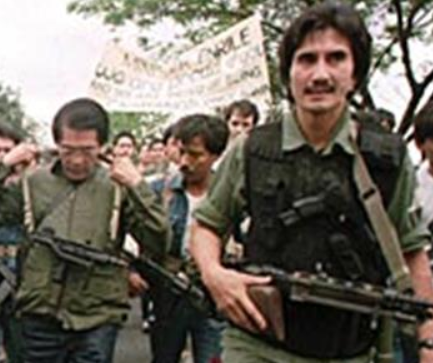
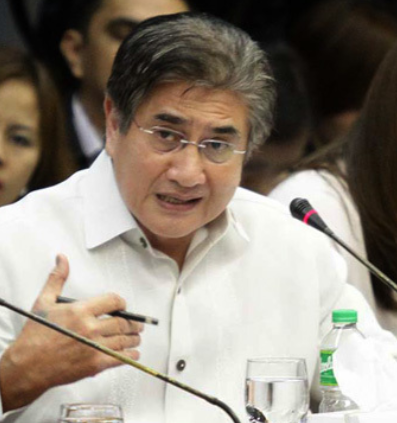
Somewhat more disturbing for Non-Philippinos is the candidacy of another senator. Gregorio Ballesteros Honasan II, better known as Gringo Honasan, participated in the EDSA revolution ousting president Marcos, but staged an unsuccessful coup in 1987 against democracy icon Cory Aquino. Imprisoned and escaped, he was pardoned by president Fidel Ramos in 1992. According to an interesting Wikipedia formulation, Honasan “utilized his rebel infamy to enter politics in 1995, becoming the first independent candidate in Philippine history to win a seat in the Senate”, and is serving his fourth term now.

Gringo-Enrile

Gringo Sen.Honasan before (1986) and after as senator (now).

During last week he declared that he is not teaming up with vice president Jejomar Binay because of unbridgeable differences in policies, but his flamboyant and somewhat adventurous image may give him a realistic chance.

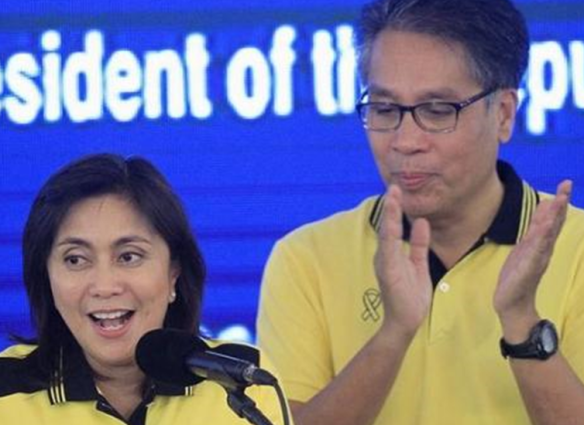
Roxas RobredoWhereas the entertainment value of flamboyant candidates is evident, the Liberal Party candidate Manuel “Mar” Roxas may be more presidentiable,  but at least at the moment he remains in the media shadow of the flamboyants, a bit like Jeb Bush with Trump and others in the US. But Roxas has found an attractive running mate with Leni Robredo, the widow of popular politician Jesse Robredo who died in a plane crash in 2012. Their poll results are improving since the announcement of the team agreement.

If we ask whether flamboyant politicians can be good leaders, Partyforumseasia tends to be skeptical. From Mussolini, Hitler and Mao Tse Dong to Ceausescu, Saddam Hussein, Gaddafi and the Kim dynasty in North Korea, flamboyant leaders may be successful in a certain sense but for good governance the dependable and sober “paperclips” are certainly a much better choice.