Dear friends, This is my last post on this blog. After more than 400 posts and reaching a “biblical” age, I retire from Partyforum SEA and will focus on my new career path as a freelance writer and journalist. Any younger political scientist may feel free to contribute fresh content. The blog will stay open for volunteers. All the best and thanks to the readers, Wolfgang Sachsenroeder
Bangkok’s penchant for political pluralism has persisted. In the 2026 elections, this would see a popular and independent incumbent pitted against an up and rising opposition party.
Her fans call her Heidi. She is 36 years old. She talks a mile a minute. She has a tattoo of the Polish-German revolutionary Rosa Luxemburg on her left arm and a million followers across TikTok and Instagram. She was relatively unknown in German politics until January, but as of Sunday, she’s a political force.
Heidi Reichinnek is the woman who led the surprise story of Germany’s parliamentary elections on Sunday: an almost overnight resurgence of Die Linke, which translates as “The Left.”
A month ago, Die Linke looked likely to miss the 5 percent voting cutoff needed for parties to earn seats in Germany’s Parliament, the Bundestag. On Sunday, it won nearly 9 percent of the vote and 64 seats in the Bundestag. It was one of only five parties to win multiple seats in the new Parliament, joining the Christian Democrats, the Social Democrats, the hard-right Alternative for Germany and the Green Party.
It was a remarkable comeback, powered by young voters, high prices, a backlash against conservative politicians, and a social-media-forward message that mixed celebration and defiance.
At a time when German politicians are moving to the right on issues like immigration, and when the Alternative for Germany, or AfD, doubled its vote share from four years ago, Ms. Reichinnek, the party’s co-leader in the Bundestag, and Die Linke succeeded by channeling outrage from liberal, young voters.
They pitched themselves as an aggressive check on a more conservative government, which will almost certainly be led by Friedrich Merz, a businessman who has led the Christian Democrats to take a harsher line on border security and migrants.
Mr. Merz’s ascent, and his decisions in the middle of a campaign that his party led from the start, appear to have helped Ms. Reichinnek. In January, after a deadly knife attack by an immigrant in Bavaria, Mr. Merz pushed the Parliament to vote on a set of migration restrictions that could only pass with votes from the AfD — breaking decades of prohibition in German politics against partnering with parties deemed extreme.
Many analysts trace Die Linke’s surge to Ms. Reichinnek’s furious — for the German Parliament, anyway — speech denouncing Mr. Merz and his measures.
“You just said that no one from your party is reaching out to the AfD!” she shouted, in a speech that has since racked up nearly seven million views on TikTok. “That’s right! They’ve been happily embracing each other for a long time already!”
In the month that followed, she called the AfD a fascist party and demanded that the Christian Democrats fire Mr. Merz. She proposed strengthening immigrants’ rights, increasing pensions and imposing stricter rent controls to help people struggling with postpandemic price increases across Germany.
Friedrich Merz, center, who is likely to be Germany’s next chancellor. Many analysts trace Die Linke’s surge to a furious speech by Ms. Reichinnek denouncing Mr. Merz and his measures.Credit…Martin Meissner/Associated Press
She also called Die Linke the country’s last great firewall against the far right.
Die Linke coupled those calls with an aggressive social media outreach and party-like atmospheres at its rallies. It added more than 30,000 new members in the last month of the campaign, said Götz Lange, the party’s press officer.
In the campaign’s final week, Ms. Reichinnek traveled to the Berlin suburb of Treptow-Köpenick to talk to Ole Liebl, a queer influencer, about “techno and TikTok.” Afterward there was a party, with a DJ set, including a techno mix with the voice of a famed left leader in Germany, Gregor Gysi.
The venue, an old brewery, was bursting at the seams: Instead of the allowed 400 guests, around 1.200 people showed up. Most of them were techno lovers in black hoodies, people with multicolored hair and T-shirts with “antifa” slogans written on them. They mostly appeared to be in their early 20s.
There wasn’t enough space inside for everyone, so around 800 guests followed the event outside and downstairs, on a livestream. Wearing a rust red-colored sweater and jeans, Ms. Reichinnek appeared after a 30-minute delay, smiling and waving to the crowd.
“Thank you for being here,” she said. “It’s crazy, I don’t even want to know what it looks like down there. If you need help, try banging on the ceiling really loudly, we’ll know.”
The crowd roared.
On Election Day, Die Linke surprised analysts and appeared to snatch votes from the Greens and the Social Democrats, the party of the incumbent chancellor, Olaf Scholz, and got new voters to turn out. In Berlin’s central Mitte neighborhood, it won areas previously dominated by the Greens.
Founded in 2007 and descended from the former ruling party of East Germany, Die Linke had recently been better known for its failures than any success.
Its most well-known leader, Sahra Wagenknecht, quit the party to start her own — which blended some traditional left economic positions with a hard line on migration and an affinity for Russia.
That may have been a blessing, said Sven Leunig, a political scientist at the University of Jena, a public research university in Germany. Ms. Wagenknecht’s positions had split the party. “They were torn,” Mr. Leunig said, and voters did not like it.
The departure also allowed Die Linke to enlist new candidates and leaders. Other mainstream parties continued to push familiar faces and may have paid the price.
Daria Batalov, a 23-year-old nursing student from the central town of Hanau, said she was won over by Ms. Reichinnek’s TikTok videos. “They really spoke to me,” she said, adding, “And it was clear to me after a few videos that, OK, my vote is going to Die Linke.”
Analysts said Ms. Reichinnek and her party also benefited from a backlash to Mr. Merz’s migration measures, and from fears about the rise of the far right. “She had good luck,” said Uwe Jun, a political scientist at the University of Trier.
Her supporters called it something else: the rebirth of a movement. At Die Linke’s election-viewing party in Berlin, the crowd erupted into cheers when early exit polls flashed across the screen. Jan van Aken, a party leader, was greeted onstage with confetti.
“The Left lives,” he said.
Adam Sella contributed from Berlin and Sam Gurwitt from Hanau.
Partyforumseasia: Running a political party is close to impossible without money. Many of the European parties of the 20th century could count on idealism and the support of their members. Reasonable membership fees were being collected by the treasurers of local branches where many members knew many of the co-members and the local leadership. In meetings they could discuss the party goals and develop leadership qualifications themselves and possibly rise in the hierarchy. Today, that looks nostalgically outdated. Party machineries have grown into sophisticated entities with all the paraphernalia of a real business and turnovers of millions and sometimes billions. Campaigning is a big strategic challenge depending increasingly on state-of-the-art PR and dominance of the media, including the social ones. AI is contributing the icing sugar, and the top candidates develop pop star personas. Membership fees are not more than a symbolic part of the overall budgets and mobilisation of dedicated members is getting obsolete. Given these developments, the funding sources for our political parties deserve more attention and scrutiny by the public. Too often, if there are any rules for donations, the parties as well as the donors are not interested in openness and transparency. They prefer to hide the real amount of influence and their vested interests. Here is an interesting case study from the United States:
Today in Singapore’s Straits Times (13 December 2024, page 21) Unfortunately, Partyforum Southeast Asia cannot help sharing the pessimism…
Super election year masks what’s really wrong with democracy
Election officials preparing to count votes during Japan’s general election on Oct 27. For democracy to hold its ground, the gap between what it promises and what it delivers cannot keep widening, says the writer.PHOTO: AFP
Record turnouts and robust competition may feel like a festival but, in many countries, democracy is not solving people’s problems. It’s in trouble.
By Bhavan Jaipragas, Deputy Opinion Editor
Are we in a global democratic recession? The numbers don’t seem to suggest that.
In 2024, the biggest election year in human history, with 3.7 billion people eligible to vote across 72 countries, experts noted strong turnout, vibrant political competition, and only limited success for disinformation campaigns.
The Economist, drawing on data from 27 countries, even noted a drop in election-related violence and protests compared with previous contests.
So, procedurally at least, democracy appears to be thriving. But let’s not be fooled by surface-level success.
Beneath this shiny exterior lies a troubling undercurrent of disillusionment, mistrust and dysfunction. This goes beyond doubts about the system itself – trust is eroding in the very people who run it.
In many places, politics no longer feels like actual governance – problems aren’t getting fixed today, and there’s little thought for the future.
In a Pew survey of 24 countries published in February (including India, Australia, Indonesia, Japan and South Korea, but excluding Singapore), a median of 74 per cent said elected officials in their country did not care what people like them thought.
The pollster said of the results: “One factor driving people’s dissatisfaction with the way democracy is functioning is the belief that politicians are out of touch and disconnected from the lives of ordinary citizens.”
Instead, as British commentator Stephen Bush put it recently on the affairs in his country, with politicians’ fixation on staying in power rather than day-to-day governing, it’s more like “staging theatrical set pieces between near-constant electoral clashes”.
This isn’t just a handful of isolated examples; it’s a pattern playing out across a good number of the world’s democracies. We’re seeing rising polarisation, the demonisation of rivals, power grabs that push the limits of executive authority, and a collapse of public trust. Peer beneath the surface, and you’ll find democracies once thought solid that are now flailing.
Asian fault lines
Take South Korea, front and centre after last week’s drama. President Yoon Suk Yeol’s abortive martial law declaration – a self-coup in all but name – tells you everything. To outmanoeuvre an obstructionist opposition, Mr Yoon flirted with wrecking the economy and national security. The message is clear: Crushing political foes tops any notion of the national good.
Japan wasn’t as theatrical in 2024, but one can argue it was just as myopic. Prime Minister Shigeru Ishiba, leading the long-dominant Liberal Democratic Party in its current cycle of leadership churn, forced a snap election a year early. This calculated gamble, aimed at securing a fresh mandate, backfired, leaving his party without the majority it had held for 15 uninterrupted years. As The Straits Times’ Japan correspondent Walter Sim recently observed, Mr Ishiba is now on precarious footing heading into 2025. Long-term strategy? Off the table, it seems.
Consider also the Philippines. Instead of genuine policy debates, its rumbustious democracy boils down to dynastic feuds. The Marcos and Duterte clans are currently locked in ugly conflicts, even hinting at assassination. Under these conditions, one wonders why ordinary Filipinos would believe their elites care about anything other than holding on to power.
Even Western Europe – supposedly liberal democracy’s heartland – is not in a good place. France and Germany enter 2025 with governments toppled by budget feuds, proving they can’t compromise or level with voters about tough economic choices. All this as Europe braces itself for Donald Trump’s return to the White House, uncertain of American policy. Add Russia’s ongoing war in Ukraine, and the leadership void in Paris and Berlin feels like a ticking time bomb.
Speaking of Trump, there’s the US – an obvious reference point for glaring democratic dysfunction. Re-electing a president who openly admires autocrats and once fuelled an insurrection attempt, and who now keeps the Republican Party firmly under his heel, lays democracy’s fragility bare.
Yes, it’s grim. But that’s the point. Regular elections and popular mandates might make democracy appear strong, but true democracy is revealed in its conduct – solving public problems and addressing the concerns and interests of ordinary citizens. To be clear, this isn’t a cheap shot at the democracies in place in these societies, or a suggestion that there’s a superior system to open, electoral contests for power. If anything, high turnout and waves of anti-incumbency in 2024 – across countless ballots – show just how fiercely people still believe in it.
The Democracy Perception Index, one of several surveys tracking how people view democracy, found in its 2024 poll that some 85 per cent of 63,000 respondents from 53 nations (including Singapore) viewed democracy as important, compared with 79 per cent in 2019 when the survey started.
And yet, paradoxically, even as voters line up at the polls, their faith in politicians and the system is crumbling.
Supply and demand factors
What’s behind this wobbling in the way democracy functions? To understand this, consider both “supply” and “demand” in electoral politics. Using the phraseology of Harvard University comparative politics professor Pippa Norris, much of the dysfunction comes from the “supply side” – how leaders and parties behave. Instead of mending disillusionment and restoring trust, many have deepened the divides.
Commentators have long noted that many leaders, buoyed by steady growth and easy credit, avoided tough economic decisions. That era is over, leaving today’s leaders to confront the problems their predecessors dodged.
Take Germany: Its fiscal shortfalls, energy security struggles, lenient emissions rules and pension woes all trace back to former chancellor Angela Merkel’s habit of deferring tough decisions – a tendency so pronounced it inspired the verb “Merkeln”. She leaned on a status quo that treated China as a reliable market and Russia as a steady energy supplier – until they weren’t. Now, Chancellor Olaf Scholz faces the fallout: a floundering electric vehicle sector, an ageing population, and an energy transition still in limbo. With elections looming, his centrist Social Democratic Party is squeezed by challengers on both the extreme left and right.
Not to single out Germany, but these supply-side political woes reflect a broader pattern plaguing many of the world’s oldest democracies. Short-termism appears everywhere: populist handouts and bloated social programmes that prove unsustainable, anti-immigration rhetoric that placates xenophobia but hobbles long-run growth, and tariffs slapped on foreign goods that might bolster short-term sentiment but sabotage long-term competitiveness. This pattern repeats across democracies. Mainstream parties – left, right or centre – keep chasing quick electoral gains while sacrificing enduring stability, leaving voters disillusioned and betrayed.
That anger clears the way for right-wing groups and other fresh faces who promise quick, easy answers. They tap into everyday worries – rising prices (blamed for 2024’s anti-incumbency wave), a shortage of homes, joblessness, and crime – invoking a simpler past when life seemed smoother. Desperate for solutions, people give them a chance. But tough problems don’t vanish just because someone claims they can fix them overnight. When these newcomers fail, disappointment runs even deeper. The cycle starts all over again, making it harder to have calm, sensible conversations about what to do next.
Still, blaming politicians alone is too easy. Democracy works both ways, and voters share responsibility.
Take France. Its recently sacked government tried to impose spending cuts and tax hikes to plug a huge deficit and mounting public debt. The far-left and far-right parties that oppose such measures ignored this economic reality but remain highly popular. This is despite an ageing population and rising security costs that will only strain public finances further. There’s little willingness to admit that budgets can’t be stretched indefinitely, or that someone eventually ends up footing the bill for generous social spending. The so-called chattering classes seldom draw attention to these uncomfortable truths.
As Financial Times columnist Janan Ganesh noted in 2022, lamenting similar “demand side” issues in Britain, voters are rarely assigned any blame. In his words, “there is something messianic about the notion that, if voters err, it is because of goings-on among one’s class at the commanding heights of society”.
These financial pressures aren’t going away, and many voters remain unwilling to acknowledge the necessary trade-offs. The outcome is a vicious circle: more heated rhetoric, deeper extremes and fewer workable solutions.
No quick fixes
Is there a quick fix to this democratic malaise? Of course not. But in recent days, as commentators reflected on just how close South Korea came to losing its democracy, a number of old proposals have resurfaced.
For starters – without sounding corny – voters need to adopt a “what can I do for my country” mindset. If you don’t like what you see, do something about it.
Political scientists have warned for decades about declining participation in political parties. In Europe, for instance, party membership has fallen sharply.
Disillusionment with traditional parties is part of the problem, but that creates a self-perpetuating cycle. Parties stay dominated by the same elites who seem out of touch, while citizens stay on the sidelines, leaving a vacuum that opportunists easily fill.
Another remedy: Voters should make more informed, sensible choices, and not be swayed by comforting fantasies. Don’t get bribed by handouts your country can’t afford. Don’t join calls to throw out foreigners and imagine that this will not hurt your economy. Easy to say, yes, but it still needs saying. The antidote is to stay informed, think long term, and not fixate on single-issue politics.
As for the political elite – the “supply side” in these places where affairs are especially dysfunctional – they don’t need more lectures. They know democracy is in trouble, and they’ve said as much. But acknowledging the problem and actually doing something about it are two different things.
Whether they mean what they say about changing their ways is another question.
One thing is clear: Procedural democracy still stands strong, as evidenced by this vast “festival of democracy” in 2024.
But for democracy to hold its ground, the gap between what it promises and what it delivers can’t keep widening. Both voters and leaders, the “demand” and “supply” sides of politics, have a part to play – if they don’t step up, democracy risks becoming exactly what its fiercest critics say it is: a noble idea that never works out in real life.
Partyforumseasia: Are social media replacing old fashioned campaigning with posters, canvassing, rallies, and personal activities of party members? If yes, election campaigning could become much cheaper than the recent billion $$ presidential campaign in the U.S.
Here is an interesting case from Japan: Japanese politician rides social media wave to polls win
Mr Motohiko Saito’s campaign for re-election cast him as an underdog reformist, among other things.
His stunning comeback after ouster from office rattles political, media establishments
Walter Sim, Japan Correspondent, Straits Times, Singapore, 26.11.2024
TOKYO Japan is reckoning with its first social media-influenced election of consequence, as a spectacular political comeback rattles traditional political and media establishments, while even being compared with Donald Trump’s victory in the US presidential election.
On Nov 17, Mr Motohiko Saito, 47, won a second term as the Governor of Hyogo prefecture, despite having been ousted just weeks earlier in a unanimous no-confidence motion across the political divide in the local assembly.
He had been accused of “power harassment” – or abuse of authority – as well as bullying that led to the suicide of a whistleblower against his administration, among other things.
Japanese media was quick to write him off, and his career seemed dead in the water. Photographs online after his ousting showed a forlorn figure standing alone at a train station, with passers-by giving him the cold shoulder.
But social media helped in Mr Saito’s rehabilitation, resulting in a stunning re-election over six other candidates to govern the western prefecture of 5.3 million people that borders Osaka and is known for the cities of Kobe and Himeji.
Turnout, at 55.65 per cent, was substantially higher than the 41.1 per cent in 2021.
This came as mainstream media outlets in Japan, which like titles elsewhere in the world suffering from a decline in readership, were perceived to be biased in their reporting about Mr Saito.
His campaign tapped into these sentiments to criticise traditional establishments, while also speaking directly to voters who were dissatisfied with the status quo.
“No one thought this would happen a few weeks ago,” political scientist Ko Maeda of the University of North Texas told The Straits Times.
“Either the media reports were wrong, or Saito’s support increased greatly in the last few days of the campaign. Or maybe both.”
The result has triggered a wave of soul-searching. On Nov 18, a headline in the Sankei newspaper pondered: “Is Saito’s re-election a defeat for mass media and a victory for social media?”
The introspective piece compared Mr Saito to US President-elect Trump in his victory against a groundswell of resentment, adding that public distrust of mainstream media that had been harsh with its condemnation of Mr Saito had worked to his advantage.
Both men also emphasised reforms in their crusade against the status quo.
Among the commentators who have weighed in on the result is mountaineer Ken Noguchi, who wrote on X: “It seems like the Trump wave has surged across the Pacific Ocean. Either way, the era in which mass media equals public opinion is over.”
However, Mr Noguchi, whose comments about Mr Saito have been widely picked up by the Japanese media, added: “As distrust of mainstream media grows, I also feel an acute sense of danger that social media, which often has unreliable information, will take centre stage.”
Mr Nobuo Inaba, chairman of public broadcaster NHK, told a news conference on Nov 20: “How can the media provide appropriate information for people to make their voting decisions? We need to seriously consider what our role as a public broadcaster is in election reporting.”
Mr Saito won 1.11 million votes, or 45.2 per cent of the total, handily defeating hot favourite Kazumi Inamura, 52, the former mayor of Amagasaki city, who won about 970,000 votes.
Ms Inamura, who won the backing of 22 out of 29 city mayors in Hyogo, echoed mainstream media in her criticism of Mr Saito for his alleged authoritarian tendencies.
But Mr Saito’s campaign, supported by his former classmates and hundreds of volunteers recruited through social media, cast him as an underdog reformist and a hero who went too far in upsetting entrenched vested interests.
“Was the media’s reporting truly accurate? Were some prefectural assembly members only interested in political manoeuvring?” Mr Saito said in a stump speech during a campaign in which he repeatedly stressed his innocence.
“What is the truth? And what is truly the best for the prefecture?”
Over street speeches and live streams on social media, he also touted his track record in his three years as governor, during which he reduced his wages by 30 per cent and made prefectural universities free of charge, while weaving in personal stories from his upbringing and school days.
Mr Saito said after his victory: “I’ve never really liked social media because it is a hotbed of harsh comments, but I’ve come to see its positive side in how it reaches a lot of people and spreads support.”
Doshisha University political scientist Toru Yoshida told ST: “This election reflects how traditional parties have completely lost the grip on independent voters, and are very much behind in new ways of mobilising them.”
He added that analyses have shown that the most significant difference between Mr Saito’s and Ms Inamura’s voters is their degree of trust in traditional media.
Still, in a sign of how social media may be unfairly weaponised, Ms Inamura’s campaign lodged a report with the Hyogo Prefectural Police on Nov 22 over the freezing of her social media accounts during the election period, purportedly because large numbers of people made false reports to platform operators.
Mr Saito’s victory comes on the heels of the political ascent of Mr Shinji Ishimaru, 42, who had little name recognition but rode the wave of social media to place second in the Tokyo governor race in July, winning more votes than the much higher-profile opposition candidate Renho, who goes by one name.
Mr Ishimaru said on Nov 12 that he plans to establish a new regional party ahead of the Tokyo Metropolitan Assembly election in July 2025.
Nationwide, the Democratic Party For The People not only quadrupled its presence in Parliament in a general election in October, but is now the most favoured party among under-40s given its social media presence, according to various media polls.
“Traditional media will probably try to maintain public support and trust by asserting that their reports are more trustworthy than what people see in social media,” Dr Maeda said. “But I don’t know if the power of social media will ever become smaller from here on.”
Dr Yoshida, meanwhile, said that although traditional media is shocked by the Hyogo outcome, its approach to news reporting “will not change in a day, given the need for reforms”.
Larry Diamond was one of the leading theorists during the Third Wave optimism. In the meantime, the old catchword “irreversible” sounds outdated. Unfortunately!
As Americans head to the polls in this year’s U.S. presidential election, many across the political spectrum believe that the future of democracy is at stake. Voters around the country have expressed grievances over the state of the U.S. political system and its failure to adequately address issues such as inflation, inequality, and global instability.
Writing in 1997, the eminent historian Arthur Schlesinger, Jr. presaged such discontent. Despite the triumphalism of the West after the fall of the Soviet Union, he warned, democracy in the United States and elsewhere would confront major challenges in the years ahead. In the twentieth century, “the political, economic, and moral failures of democracy had handed the initiative to totalitarianism,” he wrote. “Something like this could happen again.” Should liberal democracy fail “to construct a humane, prosperous, and peaceful world, it will invite the rise of alternative creeds apt to be based, like fascism and communism, on flight from freedom and surrender to authority.”
Schlesinger emphasized that humanity’s experiment with democracy was brand new in the grand scheme: “a mere flash in the long vistas of recorded history.” Over the next century, it would be put to the test; democracy “must manage the pressures of race, of technology, and of capitalism, and it must cope with the spiritual frustrations and yearnings generated in the vast anonymity of global society.” Even in the face of such challenges, he argued, “the great strength of democracy is its capacity for self-correction.” Still, “even the greatest of democratic leaders lack the talent to cajole violent, retrograde, and intractable humankind into utopia.”
Partyforumseasia: The Third Wave of Democratization is history, optimism is more and more being replaced by pessimism. International IDEA is explaining it with carefully collected facts and research. Their report The Global State of Democracy 2024 Strengthening the Legitimacy of Elections in a Time of Radical Uncertainty is a must read for everybody in politics or concerned with one’s own politics at home.
Key findings
1. Despite the many threats to elections and the declines found in many countries, elections retain their promise as a mechanism for ensuring popular control over decision makers and decision making. Incumbent parties have lost presidential elections and parliamentary majorities in many highly watched elections in 2023 and 2024.
2. In an election super-cycle year in which approximately 3 billion people will go to the polls, one in three¹ will vote in countries where the quality of elections is significantly worse than it was five years ago.
3. Electoral outcomes are disputed relatively frequently. Between 2020 and 2024, in almost one in five elections a losing candidate or party rejected the electoral outcome. Elections are being decided by court appeals at almost the same rate.
4. The global rate of electoral participation has declined as elections have become increasingly disputed, with the global average for electoral turnout declining from 65.2 per cent to 55.5 per cent over the past 15 years.
5. Countries experiencing net declines in democratic performance far outnumber those with advances. About one in four countries is moving forward (on balance), while four out of every nine are worse off.
6. Declines have been most concentrated in Representation (Credible Elections and Effective Parliament) and Rights (Economic Equality, Freedom of Expression and Freedom of the Press).
7. In addition to declines in weaker contexts, democratically high-performing countries in all regions have suffered significant deterioration, especially in Europe and the Americas.
8. While substantial progress has been made in improving electoral administration, disputes about the credibility of elections deal mainly with irregularities at the point of voting and vote counting.
NB: The country ranking, ending with the United Arab Emirates and Yemen at the bottom and starting with Germany und Uruguay on top is open to debate. As an old German living abroad but following the news, I have my doubts…
Partyforumseasia: Banning a popular party is a sensitive political move. In this special case it may be a move backwards and betray the structural and historical weakness of the Monarcho-Military Complex of Thailand. “Smooth as silk”, as the famous tourism logo of the kingdom wants to make us believe, would look different. And the obvious democratic aspirations of Thailand’s younger gemerations show that the ban might be another strategic mistake of the old order. As the French writer Victor Hugo said: “An invasion of armies can be resisted, but not an idea whose time has come.”
Asians Believe They Should Be Able to Criticize Governments By Katharina Buchholz,Jul 22, 2024
A Pew Research Center survey of nine Asian countries shows that a majority of people in the region believe that free speech is important. Between 83 percent in South Korea and 55 percent in Singapore said that they believed that people should be able to publicly criticize their governments.
Also high on the list of proponents were Hong Kong and Taiwan, where upwards of 80 percent of people agreed with the sentiment. While having self-governed and gained independent democratic structures for a long time, both places have a complicated relationship with China, which regained control of Hong Kong from the United Kingdom in 1997 while also claiming Taiwan.
Indonesia, Sri Lanka and Thailand are also highly in favor of free speech, while Japanese respondents were more timid. The idea was less widespread in Malaysia and Singapore, two countries known for their sometimes draconian laws which caused them to score low on some areas of the world press freedom index. While all countries in the survey were rated at least partially free on the World Freedom Index, Pew did not pose the question in its survey countries Vietnam and Cambodia, which are rated “not free”.
“Many voters respond to style more than substance. The well-delivered quip lingers longer than the litany of facts, and the visual often trumps the verbal”.
What most of us instinctively know, clarified here by a long-term observer of US election debates. Analyzing a debate point by point and fact-checking are useful but do not gauge the reactions of the voters.
If you’re a typical American voter in any party, allow me to let you in on a little secret: What matters most to you in a presidential debate probably isn’t the same thing that gets the most attention from the candidates, the campaigns and their allies in the immediate aftermath of those big televised showdowns.
I’ve learned this from studying American reactions to almost every general election presidential debate since 1992. I’ve sat with small groups of voters selected from pools of thousands of undecided voters nationally, watching more than two dozen presidential and vice-presidential debates in real time, and it still amazes me that minuscule moments, verbal miscues and misremembering little details can matter so much in the spin room and to partisan pundits afterward. Yet those things often have little to no discernible impact on the opinions of many people watching at home.
To be fair, some of the debates I watched with voters, like Bill Clinton and Bob Dole’s in 1996, had no major impact on the electorate’s mood. Others — like the three-way town hall debate with Mr. Clinton, George H.W. Bush and Ross Perot in 1992 and the first George W. Bush-Al Gore debate in 2000 and the three Donald Trump-Hillary Clinton collisions — arguably changed history.
As the first scheduled debate between President Biden and Mr. Trump unfolds this Thursday, the key moments that will have the greatest impact on the remaining undecided voters are those in which the candidates attack each other in defining ways or undermine the political case that each wants to present to Americans. Viewers will quickly decide whether the accusations are fair and the responses effective. From Ronald Reagan’s “Are you better off than you were four years ago?” in 1980 to Barack Obama emphasizing hope and change in 2008 to Mr. Trump telling Mrs. Clinton in 2016 that she would “be in jail” if he won, I think those key debate moments made a meaningful difference in shaping the opinions of undecided or wavering voters who related to what they heard; I certainly saw it in my focus groups and public opinion research. These moments mattered more than any candidate flub or gaffe.
And sometimes it’s a feeling rather than a specific moment that matters. The best examples are John Kerry in the 2004 debates and John McCain in the 2008 debates: Both men were good public servants with impressive personal narratives, and neither said anything wrong in their debates. But neither did they say anything especially or memorably right. Many voters were left feeling unmoved and therefore unaffected.
At the risk of offending every high school debate coach in America, many voters respond to style more than substance. The well-delivered quip lingers longer than the litany of facts, and the visual often trumps the verbal. It’s not just that the electorate tends to be drawn more to younger and more attractive candidates (like Mr. Obama, Mr. Clinton and John F. Kennedy) or to those with more commanding stage presence (which Mr. Reagan had over Jimmy Carter and Walter Mondale, and George H.W. Bush had over Michael Dukakis). While the 2016 and 2020 debates featuring Mr. Trump certainly upended our collective expectations about what exactly is presidential, listening to the voters describe each debate and their gut impressions of the candidates is more instructive about the eventual election winner than getting swept up in spin and punditry.
Perhaps the single best example of divergence between voter opinions and the views of politicos and pundits was the 1992 town hall debate. In the immediate aftermath, Mr. Bush was pilloried by the professional class for checking his watch during the debate — a moment that was completely missed by my focus group of American voters. To them, the biggest takeaways were Mr. Bush’s inability to explain what the federal deficit meant to him and then Mr. Clinton’s Oscar-worthy performance as he deftly stood up from his stool and approached an audience member with empathy and compassion, her head nodding in agreement with him throughout the encounter.
A similar misreading of a debate performance came from the first debate between George W. Bush and Mr. Gore, when a number of political analysts praised Mr. Gore for his command of the facts and intricacies of presidential decision making, while much of America seemed pleasantly surprised (shocked, actually) that Mr. Bush was able to string together complete sentences that were competent, coherent and compelling. Voters in my focus group were impressed with Mr. Bush’s comfort and command of the debate stage and disappointed with Mr. Gore’s stiffness and annoyed with what they saw as his dismissiveness toward his opponent.
In almost every presidential debate since 1992, voter expectations of a candidate’s performance also played a major role in determining perceptions of success and failure. Many had low expectations of Mr. Bush in 2000 and Mr. Trump in 2016 (and Mr. Biden now). The fact that they didn’t completely flop led at least some voters to see these candidates as surprisingly successful in the debates.
Many election observers believe that the incumbents start with some advantage because they have national debate experience and a command of governing. In Thursday’s case, both men have that experience, so voters will be looking at other factors — probably related to energy, sharpness and how they come across. While the specific circumstances were different, I think about the shock I felt watching Mr. Obama and Mitt Romney in their first debate in 2012. The widely held assumption was that Mr. Obama’s grace and charm would easily overwhelm Mr. Romney’s stiff and businesslike approach. But Mr. Obama was so chill in his approach that he came across as cold and uncaring to many voters. His performance was criticized by my focus group for lacking his customary passion and conviction — a surprising evaluation from a politician so popular for those qualities.
But here’s the surprising twist: In time, many voters came to see that first encounter with more nuance than that instant reaction suggested. In my Election Day 2012 focus groups, voters said they were left thinking that Mr. Obama truly understood them and their concerns but that he had no answers or solutions to their problems. Conversely, they felt that Mr. Romney had the better solutions to the challenges they faced but that he just didn’t fully understand their problems. Yes, policy solutions definitely matter in presidential debates. But personality, relatability and dignity matter more.
And it’s not just the candidate’s personal performance that leaves an impression. Sometimes forces that are less visible, like the debate rules, play a major role in determining the outcome. The length of time given to respond to questions from the moderator can reward or punish candidates, depending on their individual styles and ability to communicate succinctly. Nothing draws the ire of the average voter more than candidates speaking beyond their allotted time, my focus groups have shown. While most professional debate observers ignore candidates who run long, voters punish them mercilessly. It was a major reason many undecided voters turned so strongly against Mr. Trump after his undisciplined performance in the first debate in 2020.
That debate, the most consequential one in memory, was one in which many voters and political experts drew roughly the same conclusions. Mr. Trump entered the debate trailing Mr. Biden by just a couple of percentage points, but his questionable strategy to insult, badger and bully Mr. Biden was received so badly by the women in my focus group that they were as harsh about Mr. Trump as he was to Mr. Biden.
In contrast, there was one moment in the Trump-Clinton debates when voter opinion really struck me. It was Mr. Trump’s offhand comment that Mrs. Clinton belonged in jail. Many pundits and political experts hated it. My focus group loved it. For them, it was accountability in action for someone as important as her, a former secretary of state. To be sure, many political experts zeroed in on the moment as a striking instance of a presidential nominee threatening to weaponize the justice system against his opponent. But I think what they missed was a yearning among some voters to see a senior official held to account and not let off the hook by a system seen as protecting insiders.
This week brings us potentially one of the most consequential debates since Mr. Kennedy and Richard Nixon’s. The expectations are already high for Mr. Trump, who dared Mr. Biden to debate at any time or place of his choosing. It is quite possible that Mr. Trump will regret issuing such a public challenge, and Mr. Biden may regret accepting the offer.
To shape and sway voter opinion, the two opponents need to use the debate to do what Mr. Reagan, Mr. Obama and Mr. Trump did at their best: Crystallize the stakes of the race and the choice in November with a single memorable line that speaks to the feelings, instincts and perhaps even the fears of so many voters about America today.
Given that viewers are conditioned to see the 2024 debates as a mix of television entertainment and a war for America’s future, they will want to see passion, energy and even anger in service to the interests of the country. A self-controlled Mr. Trump or an adult Mr. Biden won’t be remembered, just as Mr. Kerry and Mr. McCain weren’t remembered. So much is at stake that both candidates need to let loose to make a lasting impression but not in a way that may alienate key groups like suburban women and swing voters.
In the end, it’s not the facts, the policies or even the one-upmanship that Mr. Biden and Mr. Trump offer in the debate that matters. It’s how they make voters feel.
Successful and clever parties use any new channel for spreading their message. Singapore’s People’s Action Party (PAP) is one of the most successful political parties in the region and always open to new ways of connecting with the voters. With a new Prime Minister and elections round the corner, recruiting INFLUENCERS from outside the party ranks looks like a clever move.
Earlier this week, I received my ballot paper for the European Parliament Election, marked it immediately and rushed to the next post office to send it back to Berlin. Since this was my last registered residence in Germany, from where I moved to Singapore 16 years ago, the city administration in a suburb of the German capital is still responsible for my participation. And the deadline is looming, the election is on 9 June. For me the European Union is important, a dream come true during my lifetime. In my student days, my first membership after the Boy Scouts was with the “Young European Federalists”, and together with my parents, I was active in the Franco-German twin city movement. I was sad about the Brexit and sadder about the ongoing debates about other “-exits”.
In the ASEAN-debates over the last decades, the comparison with the EU was ubiquitous, often with a whiff of regret that ASEAN was not yet as far as the EU. Sure, ASEAN has no Parliament and no governmental institution like the powerful EU Commission which can make important political decisions binding the legislation of the member states. Just as an interesting example, look at the ban of combustion engines in motorcars by 2035 and the controversies it has created in the car industry. At least for the average voter in Germany, the understanding of the role and decisions of the EU Parliament is limited. In the last election in 2019, the overall voter turnout was 50.6 %, the highest in twenty years, in Germany with 61 per cent even higher. This time, the very open party registration system in Germany does not make it more transparent or more attractive for the voters. The ballot paper is eighty centimetres long and lists 34 parties. While on the national level the ruling coalition between Social Democrats, Greens, and Liberals is increasingly unpopular, the main opposition Cristian Democratic Union joins the coalition in its fight against the more Right-wing Alternative for Germany. But probably many German voters will be surprised about the multitude of fringe parties they find on the ballot paper. If party systems all over Europa are more and more fragmented, with a trend toward the right because of the dramatic increase of immigration from Middle Eastern and African countries, 34 parties in Germany alone are somewhat strange.
Some curious fringe parties competing for a seat in the EU parliament, very probably have not much of a realistic chance. Either the five per cent threshold of all valid votes nor winning a direct mandate should be feasible for them, though some of the candidates on the list are quite prominent on the federal level in Germany. For many years, a certain type of political veterans has been “promoted” to Brussels, a parliament with limited powers of legislation. The right to initiate legislation lies with the commission and not with the EU Parliament, but the income of the MPs and the lifestyle in Brussels are attractive enough.
From the 80 cm long ballot paper below, parties 1 (The Greens), 2 (Christian Democratic Union), 3 (Social Democratic Party), 4 (The Left), 5 (Alternative for Germany), and 7 (Free Democratic Party) are established mainstream parties, the Social Democrats even with a 150-year history. The Alternative for Germany, as a right-wing party, is being attacked by all the others and the media. New on the scene is 28 (Alliance Sahra Wagenknecht) named after its leader, an outspoken younger politician who is omnipresent in talk shows and married to a Social Democratic veteran. As a registered party since only a couple of months, 28 is getting seven per cent in the polls, while The Left and the Liberal Free Democrats are struggling for survival above the five per cent threshold. Surprisingly, socialist and communist tendencies have survived in Germany with the German Communist Party (20), Marxist-Leninist Party (23), and the Socialist Equality Party – 4th International (24). With the environmental protection high on the government agenda via the Green Party in the ruling coalition, more groups are competing for Europe: The Ecological Democratic Party (13), Climate List Germany (30), and Last Generation (31) a grassroots group famous for street and airport blockades by gluing themselves to the streets. The Action Party for Animal Welfare (15), Human World – Happiness for All (21), or the Party for Change, Vegetarians and Vegans (34) are the more exotic ones. But in an era where conservative world views and attitudes are uncool and being replaced by new and colourful lifestyles and social innovations, the list reflects the country’s transformations. What reminds more of the old and bureaucratic Germany is the instruction leaflet for the postal vote procedure – at the end of this post after the ballot paper. The last instruction says that the voter should mark the ballot paper discreetly, without being observed by others, the secrecy of ballot principle.
Fragmented Party Systems In most of the so-called mature democracies the party systems are increasingly fragmented. Britain and the U.S. are an exception, mainly due to the First-Past-The-Post election system in Britain and presumably due to the sky-high campaign costs in the U.S. which discourage the formation and rise of new parties. In Europe the traditional party landscapes, if they are still visible, are falling apart at a fast rate. After WWII, Germany wanted to build a model democracy. One of the results was the ease of establishing and registering a new party, including the right (!) to get a downpayment for campaign cost reimbursement even before an election. So far so fair, but as an unintended result, there were new parties without a realistic potential, even as small coalition partners. In the last Federal Election in 2021 there were parties like “Free Voters” (vote share 2.4%), “The Animal Welfare Party (1.5%), “Pirate Party” (.4%), “Christians for Germany” (.1%), “Vegan Party” (.1%), and many others without votes. The threshold for entering the Bundestag is 5%. Combined with the decline of the old ideological parties, namely Social and Christian Democrats and Liberals, the European party systems show a tendency to splinter and make coalition building increasingly difficult.
Splinter Parties in Southeast Asia In many countries in Southeast Asia, the party landscapes resemble the European ones in terms of complexity and lack of ideological differentiation. Highly visible, popular, or towering leadership figures may make up for the deficits, at least for a while, sometimes even for decades. But today it is more urgent than ever to convince and win over new voters. Since the era of “safe vote banks” seems to be over, it is even more important for the parties to come up with a convincing program and attractive leaders. But most of all, they should have a strategic concept of how to define the type of voters they can hope to convince. This is why their campaign plans need to focus on who can be convinced and how! For concepts of “selling points” and “selling techniques” there is more than enough literature available. Voter’s opinions can change and can be changed, even to the opposite conviction if done the right way. Here is a link to the first example of a toolbox:
How Political Opinions Change | Scientific American “In a recent experiment, we showed it is possible to trick people into changing their political views. In fact, we could get some people to adopt opinions that were directly opposite of their original ones. Our findings imply that we should rethink some of the ways we think about our own attitudes, and how they relate to the currently polarized political climate. When it comes to the actual political attitudes we hold, we are considerably more flexible than we think.” And so are voters…
“Whenever a legislator elected on a party ticket or as an independent changes his party affiliation or joins a party, he commits a breach of faith. In most elections, party identity has more influence on the minds of the electorate than the personal prestige of the candidate. In fairness to the electorate, a defector should be made to seek a fresh mandate from the people.” Kamath, P. M. (1985) “Politics of Defection in India in the 1980s,” Asian Survey, Vol. 25, No. 10, (October), 1039-1054.
Cartoon by Lat, Malaysia, 1980s
What Prof Kamath, a political scientist at the University of Mumbai, called a breach of faith, carries many negative names on the side of the “giving” or “losing” party, something between defection and treason or more. The “receiving” party, of course, sees it in a positive light, and may call it a courageous move, a plunge of belief, a trusting jump, or a decision of conscience. The single party hopper, though, as warmly as he or she may be welcomed in the new party will never be fully trusted. Converts are often more eagerly faithful than the other group members, and that is not too welcome as well.
Since party hopping has been widespread in Southeast Asia, regulated in some countries and often being discussed for tougher regulation in others, we don’t want to discuss the pros and cons here in detail.
For a good introduction into the party hopping topic, we recommend the analysis by Kenneth Janda, Northwest University, Illinois. The paper is from 2009 and offers a good comparative overview. For Southeast Asia, a couple of updates are necessary. Link: wp0209 (leidenuniv.nl)
For a better understanding of politics in the region, the second sentence in the quotation above is at least similarly important, maybe even more: “In most elections, party identity has more influence on the minds of the electorate than the personal prestige of the candidate.” Partyforumseasia thinks that this is debatable and will continue to look into the issue. Contributions are welcome.
Irregular practices in the United Kingdom and other countries are no excuse!
Partyforumseasia: The old Romans had a couple of expressions for a basic social strategy which is common until today: “Do ut des” (I give you something so that you give me something back), “quid pro quo” (this for that), or “manus manum lavat” (one hand washes the other). The more popular modern expression in English is “palm greasing” which sounds much nicer than bribery, while the latter is widespread in East and West despite all attempts to fight political corruption. In the case of party politics in Southeast Asia, the dilemma is that membership and membership fees are not common. Basic funding by members is practically unknown, unlike in Europe, where the traditional parties can still count on contributing members. Meanwhile, election campaigns are getting more expensive year on year, and suitable PR-companies and their helpers have to be paid in cash. Like in the U.S., rich donors help the parties, or more dubious in Southeast Asia, political parties can be bought by rich donors who, of course, expect a return on their investment. “Do ut des…” These practices are not part of the democratic textbooks but may be stepping stones for a cleaner future with more concern for the voters and the interests of the countries.
Recommended reading, especially for Malaysians: Party Funding Scandals – UK vs Malaysia (Sarawak Report)
The Conservative party’s biggest donor told colleagues that looking at Diane Abbott makes you “want to hate all black women” and said the MP “should be shot”, the Guardian can reveal.
Frank Hester, who has given £10m to the Tories in the past year, said in the meeting that he did not hate all black women. But he said that seeing Abbott, who is Britain’s longest-serving black MP, on TV meant “you just want to hate all black women because she’s there”….
… Hester, a businessman from West Yorkshire, runs a healthcare technology firm, the Phoenix Partnership (TPP), which has been paid more than £400m by the NHS and other government bodies since 2016, primarily to look after 60m UK medical records. He has profited from £135m of contracts with the Department of Health and Social Care (DHSC) in less than four years.
Hester gave £5m to the Conservatives in May 2023 and announced this month a further £5m donation, which had been accepted by the party from his company in November last year. With months to go before the next general election, a party spokesperson confirmed he was now its “biggest ever donor”.
Obnoxious views aside, the emergence of Mr Hester as the largest ever donor to the Conservatives in the UK is reminiscent of much that SR has criticised in Malaysia.
Thankfully for electors in Britain, there are levels of transparency that make matters of such blatant concern more accessible for journalists to draw to public attention.
However, this does not negate the need to confront an apparent perception of over-inflated public contracts being recirculated to the party of government that presided over the issuance of those very contracts. That’s the sort of thing whispered for years in Malaysia.
According to the Guardian, Mr Hester’s wealth has derived from the enormous profits obtained by his company from contracts to supply software services to the publicly funded National Health Service.
Latest recored results show the Phoenix Partnership (Leeds), had a turnover of £75m, with profit before tax of £47m in the year to March 2022.
As the owner, Hester received dividends during the year of £10m on top of a salary of £515,000 which he pays himself as the director.
If Mr Hester is making such enormous margins from these public contracts the immediate concern is that they would appear to be over-inflated. Competitors could surely have been found to perform the same work cheaper.
There is also a potential danger this flamboyant and opinionated businessman may have concluded that generosity towards the ruling party would secure further lucrative work.
Either way, there is a clear reform required to preclude companies in receipt of government contracts, or their owners, from making donations to the party whose ministers signed off on them for at least the duration of that parliament or contract.
If £10 million of public money is to be circled back into party political donations, the money should at least be divided amongst all citizens equally to contribute to the party of their choice: not funnelled through one entity which has just benefitted from an overpriced contract.
After all, this is public money and the public have a right to decide through a majority who gets the most support.
Malaysia is starting its clean up from an even more questionable state of affairs and in order to do so major steps towards transparency, which has regressed in recent years, should be addressed.
The CIDB website, which registers all awards of public contracts and has been made deliberately inaccessible since 2015, ought to be restored to public scrutiny as a first crucial step.
For now, newspapers cannot even report on the sort of matters the Guardian has just shocked its readers within Britain.
Perfecting election campaigns with artificial Intelligence?
In the quasi two-party-system of the United Kingdom, focusing the election campaigns on possible swing voters and otherwise relying on secure vote banks, has long been practiced with good results. In some cases, it boiled down to certain streets and certain suburban clusters whenever the parties had sufficient information on the voting patterns in their constituency. With the increasing volatility of the voting patterns, even in Britain the numbers of swing voters are increasing. Therefore, the campaign methods and instruments must be adapted. On the European continent, the volatility is much higher than in Britain, and the party systems are more and more falling apart. Political parties with faithful membership and reliable vote banks, like Social Democratic or Christian Democratic parties, are shrinking dramatically while fringe parties come and go. Certain policies, e.g. the management or mismanagement of immigration, are being seen by larger parts of the population as a threat and trigger big swings to the right, like in Denmark, Sweden, The Netherlands, France and Germany. The mainstream parties and governments, so far, have no recipe for stemming the tide and often react in panic mode by vilifying the perceived right wingers as Nazis. In Southeast Asia, many political parties are not offering ideologies in the traditional sense but use ethnic or religious cleavages in their societies as main attraction. The fast-growing use of artificial intelligence (AI) might provide them with new sophisticated instruments to bring the votes out and maximise their voter base.
Scientific American has published an analysis of what may be possible soon. And the advances of social media and available data harvesting methods in Southeast Asia will certainly push the competing parties to try out everything what is available. The low cost of AI generated targeted campaign messages is an additional advantage, while posters and rallies are cost intensive.
The article highlights the danger as well:
“When combined with GenAI’s ability to generate customized messages, this technique places large-scale furtive manipulation within reach of bad-faith political operators or indeed foreign adversaries. Whereas previously, manual targeting at market segments required extensive funding and knowledge, the availability of GenAI has dramatically lowered the cost. Political targeting is now cheaper and easier than ever before.”
As the saying goes, power corrupts. But the corruption starts or at least tends to start long before the power has been assumed, namely in the election campaigns. Probably, there is no country with a really level playing field for elections in this world. The spoils of power are attractive in the rich countries, where they can be massive, and likewise in the poorest countries, where they might matter even more. The social status and nimbus of a leader is already a perk of sorts, the ability to make decisions for others and to expect their respect and obeisance can create anything between drug-like effects and aphrodisiacs. When Winston Churchill was asked what he was missing the most after being voted out of his premiership in 1945 despite his towering role during WWII, was the sarcasm “transportation”. But everybody who has travelled with top officials will remember this special feeling of privileged transportation.
As a logical consequence, election campaigns can be, and often are, extremely competitive, while seducing many of the players to forget about normal civil fairness. The political cultures, of course, differ from country to country, which means that very different levels of unfairness are possible, often enough ranging from defamation and character assassination to physical assaults like stabbing, poisoning, and shooting.
In Southeast Asia, so far, relatively traditional forms and techniques of election campaigning may be prevailing. Incredible amounts of campaign posters are still in widespread use. Popular leaders and candidates are pulling huge crowds and not so popular ones can hire cheering fake supporters from skilled campaign entrepreneurs. But the traditional media are increasingly losing attraction among the voting masses, newspapers and state-controlled TV stations are no longer the transmitters between the campaigning politicians and their target groups. With the Internet and smart phone penetration reaching even remote areas, more and more voters, especially the younger ones, are getting their political information from social media. And, no surprise, this is exactly the entry point for new trends in marketing, including political campaigning. But at the same time, as the technical opportunities have opened the floodgates for criminal online scams of all sorts and shapes, they attract election campaigners, fair and unfair alike. Why should skilled campaigners not generate thousands of votes if criminals can cheat unsuspecting internet surfers of millions of dollars.
Here are some examples of campaign trends around the world which may give a preview of what Southeast Asia can expect in the next few years, if the tech savvy region should not be even more advanced already.
The newest development first: In the American presidential primaries, deep fake campaigns have already arrived. In the recent New Hampshire primaries, a fake version of President Joe Biden’s voice has been used automatically generated robocalls to discourage Democrats from taking part. As unusual it may sound that the president makes phone call to single voters, the message might influence a sizeable number of voters, nevertheless. As CNN reports, while the audio appears to be fake, it sounds just like the president and even uses his trademark “malarkey” catchphrase. NB: You can listen to this fake call here: Fake Joe Biden robocall urges New Hampshire voters not to vote in Tuesday’s Democratic primary | CNN Politics Local candidates in municipal and state elections will probably not resist the temptation of using robocalls. Campaign propaganda in the form of E-mails is common enough for a long time already. For the U.S. presidential campaign, Donie O’Sullivan, CNN’s correspondent covering both politics and technology, predicts an explosion of AI-generated disinformation. Artificial Intelligence has made the upgrading from fake to deepfake so easy that practically anybody can download the necessary program from the Internet and create videos which look authentic for most recipients. The trend is especially dangerous for the U.S. because the legitimacy of elections and the orderly and peaceful transfer of power has been undermined by Trump’s “big lie” that the 2020 U.S. election was stolen. According to recent polls, nearly 70 per cent of Republicans question the legitimacy of the 2020 presidential election. The assumption that Russia had influenced or manipulated this election has never been proven but was popular enough for the media to be repeated for many months. Another related incident is brand-new and all over the media, especially with the war In Ukraine being discussed controversially in Germany. End of January, a news magazine reported that Internet experts of the Foreign Office have detected no less than 50.000 fake accounts on social media platform X, trying to stir anger at Berlin’s support for Ukraine.
In Southeast Asia, the election triumph of President Marcos in June 2022 was reportedly facilitated, among others, by thousands of occasional volunteers who could make a few bucks with their smart phones during the campaign. The social media scene, however, is changing very fast. This is evident in the number of followers of the candidates in the ongoing presidential campaign in Indonesia. While front-runner Prabowo has 10 million followers on Facebook, 6.7 Million on Instagram and none on TikTok, his much younger vice-presidential candidate Gibran has only 173.000 on “old-fashioned Facebook, 1.4 million on Instagram and 446,900 on TikTok. It looks like a mirror of the generation gap with Facebook something for the older generation. But middle-aged PDI-P candidate Ganjar Pranowo, born in 1968, is the champion on TikTok with remarkable 7.1 million followers in December last year. They are all fighting on the virtual battleground, though posters and rallies are still an important and expensive part of the campaign.
Whether party politics can make you happy is debatable and depends a lot on which end you participate. Losing an election is no fun at all, winning one can trigger anything from euphoria to arrogance, and the same is true for helping in election campaigns. Observers and analysts like political scientists risk an impact to their mood as well. For any role or outcome, we recommend a wise decision by the French enlightenment writer, philosopher, and satirist Voltaire: J’ai décidé d’être heureux, parce que c’est bon pour la santé I have decided to be happy because that is good for my health
All the best and good health! Your Political Partyforum Southeast Asia
In an article published by the Straits Times on 18 December, Wahyudi Soeriaatmadja, the Indonesia Correspondent of Singapore’s flagship daily, describes in detail his observations during the ongoing presidential election campaign. (LINK: Hired crowds in demand for Indonesia political rallies | The Straits Times). These observations are so interesting because the phenomenon of more and more professional and commercialized election campaigning and party politics is spreading to many places and continents. What is especially exciting here is the fabulous Indonesian creativity in this field.
The article describes how Mr Lukman, a 45-year-old parking attendant, runs his “rent-a-crowd” service. Once hired by a candidate or party, Lukman gathers at least 200 persons and brings them by bus to the event. He charges 100.000 rupiah (6,5 USD) per “supporter” plus food and bus transport.
Great care must be taken to pick people who look like real and enthusiastic supporters. Lukman selects the ones “who wear tidy clothes, those who look like college students, the 18-year-olds, the zillennials.” Obviously, many of the 200 million voters are already suspicious of the fake supporters, so the hired ones must act up real enthusiasm, cheer and dance. Since the salary is paid only after the event, not sufficiently convincing supporters risk a part of their pay.
Often enough, the hired troops don’t know who they are supposed to cheer until they arrive at the venue. For them, of course, it does not matter, they are like the extras in mass scenes film shootings. So, the “industry” is facing an increasing demand for sincere and convincing cheering support. A spokesman for the ruling Indonesian Democratic Party of Struggle (PDI-P), told The Straits Times that the party does not use and has never tolerated such services. True or not, it is a basic fact, that money is a decisive requirement of election campaigning, of course not only in Indonesia. But the democratic development of the country has seen several creative solutions to candidacy and electoral success, up to the phenomenon that rich candidates can choose among competing parties for a promising slot.
In Europe with a century-long history of political parties and the corresponding political theory, the developments are comparable to the ones in Southeast Asia, except for the fake cheering crowds, hired for the occasion. Campaign events, even with prominent speakers, ministers and prime ministers, risk looking bad on pictures and TV videos because, often enough, the expected crowds are not materializing. And most of the traditional campaign features are provided by PR agencies anyway. The party members sacrificing evenings and nights for hanging campaign posters are practically history. That is being accompanied by shrinking party membership in most European countries. The once dominating Christian Democrats of Italy have disappeared, once struggling right-wing parties are growing and booming in many countries, like recently in the Netherlands, mainly because voters are frightened by uncontrolled immigration. In Germany, the 160-years-old Social Democratic Party, is continuously shrinking in membership and polling results, though still in an uneasy coalition with Greens and Liberals under a social-democratic chancellor. A workers’ party for most of its life, the SPD is no longer seen as fighting for the working class or the little man on the street. Consequently, during the last few decades, the internal social coherence of the party has changed dramatically. Still some fifty or seventy years ago, the small local branches offered a sort of family bonding, the members knowing each other, and the local treasurer visiting the members at home to collect the monthly membership fees. All that is history, of course, and that has direct repercussions for the ideological and programmatic consistency of the SPD and many similar parties. Probably, the changing party landscapes are less based on values, programs, and group-interest but more dependent on professional management, financial resources, political psychology, and the real or media-hyped charisma of the leaders. For Southeast Asia see:
We vote regularly, at least a majority of us, and we try to gauge the candidates – probably first – and their programs or ideologies – probably not so carefully. Election choices are to a high degree emotional and the popularity of political leaders as well. And how do we see our elected leaders after a year in office or after major bad decisions? Do we learn over the years to be more careful? The long queue of bad leaders in too many countries seems to suggest that voters, as prominent leaders have said, are terribly stupid and awfully forgetful…
Partyforumseasia recommends the following article from The Conversation UK: What makes a good political leader – and how can we tell before voting? October 11, 2023
For many people, voting is not just a right, it’s an act of civic duty. Even more than that, some voters base their decisions on what they believe best serves society as a whole, not what might personally advantage them.
The trick, of course, is how to exercise that vote in a responsible, informed and considered manner. Understanding the policies of different parties is obviously a key part of that, in which case resources such as Policy.nz and Vote Compass can be helpful.
But what of the individual characteristics of candidates and would-be leaders? What can the research tell us about what to look for? Given they are “actors” on the political “stage”, how do we evaluate their performance?
Of course, leadership isn’t a solo act. Many things determine what leaders can and can’t do. But what makes them tick – how their personality or character informs their actions – is enduringly fascinating. In fact, we know a lot about the beliefs, attitudes and behaviours that can help distinguish between good and bad leaders.
Voters evaluate the options during the TVNZ multi-party leaders’ debate in early October. Andrew Dalton/TVNZ
Confusing confidence with competence
Given “good” leadership is generally accepted as being both ethical and effective, it stands to reason “bad” leaders tend to fail on one or both counts. They either breach accepted principles of ethical or moral conduct, or they act in ways that detract from achieving desired results.
This distinction helps demystify leadership by highlighting that the qualities we least admire in others are also what scholars have long flagged as danger signs in leaders: arrogance, vanity, dishonesty, manipulation, abuse of power, lack of care for others, cowardice and recklessness.
Notably, though, bad leaders can appear charming, confident and driven to achieve, despite seeking power for selfish reasons.
Numerous studies have identified the ways in which narcissists and what are sometimes called corporate psychopaths can be highly skilled at manipulating people into believing they’ve got what it takes, but will typically lead in destructive and dysfunctional ways. Other studies have shown the negative effects of “Machiavellian” leadership styles.
There is also a tendency to confuse competence – the actual knowledge and skills needed to perform a leadership role – with confidence. Good leaders tend to be relatively humble about their abilities and knowledge. This means they’re better listeners, more sensitive to others’ needs, and better able to collaborate effectively.
None of this fascination with leadership is new. The Classical Greek philosopher Aristotle argued good leaders possess a range of character virtues in the “middle ground” between what he called the “vices” of excess or deficiency. Courage, for example, is the virtuous mid-point between the vices of recklessness and cowardice.
Aristotle looked for a middle ground. Getty Images
The modern character virtues leadership researchers emphasise include humanity, humility, integrity, temperance, justice, accountability, courage, transcendence, drive and collaboration.
Each attribute helps a leader deal more effectively with some aspect of their role. Humanity, for instance, enables a leader to be considerate, empathetic and compassionate. Temperance helps them remain calm, composed, patient and prudent, even in testing circumstances.
Deployed together, these character virtues help foster sound judgment, insight, decisiveness – allowing a leader to calmly handle complex, unfolding challenges.
For Aristotle, the ideal leader could demonstrate what he called “phronesis”, or practical wisdom. This wasn’t necessarily about delivering perfect, painless solutions. Indeed, phronesis might mean adopting the least-worst option – which is often the case when dealing with the complex task of running a country.
There is also no single personality “type” most suited to good leadership. But studies indicate those who are proactive, optimistic, believe in themselves and can manage their anxieties stand a better chance. Empathy, a sense of duty and a commitment to upholding positive social values also underpin the attributes of good leaders.
Evaluating political leadership
No leader will be perfect. But each character or personality flaw impedes their capacity for wise judgment and dealing with the demands of their role. A wise leader, therefore, is one who has deep and accurate insight into their personal foibles and has strategies to mitigate for those tendencies.
Political leaders will obviously seek to present their policies, parties and themselves in a positive light, something known as “impression management”. This is where critical questioning and fact checking by journalists and experts can play a vital role.
But gauging a leader’s “true” personality or character is more difficult. And we first need to be aware that our impressions and evaluations of leaders are not entirely driven by reason or logic.
Secondly, we can look for recurring patterns of behaviour in different situations over time. We should pay particular heed to behaviour under pressure, when it becomes more difficult to “mask” true feelings and motives.
Thirdly, we can consider the values that underpin a leader’s policies, who benefits from them, and what messages these convey to the community at large.
In the long run, a leader’s results bear consideration. But we need to assess these fairly, accounting for what was beyond their control. We should be mindful to avoid “hindsight bias” – the tendency to imagine events were predictable because we know they’ve occurred.
It should be no surprise that what constitutes good leadership has been studied and debated for thousands of years. Leaders have power and we’ve always wanted them to use it wisely. An informed voting choice makes that more likely.
Millenia of feudalism have left parts of their legacy until today. As it was normal that princelings were groomed to become kings or sultans, company owners often groom their children as successors. Should it be different in politics? It probably should, because charisma and eloquence paired with intelligence and a sense of chosenness and mission are not necessarily hereditary. However, political dynasties are common, from the Kennedy and Bush clans in the USA, the Gandhi family in India, to the latest well prepared and successful handing over of the Cambodian premiership from Hun Sen to his son Hun Manet.
The Indonesian media headlines last week sounded somewhat skeptical when President Jokowi’s youngest son Kaesang Pangarep, 28, was named as chairman and leader of the Indonesian Solidarity Party (PSI) on 25th September, only a few days after joining. The PSI, founded in 2014, tries to form a counterbalance to the traditional macho and money style politics, eying the young and progressive voter generation, in a way similar to the Move Forward Party in Thailand. It is not yet represented in the national parliament but in several regional and provincial parliaments as well as in the municipal councils of big cities like Surabaya and Bandung. The party is sort of revolutionary with its 45 per cent of female candidates and the transparent way of publicly selecting the candidates.
One interesting feature which has come up in Indonesia’s democratic development is the focus on eligibility in the selection of candidates. It has the disadvantage of giving attractive candidates a choice between different parties and their financial possibilities – or a rich candidate “buying” a poor party as a vehicle for his ambition. But the focus on eligibility is a feature which many European parties should keep in mind as well. Their candidates for party posts and parliamentary elections are too often making their way up through the ranks from the bottom. This needs elbows, ambitions and years of patience, compromises, and back-door deals, which in many cases does not produce candidates sufficiently attractive for the voters.
For the Indonesian party scene, the lightning career of Kaesang Pangarep makes sense. As the president’s son he is highly visible and known to the broader public which will be useful for the PSI in the upcoming elections next year.
With Kaesang’s career move, the Widodo family’s political life after the president’s second term does not end in 2024. Jokowi’s elder son Gibran Rakabuming Raka is already the mayor of Surakarta, and Bobby Nasution, his son in law, is mayor of Medan. Both are on a PDI-P ticket and the PSI-move for Kaesang has been interpreted as a rift between President Widodo and PDI-P chair Megawati, his sponsor.
Back to the addictive attraction of power and high office. Both are addictive in terms of status and self-importance, sometimes with access to funding on top. Giving up the presidency of big countries like Indonesia, but any smaller office as well, may create a sort of phantom pain, the loss of something the holder is used to and eventually feels entitled to. When Winston Churchill was no longer prime minister, a reporter asked him what he missed most. With grim humour Churchill answered in one word: “Transportation…”
Peggy, can we find someone to misuse some of these campaign funds for a run to the deli to get us some lunch?
Vote buying, in different forms and disguises, is common all over the world. It also has a long tradition in Thailand’s elections. Banharn Silpa-Arche, Prime Minister from 1995 to 1996 and successful in the booming construction business of this era, even earned the nickname “Mr Automatic Teller Machine” with his vote buying. The following Fulcrum article by Daungyewa (Hong) Utarasintfrom the ISEAS Jusof Ishak Institute in Singapore describes the current practices in Thailand’s deep south. Ever rising “tariffs” and religious undercurrents form a strange mélange in the political culture. The interesting question is whether this historical burden might be overcome with the success of a new generation movement like the Move Forward Party, which is rejecting it. Vote buying with up to three thousand baht per vote(r) in 2023 is adding to the financial needs of the competing parties which may trigger more corruption.
Religion can be an important feature in attracting voters to a political party. Western Europe had strong Christian parties in the second half of the 20th century. In Italy, the Democrazia Christiana (DC), played a leading role in postwar Italy and the European integration until it lost its influence in the 1990 and was disbanded in 1994. In Germany, the Christian Democratic Party (CDU) is still the biggest party in the Federal Parliament today, though in opposition. The “C” (for Christian) in its name is often questioned, and it certainly does not imply a major influence of the Catholic and Protestant churches which struggle with shrinking membership already for years. For the American Republicans, the picture is different. According to a Statista survey for the years 2021 to 2023, a total of 56 per cent of the members identify themselves as Protestant and 25 per cent as Catholic. It would be difficult, though, to pinpoint the religious influence in political decisions and the legislation. Whether this can be said for the Islamic parties in Southeast Asia is a matter of perception and debate. The following article about Malaysia’s PAS party, published by the Straits Times in Singapore, gives some interesting insights.
The rise of the non-clerics in Malaysia’s Islamist PAS party
The Straits Times, Singapore
PAS flags and a ship made by party supporters were seen in Kedai Buluh, Kuala Terengganu, ahead of the state elections in August. ST PHOTO: ARIFFIN JAMAR
By Hazlin Hassan Malaysia Correspondent, 18 SEPT 2023
KUALA LUMPUR – State elections in August have put the spotlight on a pair of fast-rising non-clerics in the fundamentalist Parti Islam SeMalaysia (PAS).
Soft-spoken Datuk Seri Ahmad Samsuri Mokhtar, 52, one of the party’s three vice-presidents, wiped out the opposition in Terengganu to retain the Menteri Besar, or chief minister, post. His counterpart in Kedah, Datuk Seri Sanusi Md Nor, 49, gained prominence as a shoot-from-the-hip orator who retained the state with a commanding majority despite being hit with sedition charges for insulting the monarchy.
They are not religious scholars, who usually form the leadership ranks of Malaysia’s Islamist party.
Dr Mazlan Ali, senior lecturer at the Razak Faculty of Technology and Informatics at Universiti Teknologi Malaysia, told The Straits Times it is important for PAS, which has 43 MPs in Malaysia’s federal Parliament – the most for any single party – to have laymen instead of just religious scholars among its leaders.
He said: “In order to win votes, PAS has to be pragmatic and not just be a party based on religion alone. In politics, power is gained from votes and popularity. So PAS has to put up leaders from a variety of backgrounds, and not just clerics.
“When you form a government, you need people who are experts in administration, economy, finance and diplomatic relations. All these require professionals.”
Dr Samsuri has a PhD in aerospace engineering from Britain’s Leeds University, and uses science and data to make his points against political opponents, instead of just relying on jibes.
After PAS’ clean sweep of all 32 seats in Terengganu’s state legislative assembly, as predicted by the party, Dr Samsuri said: “I make statements based on facts and knowledge. As a scientist and an engineer, when we make a decision, we must have enough facts.
“When I said we were very confident of winning in Terengganu, it was not based on sentiment or coffee-shop talk but based on studies and surveys which we carried out.”
Mr Sanusi, meanwhile, courts controversies with his public speeches but is wildly popular with the masses.
He used to work in real estate valuation before becoming the political secretary of the previous Kedah chief minister from 2008 to 2013. Numerous gaffes throughout his tenure and a penchant for highly contentious statements have seen him compared with former US president Donald Trump.
He was charged with sedition in July for allegedly insulting the Selangor ruler when he compared him with the Sultan of Kedah, saying that the former’s choice of chief minister was substandard.
That only led to a wave of sympathy from voters, who turned up in droves to see him at political rallies and take selfies. Ruling coalition Pakatan Harapan (PH) and its ally Barisan Nasional had hoped to wrest back Kedah from PAS in August.
But, under Mr Sanusi, the opposition alliance Perikatan Nasional (PN) snatched 33 of the 36 state seats, improving on its previous 20 seats. PN is led by PAS and Malay-centric Parti Pribumi Bersatu Malaysia, with former prime minister Muhyiddin Yassin as its chief.
The difficulties in forming a coalition government and electing a prime minister are in the media around the world. This article helps to understand some of the basic problems. The two-ballot system with separate votes for party and candidates is not easy for all voters.
Link to the Fulcrum series of ISEAS Yusof Ishak Institute, Singapore:
The Pheu Thai Party released a new marketing ploy: A poster linking each of the 44 letters of the Thai alphabet with one of its attention-grabbing campaign pledges.
A tweet with a link to the alphabet poster received about 1 million views within 12 hours.
The alphabet-campaign poster was uploaded on Pheu Thai’s Facebook page at 8pm on Wednesday, followed by a tweet embedding a link to the Facebook post.
The alphabet-campaign poster mimics the ones used to teach the Thai alphabet to children, but uses rhymes for key campaign pledges.
Pheu Thai uses the first letter of the alphabet, “Kor Kai”, to spell out “Kasettakorn” (“farmers”) and follows with its promise to give them a three-year debt moratorium.
“Khor Khwai”, the third letter of the alphabet, is rhymed with “Kha Raeng” (“wage”). It is followed by Pheu Thai’s promise to raise the daily minimum wage to 600 baht.
“Chor Chang”, the seventh letter, is rhymed with “Charttiphan” (“ethnic minorities”) and explains that they will be given Thai citizenship.
The tweet was retweeted 12,400 within 12 hours, while the Instagram photo of the poster received more than 3,100 likes.
As of Thursday afternoon, the Facebook post received over 9,600 likes and was shared 1,700 times. It received more than 420 comments.
Pheu Thai is by far the frontrunner for the May 14 election, according to national opinion polls. It leaves every other party, except Move Forward, in the dust.
The chances for the Pheu Thai Party explained by Dr Termsak Chalermpalanupap (CNA)
Commentary: Could Thai voters put a third Shinawatra in power after Thaksin and Yingluck?
Winning at the polls on May 14 may not guarantee an actual victory for Pheu Thai favourite Paetongtarn Shinawatra nor her father Thaksin, says ISEAS-Yusof Ishak Institute’s Termsak Chalermpalanupap.
From left to right: Paetongtarn Shinawatra, Pheu Thai candidate (Photo: AP Photo/Sakchai Lalit), former prime minister Thaksin Shinawatra (Photo: AFP/Isaac Lawrence), former prime minister Yingluck Shinawatra (Photo: AFP/Lillian Suwanrumpha).…see more
28 Apr 2023 06:27AM(Updated: 28 Apr 2023 06:27AM)
SINGAPORE: Seventeen years after exiled former prime minister Thaksin Shinawatra was ousted in a coup, his youngest daughter Paetongtarn Shinawatra, 36, has been leading opinion polls for the same job in recent months.
Yingluck Shinawatra, Thaksin’s younger sister and Paetongtarn’s aunt, had been prime minister until she resigned in 2014, two weeks before a military coup toppled her government. If election outcomes were to follow the polls, could Thailand soon see a third Shinawatra in power?
PREVAILING ANTI-GOVERNMENT SENTIMENTS
Many in Thailand are unhappy with the political status quo. A large majority of voters in Bangkok and urban areas in the provinces have indicated they want a change in government.
But surveys tend to capture the sentiments of urban respondents – easily accessible to pollsters – and name recognition, which are shaped by media exposure. They usually miss a large majority of voters outside of provincial centres, who may vote with their wealthy patrons or influential village heads.
Opposition party Pheu Thai is fronted by Paetongtarn Shinawatra, daughter of billionaire former PM Thaksin Shinawatra (Photo: AFP/Lillian Suwanrumpha)
Veteran politicians in Thailand rely heavily on patronage networks of influential families to win elections. Party label, policy platform and reputation of party leadership are secondary.
Even in Chiang Mai, a Pheu Thai stronghold and Thaksin’s hometown, a sweep of all the seats at stake there isn’t guaranteed. Opposition party Move Forward is also gaining ground in Bangkok and is currently expected to win more seats than Pheu Thai.
NO PHEU THAI LANDSLIDE VICTORY?
Failure to achieve a landslide victory will put Pheu Thai in a precarious position.
Based on the NIDA Poll and The Nation Poll, both released in April, Pheu Thai could win no more than 240 House seats, 11 seats short of the minimum majority in the 500-seat lower chamber.
To form a viable government coalition, it would need support from fellow opposition ally Move Forward. In return, Pheu Thai would have to accept some of Move Forward’s sensitive policy initiatives – including reforming the monarchy.
Alternatively, Pheu Thai could avoid upsetting the conservative establishment by working with some government parties. But doing so would alienate a large number of its supporters who are anti-government.
Pheu Thai already found itself in such a situation after the 2019 general election. Pheu Thai won the most seats (136 seats) but only had 245 seats as a coalition of seven parties. The government was formed instead by a coalition of 19 parties led by Palang Pracharath with 254 House seats.
SENATORS HAVE A BIG SAY IN PRIME MINISTER CHOICE
Winning at the polls in May will not be enough for Pheu Thai to usher Paetongtarn all the way to the next premiership. It still may not have the minimum of 376 votes in the combined session of house parliamentarians and senators.
All 250 senators were hand-picked by the military regime headed by then General Prayut Chan-o-cha before the 2019 general election. In 2019, Palang Pracharath’s candidate easily won nearly all the senators’ votes – and became Prime Minister Prayut.
Prime Minister Prayut Chan-o-cha is seeking re-election, after a court ruled in September 2022 that he had not reached the constitutional term limit in office. (Photo: United Thai Nation Party)
Not many of the senators would vote for Paetongtarn or Pheu Thai’s two other candidates, real estate tycoon Srettha Thavisin, and veteran lawyer Chaikasem Nitisiri, in the premiership selection in parliament after the general election. A majority of the senators is expected to support either Prayut, who switched to the new United Thai Nation party, or Deputy Prime Minister General Prawit Wongsuwan, leader of Palang Pracharath.
Even if Pheu Thai can form the majority alone, senators may abstain from the vote. Pheu Thai would need the support of other opposition parties or major government parties to cross over to vote for Paetongtarn to win the premiership with 376 votes. This may not happen.
THAKSIN’S FINAL BET
But Thaksin is probably still pinning his hopes on Pheu Thai’s landslide victory in May that could make his dream of returning home from exile come true. A resounding mandate to form the next government could give it more leverage to overcome the senate vote.
Thaksin had been instrumental in fielding Yingluck as a surprise candidate of Pheu Thai in the 2011 general election. It swept 265 House seats with the slogan “Thaksin thinks, Yingluck acts!”
This time, he has sent in yet another surprise candidate, Paetongtarn. But for now, he has avoided being seen to do anything for his daughter or Pheu Thai.
He has stopped his weekly Tuesday talks on social audio app Clubhouse, where he goes by the alias Tony Woodsome, to distance himself from the election. He is being careful not to make any serious misstep that could lead to the dissolution of Pheu Thai.
With less than three weeks until the election day on May 14, Pheu Thai’s dream of a landslide victory is probably wishful thinking. Thailand may not see the third Shinawatra prime minister after all.
Dr Termsak Chalermpalanupap is Visiting Fellow and Coordinator of the Thailand Studies Programme, ISEAS – Yusof Ishak Institute.
A superb introduction by Prof.Punchada Sirivunnabood
Thailand’s General Election: Can the Winner Really Take All?
The opposition Pheu Thai Party is well placed to win the May 14 polls. But will it be able to form government?
By Punchada Sirivunnabood for The Diplomat
April 20, 2023
Paetongtarn Shinawatra, the leading prime ministerial candidate of the opposition Pheu Thai Party, speaks at a campaign rally on March 30, 2023.Credit: Facebook/Ing Shinawatra
On April 5, Thailand’s opposition Pheu Thai Party announced at a rally that the party would not join the pro-military Palang Pracharath Party (PPRP) in forming a coalition government after next month’s general election, despite rumors to the contrary. The party was aiming to reassure supporters and stated that its goal was to win at least 310 of the 500 seats in Parliament. Many polls report that Pheu Thai is the most popular choice to lead the government, with at least 35 percent support.
The question remains, however, whether the party can form a one-party government or even obtain the prime minister’s seat. Despite its likelihood of emerging with the largest share of parliamentary seats – the party and its predecessors have done so in every Thai election since 2001 – the party will face many challenges in forming the government, including the fact the 250 unelected senators will vote to elect the next prime minister, and are unlikely to support Pheu Thai’s chosen candidate, given the party’s association with exiled former Prime Minister Thaksin Shinawatra.
According to the 2017 Constitution, prime ministerial candidates are not required to run for election. Political parties can nominate up to three candidates with the Election Commission of Thailand before election day. Only candidates whose party wins a minimum of 25 parliamentary seats are eligible for consideration. Until 2024, the selection of the prime minister is open to both the 500 MPs in the Lower House and the 250 members of the Senate Thus, to win the PM post, candidates likely must secure the support of 376 members of both houses of parliament. The Pheu Thai Party (PTP)’s “landslide strategy” of aiming to win at least 310 seats in the lower house would allow the party, with the support of other opposition parties, to claim a clear victory and appoint a PM despite having little support from the appointed Senate. Can the PTP, the party with the highest potential for electoral victory, achieve this landslide goal to form a one-party government and win the PM position? If not, what are the other possible electoral outcomes?
Winning 310 seats is not an easy task for the PTP. According to recent media interviews with senior members of the party, the PTP announced this strategy based on its victory in the 2001 and 2005 elections, in which the party won 248 seats and 377 seats, respectively. In those elections, though, the only main alternative party was the Democrat Party. There were no clear alternatives on either the liberal or conservative sides of the political spectrum.
In 2023, however, the electoral battlefield is crowded. The major conservative parties include the Democrats, the United Thai Nation Party, which supports Prime Minister Prayut Chan-o-cha as its prime ministerial candidate, Palang Pracharath, led by Gen. Prawit Wongsuwan, and the Bhumjaithai Party, led by Health Minister Anutin Charnvirakul. On the liberal side are PTP, the Move Forward Party, the Thai Sang Thai Party, led by former Pheu Thai prime ministerial candidate Sudarat Keyuraphan, and the Seri Ruam Thai Party, led by Seripisut Temiyavet.
The large number of options for voters will make it difficult for Pheu Thai to capture a landslide. Without a clear victory, it may be forced to form a coalition government with other parties from the liberal side, including Seri Ruam Thai and Move Forward. However, the PTP may need to consider this option carefully with regard to Move Forward’s policy on the reform of Article 112, Thailand’s lese-majeste law.
Aside from the above option, PTP may join political parties from the conservative group, including Palang Pracharath and Bhumjaithai. PPRP has headed the government under Prayut since 2019, and captured the prime ministerial post, despite being only the second-largest party in parliament, thanks to support from the 250 appointed senators. By joining PPRP, Pheu Thai could potentially gain support from the Senate. However, this might not result in a Pheu Thai prime minister, as the PPRP’s candidate, Prawit Wongsuwan, would prefer to become prime minister rather than take a backseat to the PTP.
Before the 2019 general election, Prawit had a hand in selecting the 250 appointed senators, which would likely give him a boost over any PTP candidate. While a PTP-PPRP coalition is possible, as mentioned above, senior members of Pheu Thai have declared their intention to establish a government without PPRP, calling on supporters to deliver a landslide victory. But the PPRP has additional advantages. Given his charisma and connections to many sectors, Prawit could help PTP form a stable government as well as create a path for Thaksin Shinawatra, one of the most influential and controversial figures in recent Thai political history, to return to the country.
During campaign debates, leaders of other conservative parties have stressed that if parties can form a coalition government with more than 250 seats, those parties should be allowed to rule the country, raising the prospect that the party that wins the largest number of seats may not form the government, as happened in 2019. If the PTP fails to form the collation government again after this election, there is a good chance that this will will allow the second largest party to form a government, perhaps in the same sort of patchwork conservative coalition that emerged after the last election. Last month, photos of Anutin Charnvirakul, the leader of the Bhumjaithai party, having lunch with Prawit, were released in the media, signaling a possible cooperation between these two parties after the election.
In responding to PTP’s April 5 announcement that it would not join forces with the PPRP after the election, PPRP deputy party leader Paiboon Nithitawan insisted similarly at a press conference that his party would not form a government with Pheu Thai due to disagreements with several PTP policies. The statement may have been made to appeal to conservative voters who oppose pro-Thaksin and liberal parties. On the other hand, Paiboon’s message weakens PPRP’s claim to transcend past conflicts in Thai politics, emphasizing the party’s willingness to work with a broad array of parties after the election.
PPRP hopes that its motto will elevate it above the struggle between conservative and pro-democracy forces that have shaped Thai politics over the past two decades. The 2023 election will likely see a repeat of this struggle. Pheu Thai will likely gain the largest number of seats in parliament, as it and its predecessor parties have in every election since 2001. But whether that victory will translate into the capture of the prime minister’s seat is still in question.AUTHORS
GUEST AUTHOR
Punchada Sirivunnabood
Punchada Sirivunnabood is an associate professor in the faculty of social sciences and humanities at Mahidol University, Thailand. Her expertise is Thai politics, political parties and elections, Indonesia’s politics, the criminal justice system in Thailand, and ASEAN security.
Prime Minister Prayuth Chan-ocha (center) with supporters
While many Western democracies are losing their former prestige as a political model for Southeast Asia, there are interesting developments in the upcoming elections. In Europe, formerly stable political systems have crumbled. Party programs are difficult to distinguish, traditional ideological divides between conservatives, socialists, and liberals have nearly vanished, far right and far left fringe parties make it into the parliaments. The trust of the voters in political parties has eroded in such a way that parliamentary majorities are more difficult to form than ever before. More coalition governments struggle to survive, and hardly compatible parties in these shaky coalitions are facing the big challenge of accelerating economic and demographic changes. The USA, considered for many decades the leading model for the world and promoting democracy everywhere, is risking no less than its own governability in the unprecedented conflict between Republicans and Democrats. The once celebrated “Third Wave of Democratization” is so obviously history that finger pointing at democratic deficits in other countries is becoming futile and counterproductive. Politically motivated sanctions against military and authoritarian regimes don’t change attitudes but often enough endanger the poorer parts of their population. Exporting democracy as a humanitarian mission and attempts at regime change in countries far away look out of place, and the “missionaries” should better try to improve and rebalance their systems at home to regain credibility. Given this background, politicians, voters, and political scientists in Asia resent being constantly reminded of their democratic deficits and lack of human rights and minority protection. That might also apply to many among the 1.3 billion Chinese who see the progress of the country and the improved quality of life, without suffering too much from their lack of democratic freedoms under the tight control of the Communist Party. Because of the fast-increasing prosperity in many parts of Southeast Asia, people are more self-assured, and voters are looking for opportunities and improvement of their personal lives while remaining well aware of the power games among the political elites and their competition. But the popular demand for more transparency and democratic participation is persistently visible, not least inspired by the Myanmar resistance against the military regime.
The Thai elections on 14th May
Thailand has lived through a checkered history in terms of democratic development with more than a dozen military coups. Nevertheless, what seems to come up in the May election could be a fresh start without the coalition between the economic establishment and the conservative voter base supporting the monarchy and the military. The incumbent Prime Minister and ex-general, Prayut Chan-ocha, is running for re-election on a ticket of the United Thai Nation Party, which he joined only in December 2022. He has been in power since 2014, when his coup toppled the elected government, and he was elected in 2019 as a new-born civilian. His candidacy may be a move to consolidate the ruling coalition beyond April 2025 when his maximum six-year term as Prime Minister will end. Prayuth’s shaky coalition may have a chance to continue because of certain technicalities in Thailand’s election law. The Prime Minister is being elected by the 500 members of parliament and the 250 senators who are appointed and supposed to be “reliable”. If there is no clear majority for one of the candidates in the lower house, which is rather probable, the senate may tip the scale by joining one of the MP groups and support the incumbent. Thailand has experimented with changes of the election law and the balance between 400 MPs being elected in a first-past-the-post system with 100 more on party lists. Internal critics feel that this 400 to 100 balance favours the big parties. What may turn out as a surprise is the strength of the parties now in opposition. Leading in the polls is the Pheu Thai Party, the second reincarnation of Thaksin Shinawatra’s original Thai Rak Thai Party, which ruled from 2001 to 2006 and was dissolved in 2007. Its founder Thaksin Shinawatra, a self-made billionaire, lives in exile, and his 36-year-old daughter Paetongtarn Shinawatra is increasingly ahead of Prayuth in the polls, despite her lack of leadership experience. Prayuth has so far managed to defang the opposition, especially the charismatic Thanathorn Juangroongruangkit, co-founder and leader of the Future Forward Party, dissolved in 2020, which resurrected as Move Forward Party and aims to end the military’s role in the country’s politics. This is particularly popular among the younger and more educated population and in urban areas. The Move Forward Party, which is campaigning as well for certain reforms concerning the political role of the monarchy, may be better prepared than in the last election, having had more time to identify candidates and campaign in the constituencies. Like in other countries in the region, especially in Indonesia, candidates are increasingly being vetted for their electability, a feature widely neglected in Western democracies, where self-declared leaders fight their way up to the candidacy. That does not guarantee at all that they are attractive to the voters. The bait should be appetizing for the fish and not for the fisherman.
Thailand’s party landscape is splintered and fluid. Parties come and go, are banned, and resurface under a new name. Speculating on future coalitions after the May 14 election is difficult, while other mechanisms like money politics and old traditions of vote buying can be game changers beyond the intentions of voters and the often-unreliable poll results. There is also the Bhumjaithai Party, the second biggest in the outgoing coalition, which is open for cooperation with Pheu Thai or Prayuth or Prawit, whoever wins and is open for compromises, not least in the distribution of cabinet positions. Prayut’s own support base has been weakened by a split in the military and his falling out with the influential general Prawit Wongsuwan from the Palang Pracharath Party (PPRP). Both generals are promising a new political climate beyond the old divisions and promise to address the real issues of the people and the country. These are mainly the recovery after the Covid-slump, with a 6% contraction of the economy and many job losses in the important tourism industry. Now the tourists are coming back, and the outlook turns to cautious optimism for the second biggest economy of Southeast Asia. That might support Prayuth’s promise for continuity and stability, but it remains to be seen how strong the more anti-establishment drive by Pheu Thai and Move Forward will be at the ballot boxes in May. They are campaigning with promises, like an increased minimum wage, similar to the old establishment, but there is not much financial leeway to fund them without new debts or higher taxes.
The challenger: PM candidate Paetongtarn Shinawatra
In the morning of Friday, March 3, the Phnom Penh Municipal Court delivered the much-anticipated verdict on Kem Sokha, the last leader of the opposition Cambodia National Rescue Party (CNRP), dissolved by the Supreme Court in November 2017. The news spread immediately around the media worldwide, all of them slamming the all too visible political motivation of the verdict. It certainly is detrimental for the image of Cambodia and its strongman Hun Sen who is prime minister since 1985 and obviously grooming as a successor his son Hun Manet, who is already the army chief. The Phnom Penh Post reports on the same day that the court convicted Kem to 27 years in prison under articles 439 and 443 of the Criminal Code and barred him from politics and elections under article 450. The main reason for the indictment being the alleged attempt to overthrow the rightful Cambodian government by conspiracy with foreign states is covered by article 443, which reads as follows: Article 443 Espionage. The acts of entering into secret agreement with a foreign state or with its agents in order to create hostilities or aggression against Cambodia is punishable by imprisonment from 15 (fifteen) years to 30 (thirty) years.” Article 450 defines additional penalties like the reduction of civil rights, travel restrictions, house arrest and the ban of contacts with others than family members.
This unusual kind of lawsuit against Kem had started with his detention in 2017 and smoldered since then through several phases of imprisonment, release on bail, and house arrest. After the verdict was handed down by the court, Kem was not immediately sent to prison but confined to his home under court supervision.
With the former co-leader of the CNRP, Sam Rainsy, already in exile since 2016 to avoid prison terms for similarly politically motivated conspiracy against Cambodia, the opposition is now without its most popular figure heads. Kem Sokha is 69 years old, Sam Rainsy 74, and Cambodia has a young population with the younger ones probably not remembering too much of the days when the CNRP had hopes to win against Hun Sen’s well-oiled Cambodian Peoples Party (CPP) election machinery and its army backing.
For all who know Kem Sokha personally, the conviction is especially outrageous. A balanced and soft but outspoken man, he became popular as a politician who can listen to the grievances of the common people, who can speak their language, and who knows what is wrong in the country. As a former human rights lawyer, he founded the Human Rights Party which he later merged with the CNRP. He could have contributed much to the development of Cambodia and balance the authoritarian style of the ruling CPP, had he not been perceived by Prime Minister Hun Sen as a threat to his own dominance.
The funding of political parties is somewhat precarious and controversial all-over Southeast Asia and, unfortunately, opaque enough to enable corruption and money politics in too many places. The politicians are in a difficult position to eradicate that because election campaigns are getting increasingly costly and who would be prepared to cut himself off from the vital funding sources? In several countries the legislature and the judiciary have tried to eradicate political corruption, but as the saying goes, necessity is the mother of invention, and politicians are creative in this field. For comparative reasons, let us look into the experience with the legislative and judicial attempts to make the political parties in Germany as clean and democratic as possible.
After the end of WWII and twelve years of Nazi rule, the allies, USA, GB, and France occupied their respective zones in the West of Germany and tried their luck on “Denazification” and “Re-education” for a democratic future. The USSR, occupying the East of the country, tried to nurture a Communist new Germany there. Based on democratic traditions before the Nazis took over in 1933 and with several politicians who had resisted the Hitler regime, the Federal Republic of (Western) Germany was established in May 1949. The men and women in the Parliamentarian Council who formulated the new constitution were careful in designing it in the most impeccable democratic form and the following legislation took great care to make the new parties as fair, free, and democratic. The constitution stipulated that the political parties should be regulated by a federal law. But because of different expectations on the funding part, the Political Party Act was passed only in 1967 and amended in 2002, meant to ensure the transparency and integrity of political parties.
The funding regulations The basic principle of the funding is that the parties must generate at least half of their expenses by membership fees and donations before any topping up by tax money. And they must regularly and publicly declare their income and expenses and the respective sources. Public subsidies for the party finances depend on the number of votes won and are limited at .83 Euros per vote. The federal ceiling for party disbursements is fixed at 150 million Euros per year. Donations must be declared and one half of them is tax deductible for the donors. One of the aims of the Political Parties Act is to fight corruption. Therefore, donations to political parties are limited to 20,000 euros per year. This is to prevent interest groups from influencing politics by donating large sums of money. Members’ contributions are also part of the Political Parties Act. To strengthen the influence of members on party decision-making, minimum contributions must be levied. To ensure that the Political Parties Act is complied with, all financial flows to and from political parties must be disclosed. Everyone thus has access to information on donations or membership fees of the respective party. The Political Parties Act has had a positive impact on democracy in Germany. It ensures the transparency and integrity of political decision-making processes and at the same time prevents corruption through donations or membership fees. Unfortunately, the system was not airtight, and several funding scandals have occurred over the years, a major one even involving then chancellor Helmut Kohl.
Membership fees Since membership contributions are nominal or close to zero in Southeast Asia, a glimpse into the German experience may be interesting. The following figures come from a recent article in one of the mainstream dailies which reminds the readers that, cleverly, the parties have pegged the membership fees to the net monthly income of their supporters. Membership normally does not come with a privilege expect in some cases when knowing the mayor of a village via the party may facilitate one or the other administrative procedure. Now, are the fixed fee levels different in the competing parties? Yes, they are. For a high monthly net income of 6.000 Euros, the fee you are supposed to contribute to the Social Democratic Party, the oldest in Germany and formerly a working-class party, is three hundred Euros. That sounds like a lot, but the income classification is voluntary, and one might guess how many members are paying that much. The other parties are much cheaper at the same income level. The Green Party asks for 60 Euros, the Free Democratic Party for 52, the Christian Democrats for 50, and the right-wing Alternative for Germany for 10 Euros. Pensioners, jobless members, or students can pay as little as 2,50 in the SPD and probably an equivalent in the other parties. But all are experiencing a shrinking membership base, especially the Social Democrats who also suffer from a higher and higher median age of their members.
Dr Wolfgang Sachsenröder 2 March 2023
PS: A part of this post has been redacted with AI support, my first attempt to AI. The software I have used is “neuroflash”
For an overview on party financing in Southeast Asia, see my book below:
Thaksin’s “little girl” as Prime Minister candidate
Partyforumseasia: Thailand’s next parliamentary election is scheduled for 7 May 2023, reason enough for political parties and their leaders to start campaigning and sorting out who will be the best candidate for the top job of prime minister. As usual, campaign season is the season of promises and opinion polls while both tend to be exaggerated and often enough too nice to be true or achievable. The country is hopeful that the economy will start to grow again after the dull Covid years, but it is also true that the ruling coalition under Prime Minister Prayut Chan-o-cha is not inspiring the electorate. Former general Prayut, started the top job as junta leader in the coup of 2014 and continued as civilian prime minister after the 2019 election. He has announced that he would like to continue but his popularity and that of the military behind him is limited. His 17-party coalition with eight of them represented by only one MP is anything but stable. The opposition camp in the house counts seven member parties, with the Pheu Thai Party being the biggest one with 131 MPs in the 500-seat parliament. The party performs rather consistently well in the polls, recently with 42% against the 4% for Prayut’s Palang Pracharath Party. One of its top candidates with increasing popularity is Paetongtarn Shinawatra, the youngest daughter of former PM Thaksin Shinawatra. According to the National Institute of Development Administration (Nida), the 36-year-old politician has increased her polling results from 22% in September to 34% in December and may be the front runner among the party’s three hopefuls. The nomination has yet to be finalized, but Paetongtarn, nicknamed “Ung Ing” declared already her “readiness” to be the next prime minister. Pheu Thai expects a landslide victory, which competing parties call hot air, but the memory of the predecessor Thai Rak Thai Party (TRT) and the triumphant election victories of Paetongtarn’s father Thaksin Shinawatra in 2001 and 2005 are unforgotten. The success ended with the party’s dissolution in 2008, the exile of Thaksin, and was followed by TRT’s reincarnation as Pheu Thai in 2008. Thaksin’s younger sister Yingluck Shinawatra was then prime minister from 2011 to 2014, her government ended in turmoil and one of Thailand’s infamous military coups in May 2014, led by the present prime minister Prayuth chan-o-cha. Paetongtarn Shinawatra is now the third family member reaching out for the premiership. Also known as “Thaksin’s little girl”, her profile as a politician may not yet be sharp enough to show her as predestined for the top job. Obviously, if the poll results can be trusted, there seems to be enough nostalgia for the economically successful Thaksin years, feeding Ung Ing’s growing popularity. Interestingly, political families are more common in Asia than in the West, apart from the Kennedy and Bush clans in the USA. The election of Ferdinand Marcos Jr. as president of the Philippines last year is the latest example in Southeast Asia.
With the election campaign starting to develop momentum, the election promises are providing fodder for the media. Whether a majority of the voters believe them is an open question, but they belong to the propaganda rituals of the parties. Since it is difficult in Thailand’s stunningly diverse and volatile party landscape to understand their ideological or programmatic differences, promises must serve as bait for votes on top of the charisma of the leaders. That seems to be similar for many parliamentary democracies worldwide and may be due to the more and more chaotic supply of news and information through mainstream and social media. (WS)
Partyforumseasia plans to start a collection of typical election promises.
Suggestions are welcome!
Promises by Paetongtarn Shinawatra and her Pheu Thai Party (among ten proposed policies):
Raise the minimum daily wage to 600 baht ($17) by 2027, nearly twice the current amount.
Bachelor’s degree holders will earn at least 25,000 baht per month, about 765 USD.
Vietnam succession heats up after president’s ouster
CORRUPTION PURGE: The ouster of Nguyen Xuan Phuc opens the door for the Communist Party head to line up a successor and shut out rival reformist factions.
The horoscope says: “People born under the sign of the Rabbit dislike fighting and like to find solutions through compromise and negotiation.” Probably there are many non-Rabbits who also dislike fighting, especially in Ukraine, Russia, and elsewhere. Let us hope with them for an end to the war!
Best wishes for a successful and hopefully more peaceful year!
The Trappings of Leadership Succession in Malaysia
Partyforumseasia: Malaysia’s United Malays National Organisation (UMNO), the party which dominated the country’s politics for six decades, is trying to digest and hopes to overcome its worst election result ever. With the reliable support of ethnic minority parties, the predominantly Malay UMNO used to enjoy stable absolute majorities. After several years of gradual decline, the shock result of the November 2022 election reduced it to only 30 seats in the 222-member parliament. Like in any political party, victories have many fathers and unite the membership whereas losses trigger internal and public debates, rivalries flare up and the hunt for culprits is difficult to control. This was the central problem of party president Dr Ahmad Zahid Hamidi and secretary-general Ahmad Maslan, the second in command. The calls for their resignation were loud enough, especially from the former MPs who lost their mandate, but as well from the members who blame the defeat as a deserved punishment for the years of money politics and corruption. With former UMNO leader and Prime Minister Najib Razak in prison and a conviction of Zahid looming, many were arguing for a self-cleansing exercise to improve the bad image of the party. Acquitted of 40 corruption charges in September last year, Zahid is still facing 47 charges of criminal breach of trust, corruption, and money laundering. In most democratic systems this would have finished his leadership ambitions, not so in UMNO and not in Malaysia. With admittedly skillful arguments and maneuvers, Zahid has managed to survive. He persuaded the recent general assembly of the party (January 11-14) to vote with a convincing majority of delegates not to contest the two top posts in the coming party polls, which must be held by May 19. The main argument tried to persuade the delegates that shaking the boat even further would be a deadly danger for the very survival of the party, especially in view of the growth of long-time rival PAS, the Islamist party competing in UMNO’s Malay vote bank. Zahid’s and Maslan’s success shows as well how skillful the two can play the party piano, even without the deep pockets the party used to enjoy, mainly from contributions by Government-linked companies (GLCs). The outmaneuvered faction in the assembly was not only against Zahid and Maslan and a more forceful renewal, but also for a rejuvenation of the leadership. Zahid, who just turned 70 last week, has been challenged by Khairy Jamaluddin, 47, a former leader of UMNO’s Youth Wing, former Minister of Youth and Sports as well as Health Minister. As son of a top diplomat and son in law of a former Prime Minister, he belongs to Malaysia’s “political nobility”, but above all he is a political animal of sorts. He lost his seat in Parliament in November and will have enough time to campaign for a continuation of his political career. One possible opportunity will come if Zahid should be convicted and imprisoned at the end of the law suit which will resume in April. For many it looks logical that his fight for an acquittal would be supported if he remains party president and Deputy Prime Minister in the present Government under PM Anwar Ibrahim. For students of party politics, the ongoing saga is a rather interesting case study, though, or maybe even more so, because it is not following the textbooks on liberal democracy. But which party does?
The outlook for 2023 is gloomy for all too many, optimism and confidence that the governments and the political class can solve the main problems is fading. Supposedly stable party systems are disintegrating and visions for a brighter future are hard to find among those who feel destined for leadership.
Nevertheless, we wish you, at least on the private level, good luck, success,health and happiness!!!
A version of the following article on a neglected aspect of the ongoing war in Ukraine and the military conflicts in many other places has been published in several media in Germany. If you know of a political leader or a party aware of this problem, please tell me.
Military, Arms Race and War: A Devastating Environmental Balance Sheet
According to the latest surveys, the willingness in the USA and the main donor countries in Europe to support Ukraine in the fight against Russia with whatever is necessary and for as long as it is necessary, is sinking. On the European side, this involves private aid and the accommodation of millions of Ukrainian refugees, but above all the unconditional supply of weapons and ammunition. For the latter, the donor countries’ own reserves are apparently running low, and weapons manufacturers are unable to replenish the quantities needed for their own defense quickly enough, even in the United States. Generally, moral support remains high, but many believe that the Russian attack was not as “unprovoked” as the Western mainstream media repeat since February. According to the Quincy Institute for Responsible Statecraft, a think tank in Washington, the latest budget approvals are pushing the US support for Ukraine to 113 billion dollars. The Quincy study sees that in the perspective that, in the past twelve months, Ukraine has been awarded more taxpayer dollars than 40 US states altogether and asks how long that can continue if the war drags on for years. If both sides refuse to revise their maximum goals, there is no chance for negotiations, not even for a limited ceasefire.
Wars and their long-term environmental damage
The international fallout of the war, the energy crisis in Europe and many other countries far away, the disruption of the supply chains for vital goods and the increasing unpredictability of food security, is mostly being discussed under economic aspects. But on one important side effect of the grinding war, its environmental damage, politicians, and media are remarkably quiet.
Historical environmental damage, such as that caused by the endless wars in ancient Rome, is still visible 2000 years later. The Mediterranean region, which was densely forested in ancient times, was extensively deforested by the massive fleet and housing construction of the Romans and developed its characteristic arid fauna and flora due to the resulting karstification. In German and other European cities, unexploded ordnance from WWII is regularly found during construction work and often requires widespread evacuation of residents when it is defused. Since the war damage has now been so largely removed and only the very old can still remember the ruined landscapes, the topic of war and the environment apparently no longer makes it onto the current agenda. And the future reconstruction of Ukraine is discussed more under financial aspects. At least one reads less about the social and emotional consequences for the people there and even less about the polluted environment.
In other countries, the consequences of war are more strongly remembered for the continuing maiming of people who unexpectedly step on a landmine. The mining of large areas of even sparsely populated Indochina during the Vietnam War or the deformities of babies caused by the widespread spraying of forest areas with defoliants are unforgotten there. International attention was given in January to a report about Magawa the rat, who had helped clear mines for five years with his fabulous sense of smell, was awarded a gold medal, and died peacefully shortly thereafter. Presumably, the attention was more on the cute rodent than the dangerous mines. But almost fifty years after the end of the war, in which Cambodia was not even involved, the material damage is far from being repaired. The government launched a new program in early December to remove at least the remaining land mines by the end of 2025. At the same time, tens of thousands of new land and sea mines are being laid in Ukraine.
Futile warnings?
Ecologically devastating war damage has been studied in the Middle East. In 1991, more than 700 oil wells burned in Kuwait, destroying six million barrels of crude oil a day, 9% of world consumption at the time. Released were millions of tons of Sulphur, nitrogen, soot and hydrocarbons, a blanket of soot and oil covered 60% of Kuwait’s total area. War waste, and unexploded ordnance still make entire areas inaccessible, and radiation from uranium-hardened munitions remains an invisible threat for generations. The dramatic images of burning oil wells may have contributed to discussions about these all-too-visible consequences of war. But it was not until November 5, 2001, that the United Nations General Assembly declared November 6 of each year as the “International Day for the Prevention of the Exploitation of the Environment in War and Armed Conflict” (RES 56/4). For this year’s International Day, the echo in was almost inaudible. On the Internet it is mentioned at least on the web pages, which remind in a calendar of such events. In the leading media it did not take place, and the Green parties in many European government coalitions, who had their roots in the peace movement of the 1960s, or the strong climate change demonstrators, were all quiet.
Environmental damage and the current arms race.
What one can assume anyway in the regions with air bases, namely that military air traffic is a considerable environmental burden in addition to civil aviation, is confirmed by pertinent research reports. A critical study from June 2019 by Brown University near Boston calls the U.S. military the biggest polluter. According to the study, the military has produced a total of 1.8 billion metric tons of greenhouse gases since 2001, more than twice as much as all of the nation’s passenger cars combined emit in a year. The Pentagon is the world’s largest institutional consumer of fossil energy, making it a major contributor to climate change. President Biden and his Energy Secretary, Jennifer M. Granholm, have initiated a number of programs to decarbonize, but they can only be implemented over the long term. The Brown University researchers, by the way, got their figures from Granholm’s ministry, because the Pentagon itself does not provide these figures even to Congress. (The study can be viewed at www.costsofwar.org)
Comparable data is naturally not available for Russia or China but can be roughly guessed at. The latest figures from the Stockholm Peace Research Institute (SIPRI) at least do not indicate a decline. According to them, the hundred largest arms corporations turned over $592 billion last year, far ahead of long time leaders Lockheed Martin, Raytheon, Boeing, Northrop Grumman, General Dynamics and British firm BAE Systems, and now four Chinese corporations. Total U.S. spending on military and security, including intelligence agencies and the National Security Agency, which also handles cybersecurity, is estimated at $1.4 trillion. In the 2021 figures released by Statista in April, the U.S. leads with 801 billion in direct military spending, followed by catching-up China with 292 and India with 76. The U.K. still spent about 2.5 billion more than Russia before the Ukraine invasion, at 68.4 billion, and France and Germany are nearly tied at about 56 billion.
Meanwhile, “dreamers” can be found on the Internet who want to theoretically convert the presumed world military expenditures to fabulous per capita incomes for each of the earth’s eight billion citizens, which would unfortunately be too good to ever come true. On the other hand, it would do the world and all of us good to give the issue of war and the environment the priority it deserves.
Singapore, 28 December 2022 by Dr Wolfgang Sachsenröder
GE 15, the 15th Malaysian general election on 19th November 2022, has been analyzed in many ways. Probably the most commented elements of its outcome were the appointment of veteran politician Anwar Ibrahim (74) as Prime Minister and the decline of the Barisan Nasional, the vehicle for decades of UMNO’s dominance. What is coming up with some delay is the much-anticipated impact of a change to the constitution. In July 2019, the Parliament had enacted the Constitution (Amendment) Act 2019, which contained provisions to lower the voting age to 18 and allow for the automatic registration of voters. The inclusion of young voters was a success story of the advocacy group Undi18, which was born as a student movement in 2016 and started to officially lobby for its cause with a memorandum to then Prime Minister Najib Razak in April 2017.
Since the constitutional amendment, and especially in and long before the official election campaign, politicians and commentators were speculating about possible changes by the enlarged and much younger electorate. Indeed, with the similarly new automatic registration the number of voters increased to 21.1 million, and the reduced age limit added 1.4 million young and first-time voters, with a total of 6.9 million potential new voters. There was a clear expectation that the role of young and younger voters below 40 would be pivotal. All post-mortem election analyses, as usual, depend very much on the party affiliation or programmatic and ideological preference of the analysts. Losing parties tend to believe that those who have given their vote to other parties are ungrateful, mistaken, uninformed, or outright stupid. And even if a party has won because of the lack of alternatives, their top dogs will attribute the success to their own convincing leadership and their farsighted programs for the glorious future of the country.
Concerning the real voting patterns of the youngsters, some research results have come up in the meantime. Hisomuddin Bakar, director of Ilham Centre, a market research company in Kuala Lumpur, found that almost 90 per cent were unaware of current political developments, that some were unable to differentiate between MPs and assemblymen, or even recognise existing political parties. According to his research results, most of them followed family traditions or relied on social media as main source of political information. But the encouraging result of the Ilham survey is the assumption that around 80 percent of the first-time voters exercised their right to vote. That is a fabulous increase from the Johor state election in March, when the turnout of young voters was only five per cent.
Interestingly, Hisomuddin adds to his critical assessment that young voters are slightly more politically literate than older generations, as they can access information online. The influence of the social media consumption, Hisomuddin says, can be seen in the success of the Perikatan Nasional (PN) coalition among young voters. PN had used social media in its campaigning, including narrative content on TikTok. But in a regional comparison, Malaysia seems to be behind the Philippines, where the landslide victory of President Marcos in May was prepared by an army of trolls in the social media. Candidates there were all hiring trolls and have created tens of thousands of easy jobs for which you need just a SIM-card and a telephone or a PC and Wi-Fi.
Whatever politicians, parties, and analysts may say about the ideal voter and how first-time voters might qualify to be taken seriously, a comparison must encompass young and old, urban and rural, enlightened or not. For many decades, political scientists are debating how informed the average and the ideal voter should be, whether voting is a rational decision at all or just emotional and following the all-too-common herd instinct in politics. Very important for the outcome is, of course, the current political situation before the election, in the GE15 a mix of complications of utmost impact for the stability and the future of the country. And, not to forget, a political impasse can be such a deterrent that many voters, young or old, don’t bother at all to go and cast their vote. In Europe, where in many countries the non-voters outnumber the leading parties, civic education in schools and comfortable voting by mail are not really boosting the turnout. The so-called mature democracies don’t appear to be more mature in political knowledge and voter decisions. According to figures of the European Commission, visualized by Statista, the turnout of young voters between 18 and 30 varies between 79 per cent in Austria and 35 per cent in Luxemburg. And in the USA, the overall voter turnout notoriously remains below 50 per cent. For the outcome of GE15 in Malaysia in November, the youth vote was not decisive. The formation of the new ruling coalition under Anwar Ibrahim, according to many analysts, shows much more the moderating influence of the King and his fellow rulers.
The recent election in Malaysia offers interesting examples of the value of party manifestoes and what voters read or believe. Here is a fascinating analysis by Dr Lee Hwok Aun, senior fellow at the ISEAS Yusuf Ishak Institute, Singapore
Highly recommended to researchers and party practitioners alike by Partyforum Southeast Asia
In practically all languages, the contest for parliamentary seats is called election “campaign”, except in Germany where it is traditionally called “Wahlkampf”, meaning election fight or election battle. But compared to most other electoral democracies, the German campaigns are increasingly boring with little interest in rallies and speeches of candidates, even if the top cabinet brass is showing up. The contrast to this electoral fatigue could not be bigger in the unfolding battle in Malaysia right now! Posters and flags in the party or coalition colors are omnipresent, rallies attract big and sometimes huge crowds, often in a sort of carnival atmosphere. It is also the time when the campaign turns into a battle with accusations flying back and forth in ever more heated and ferocious speeches. Vociferating candidates seem to be part of the entertainment expectations of the crowds coming to the rallies, whereas real arguments are not what candidates feel an urge to use and crowds want to hear. Manifestos with details of plans and visions of the parties are practically ignored, except by some journalists or political scientists, and instead, promises, lies and sweetened or poisonous narratives are all over the partisan mainstream and social media.
The outcome of the upcoming GE 15 is certainly less predictable than most previous elections, not least by the lowered voting age. According to the Election Commission, 40 % of the 21 million voters are between 18 and 21 years old. The pundits try to gauge how they will participate and vote and whether the top contestants, many in their seventies, can connect with this young generation. Rising flight prices and Monsoon floods in several areas of the country might prevent more than a few voters to travel to the home states for casting their vote.
The voter turnout in Malaysia started high in the first general election after independence in 1959 with 73.3% and continued to be high in the following decades. With 82.3% in 2018 it was even extremely high compared to the turnout in most European countries, not to speak of the notoriously very low turnout in the United States.
The voter turnout reflects the public perception of the importance of the decision in terms of future policy outcomes and the ability of the contenders to fulfil at least part of their election promises. But the atmosphere and mood of the special Malaysian campaign style certainly plays a role for the individual decision to vote. The limitation of the campaign period, just two weeks before polling day on 19 November, is at least helping to keep the campaign expenditure under a semblance of control. During the decades of Barisan Nasional and UMNO rule, the campaign budget was a big problem, but only for the opposition. That limitless money flow for BN eventually brought them down in 2018, when major corruption practices could not be camouflaged anymore.
The organisation cost of elections in Malaysia has increased from RM 1 million in 1959 to RM 500 million in 2018 and might go up to one billion this year. The campaign costs for the parties are more difficult to gauge, of course. The expenses allowed to be incurred per candidate are RM 200,000 for the federal parliament and RM 100,000 for a state election. The biggest problem for the parties is the absence of a volunteer tradition among the rank-and-file members. Every help and input must be paid. Therefore, the traditional thumb rule is “Tanpa minyak jentera tak jalan” in Malay or “Without fuel the machinery will not move”. According to Malaysia Today, the mineral water bottles with imprinted party logo alone cost already more the RM 100 million in 2015. The overall expenditure, against the intention and in breach of the legal regulations, has been in the billions for decades, explaining the ubiquitous party t-shirts, hats, meals for rally participants as well as the sea of flags and banners. In the difficult economic situation of Malaysia with a slow post-Covid recovery, high inflation and a depreciating currency, the costly election campaign is an additional financial burden. Like in many countries in the region, huge campaign costs are one of the root causes for corruption and money politics. See: Power Broking in the Shade https://www.worldscientific.com/worldscibooks/10.1142/10726#t=aboutBook
Partyforumseasia: Malaysia is going to the polls again; parliament has been dissolved last Monday and everybody is speculating about the nomination and election date which will be decided by the election commission. In a commentary on 13 October in Free Malaysia Today, Shankar R. Santhiram comments on the chaotic political situation of the country. Under the headline “The circus is back in town” he describes the usual metamorphoses of politicians as we all know them: “The usually aloof chaps will transform into congenial and convivial fellas. Everybody will now have time to listen to your problems. And every politician will promise that they are the ones who will look after your needs and rights.” What Santhiram describes with amusing irony has a rather sad undertone though, because the country does not have the responsible political class and the government it deserves and needs at a time of too many dangerous uncertainties outside the control of any single nation. The last part of the article gives a good idea of the four competing possible coalition groups and what they stand for – or not. As in many countries in Europe, Malaysia’s political landscape is splintered to a degree that any coalition which will manage to cobble together a majority, probably wafer thin as before, will consist of strange bedfellows. Unfortunately, the democratically unhealthy typical feature of these coalitions is that they are forced to close ranks and make decisions more for their political survival than for the interest of the country.
The case of Malaysia and its political woes and tribulations is fascinating in many ways, not only for the electorate and the political pundits, and the above quoted analysis is a good introduction for outsiders as well. But let us focus on two remarkably unusual candidatures here, the former Prime Ministers Najib Razak und Mahathir Mohamad.
Najib Razak is in prison since end of August this year when he started a twelve-year conviction for corruption and abuse of power (see the previous post for details). This is only the first conviction, a slew of other indictments is pending, and his spend-thrift wife is also confronted with related indictments. The surprising and unusual fact is that Najib is convicted and in prison but could remain a member of parliament, nevertheless. He is still popular with many voters and, of course, his network of cronies who have profited from the money cascade organized by his ruling party UMNO. It was not a Ponzi scheme, no, maybe the opposite. The money was not stolen from trusting investors but from the state coffers and the taxpayers, who did not notice it until the 1MDB scandal came to the surface. At the moment, related tricky business moves are making waves internationally with the vanished billions in a series of military procurement cases involving foreign companies and their bogus sub-contractors organizing the deals. As if the continuing parliamentary mandate is not unusual enough, Najib’s constituency wants to nominate him as a candidate in the upcoming election. The argument is that after being eventually released the elected MP could give up the mandate and pass it on to Najib. Many Malaysians view the urge for snap polls by UMNO leaders as a maneuver to return to power and protect themselves against the pending court cases and further criminal charges.
The second unusual case is the candidature of the other former Prime Minister, Dr Mahathir Mohamad. His has reached the ripe old age of 97 years, and some assume that his political ambition includes the desire to become PM for the third time… When he predicts a possible victory for UMNO in the imminent election, it is rather an attempt to prevent it. He knows quite well that this could bring about a return of Najib. Both of the two would be bad for Malaysia which urgently needs a convincing political leader and a strong and clean government.
A visibly shaken Najib Razak during his last court session
Partyforumseasia: The investigative website Sarawak Report, which helped to bring the 1MDB scandal to light and relentlessly published details of political corruption and money politics in Malaysia, summed up the final outcome of the former PM’s two year-long battle appealing his conviction to twelve years imprisonment from July 2020, in one short sentence: “Najib had assumed that power would prevail over justice, which has so long been his experience and that of his ilk.” (Link: https://www.sarawakreport.org/2022/08/najib-this-was-just-a-fraction-of-the-crimes-committed/) His ilk mainly means the party he had helmed and increasingly dominated for so many years, the United Malays National Organisation or UMNO and its coalition partners. First elected as member of parliament in 1976 at the age of 23, when he replaced his deceased father, Malaysia’s second PM after independence, he rose continuously through the ranks and assumed the premiership in 2009 after a string of different ministerial posts, including defence. The latter may now add another criminal charge to the already long string with another black hole discovered in a huge procurement scandal over war ships.
The refusal of the Federal Court to accept more manoeuvres of Najib’s lawyers to delay the final decision on the appeal and the immediate transfer of the former Prime Minister into a jail on 23 August, sent shock waves through the country. With his joviality and easy communication skills, Najib had kept many followers among the UMNO voters despite the 1MDB scandal which starts to be forgotten by many. On the other hand, the patronage, and the sort of Ponzi-scheme-like cash distribution system within the party, cemented strong loyalties. However, getting more used to this special variety of money politics demanded ever growing sums. The help of a shady businessman, with a penchant for a luxurious lifestyle, shared by Najib and his wife, led to the creation and exploitation of the 1MDB sovereign wealth fund which made it possible to siphon away billions of dollars. Najib and UMNO blamed the businessman, who managed to disappear and is still in hiding, for most of the wrongdoing, but the courts heaped Najib and several of his closest allies with hundreds of charges of criminal breach of trust, corruption, money laundering, and abuse of power. The shockwaves culminated last week and did not end on Tuesday 23 August. For Najib und his cronies the whole lawsuit is “politically motivated”, the court “denied him a fair trial”, a man who sacrificed his family for “serving the people”, begs for pity, and so on. The former PM is in prison now, and according to the Prisons Department “without VIP-treatment”. But the public debate speculates already about the chances of a royal pardon or a premature release for good behaviour or medical reasons. Apart from this spectacular fall of the “dramatic hero” and its highlighting by the media, Najib’s imprisonment is affecting his party. Even with the legal sword of Damocles visible for everybody, the former leader’s popularity helped UMNO to win a series of by-elections and fanned its hopes to regain a majority and return to power – and funding. Even the possibility of Najib coming back as Prime Minister seemed to be realistic, not least for the other UMNO grandees whose corruption cases are still pending. Their relationship with Prime Minister Ismail Sabri Yaakob, who ranks only third in the party hierarchy after president Ahmad Zahid Hamidi and deputy president Mohamad Hasan, is difficult. Thus Najib’s elimination could give the PM more control over UMNO and stabilise the shaky political landscape.
Partyforumseasia: We use the word catharsis, as it was coined by Aristotle in his Poetics about 2,300 years ago, as the purification and purgation of emotions through dramatic art. Since politics is sometimes even more dramatic than art, big scandals might trigger a catharsis in terms of policy and legal changes as well. After the purification of emotions, in this case the widespread indignation about the infamous 1MDB financial scandal in Malaysia, legal consequences might help to purify the cancer of money politics. With a quote worth remembering, “There will be no more unaccounted “stacks of cash” by politicians once laws on political funding are in place”, Datuk Seri Dr Wan Junaidi Tuanku Jaafar, Minister in the Prime Minister’s Office, announced the planned rather radical policy changes of the government concerning the funding of political parties and election campaigns. A Political Funding Bill is set to be tabled this October. Eradicating money politics and political corruption is a tall order, as their ubiquity in practically all political systems shows. One can only wish Malaysia good luck and success in reducing this national scourge.
Dr Wan Junaidi
Though money politics is widespread in the region, Malaysia has ruined her reputation with the disappearance of 4.5 billion US$ from her 1MDB sovereign wealth fund, which were presumably syphoned away into political pockets and the numerous cronies who surrounded the ruling parties. The scandal started to erupt in 2015 and was declared “the largest kleptocracy case to date” by the US Department of Justice. Then Prime Minister Najib Razak, in whose personal accounts 700 million US$ were detected, lost the following election in 2018 together with his job and reputation. Accused of many related offenses, especially abuse of power, criminal breach of trust and money laundering, he was convicted to twelve years in jail and a fine of nearly 50 million US$ in July 2020. Nevertheless, he remained a member of parliament and continued to be popular among his former voters. He and his political friends managed to slow down the lawsuit with several legal manoeuvres until today.
Ironically, in parallel to the announcement of a stricter party funding law, Najib and his legal team are trying these same days, as a last straw, his final appeal at the Federal Court to avoid the incarceration. So far, his and his closest allies attempts to regain power and thus have a chance to squash the sentence have failed.
Najib Razakin court
More information on the 1MDB scandal and money politics in Southeast Asia can be found in:
Partyforumseasia: Party hopping banned at last in Malaysia! Reforms of parliamentary rules tend to be especially difficult because they can be game changers, and for laws and rules we know by experience that not all results and consequences can be foreseen. They may influence the power structure within the house and give advantages to one of the factions, even to the opposition, which the majority group would, of course, try to prevent. On 28 July, the Malaysian parliament passed a landmark law which will ban the all-too-common habit of MPs to switch party, challenge the power balance or even change the government. The law is called Anti-Party-Hopping Law (AHL) and will prevent party and aisle switching in future. It was passed unanimously by the 209 attending members and praised by Prime Minister Ismail Sabri Yaakob as “a law to ensure continuous and lasting political stability”. Since 2018, the party hopping of 39 MPs, called “frogs” in the media and by the voters, had toppled the first coalition government under veteran Prime Minister Mahathir in 2020 and endangered the two subsequent governments with their fragile majority, political instability has always threatened the paper thin majority of the coalitions in power. (See our post from September 2020 on Malaysia’s “Katak”-Parliament (Katak meaning frog in Malay): Malaysia’s “Katak” Parliament | Political Party Forum Southeast Asia (partyforumseasia.org) With the rare unanimity, the legislation was passed via a series of constitutional amendments, instead of a new Parliamentary Act. It is noteworthy, though, that the consensus was due to the confidence-and-supply agreement (CSA) between government and opposition for upholding the governability of the country and prevent the premature dissolution of parliament and snap elections. According to the AHL, the “frogs” lose their seat, except MPs who are fired by their party, but en bloc defections are still possible, a tribute to the required consensus in the highly fragmented party landscape in Malaysia. An additional factor was the looming early election, due only in September 2023, which might bring UMNO back to power.
Are there any lessons to be learned from this remarkable effort to prevent party hopping in Malaysia? The first, we suggest, is the danger of instability in more and more fragmented party systems. It is a widespread development worldwide, especially in many countries in Europe. Due to electoral fairness, even not so serious small parties like “Flying Yogis” or “Motorist Parties” are registered and even co-funded with taxpayers’ money if they reach a certain percentage of votes. Traditionally dominant mass parties have lost their positions and are far from a chance to win an absolute majority like in the old days. Malaysia is a special case because of the ethnic mix of the population and race-based electoral politics which created ethnically oriented parties for more than half a century. This leads to the second lesson, the blatant lack of ideological or programmatic distinction between the competing parties. Consequently, the electability depends at the end on the attractiveness of the candidates and, even more decisive, the magnitude of their campaign budgets, which in many countries in Southeast Asia predetermine election success. The third lesson, regional but very typical in Malaysia, is the prominent role of money politics. If a seat in parliament or a leadership role in the party is also a passport to lucrative deals in government-owned companies, the monetary aspect of a candidacy becomes the dominant motive and the common weal of the country and service to the citizens, against all campaign promises, may be secondary or even less. Especially if party hopping is being rewarded by the receiving party with financial compensation, the purpose of political activity is being perverted. With the multitude of the ongoing challenges, from pandemics, economic and trade disruption to military threats, one can only wish Malaysia more political stability.






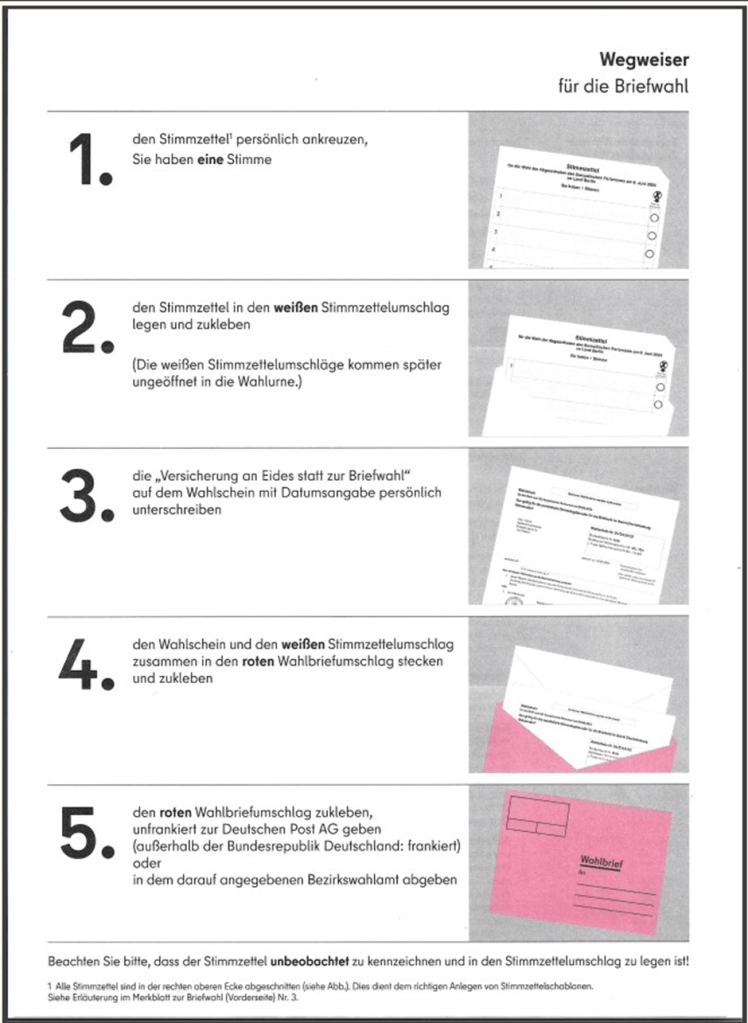
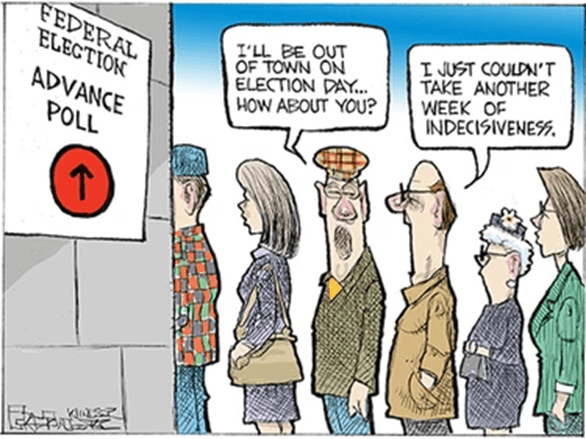
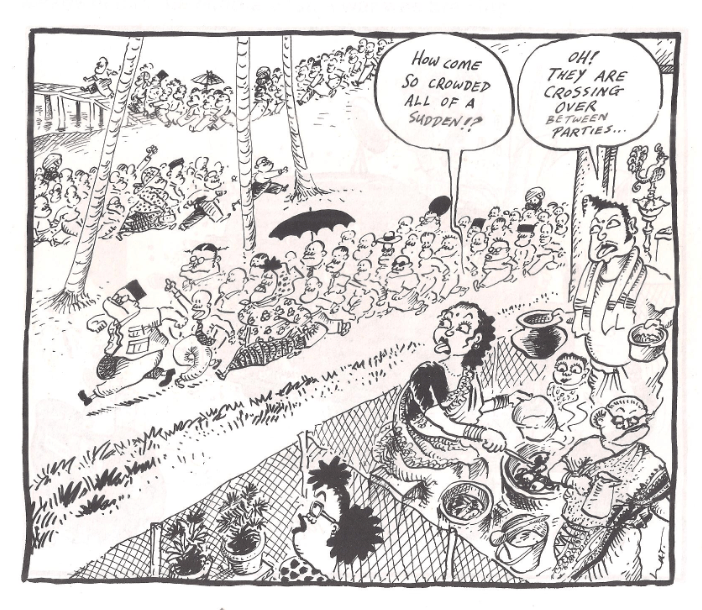
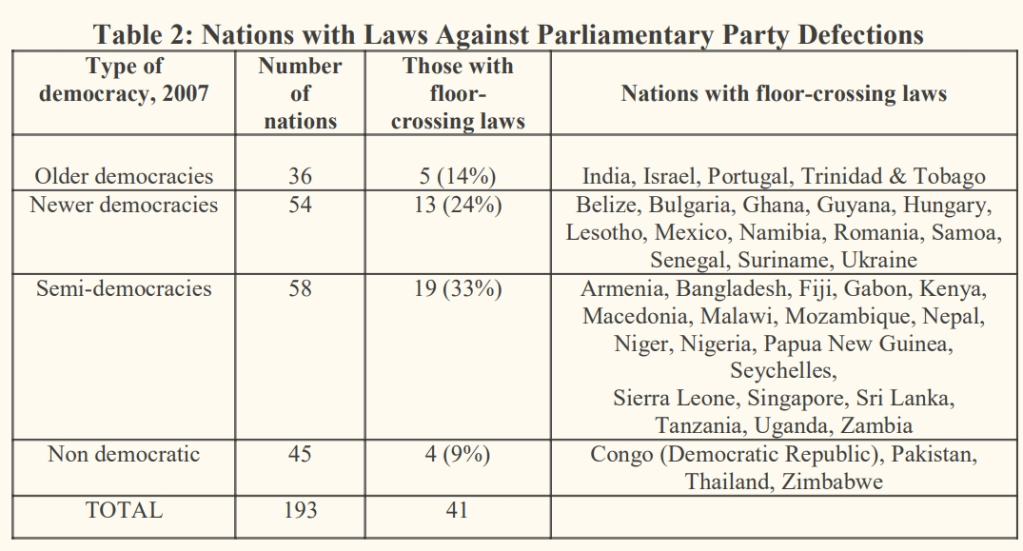



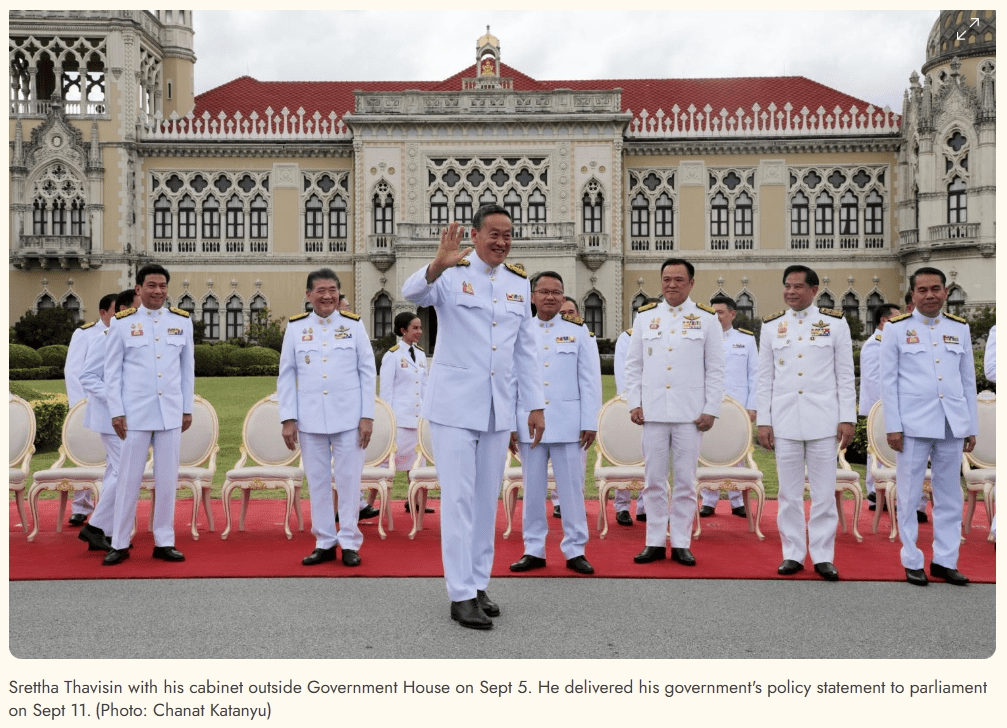


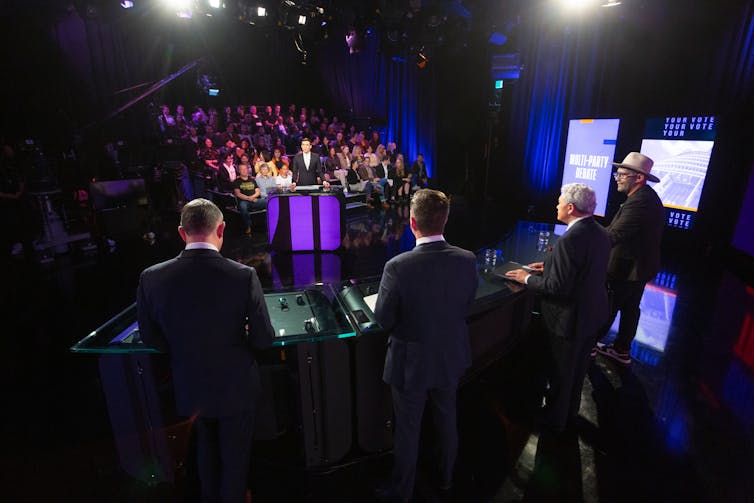
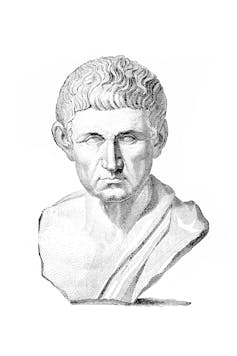

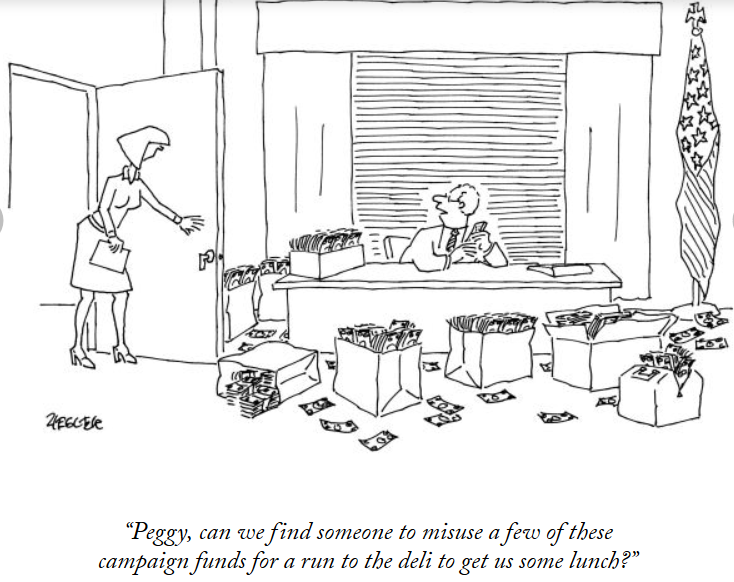
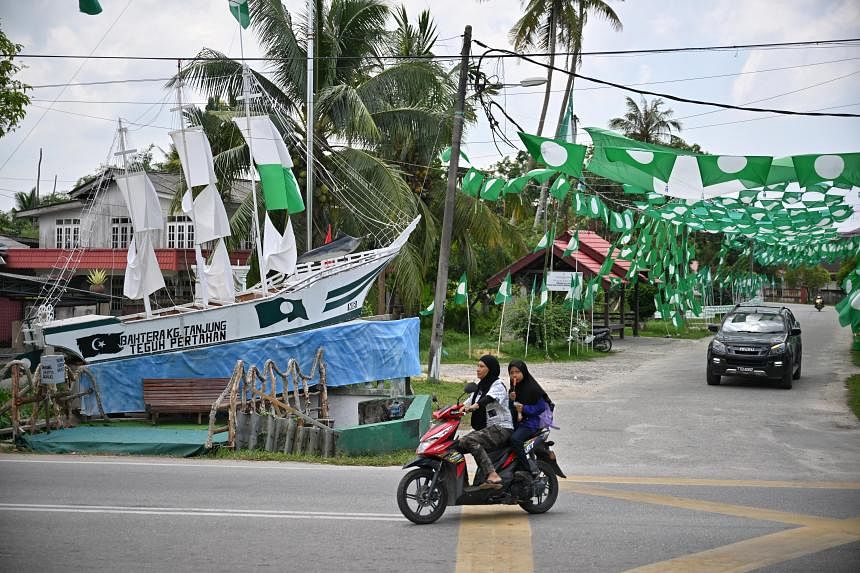


 “Khor Khwai”, the third letter of the alphabet, is rhymed with “Kha Raeng” (“wage”). It is followed by Pheu Thai’s promise to raise the daily minimum wage to 600 baht.
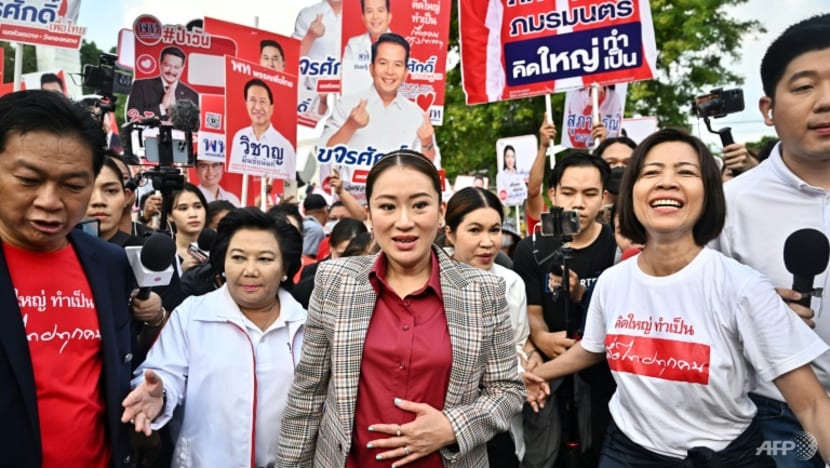
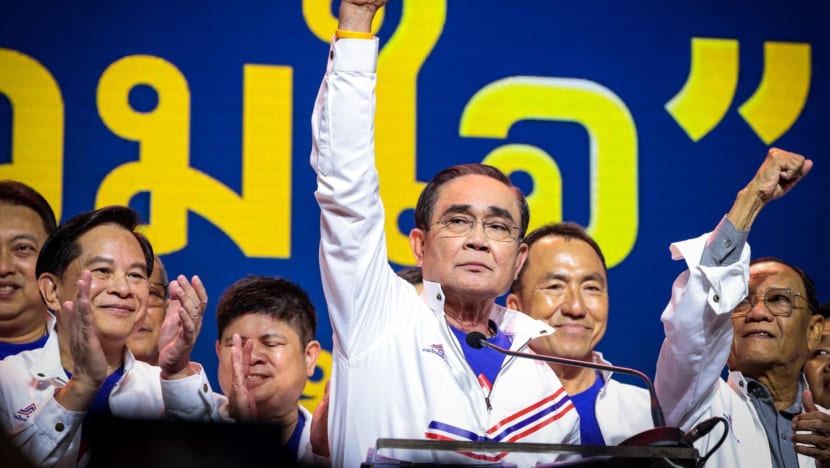

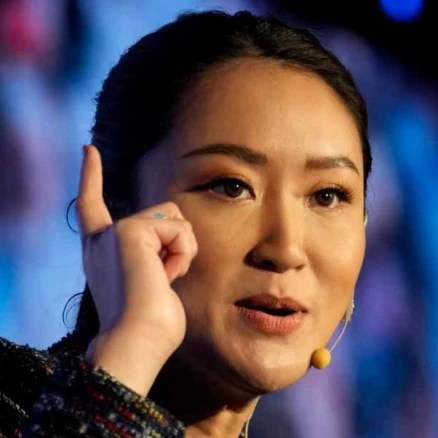
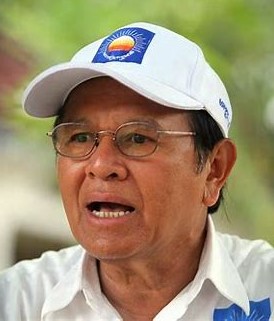

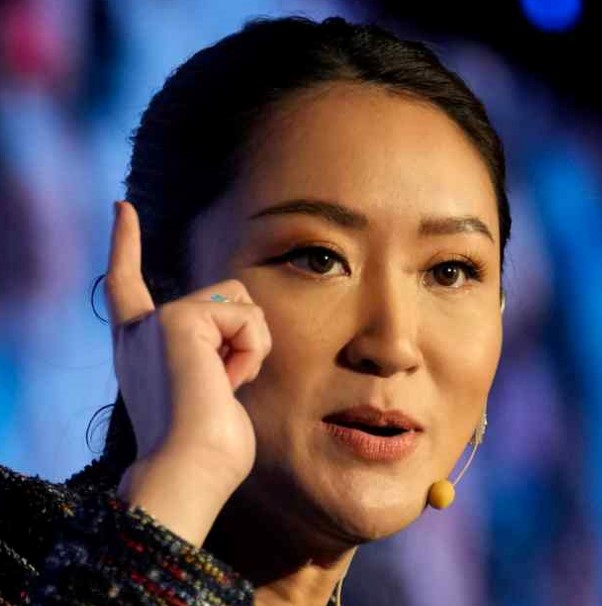


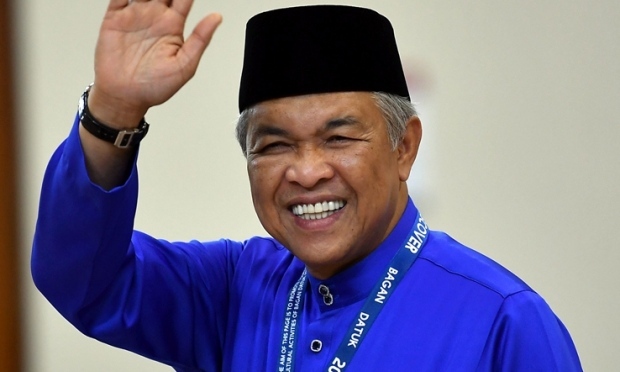


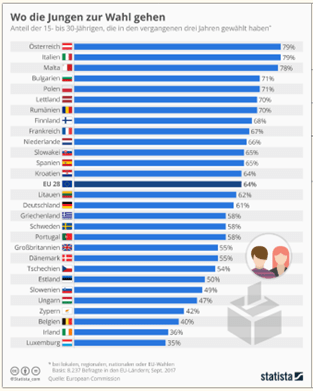


 The surprising and unusual fact is that Najib is convicted and in prison but could remain a member of parliament, nevertheless. He is still popular with many voters and, of course, his network of cronies who have profited from the money cascade organized by his ruling party UMNO. It was not a Ponzi scheme, no, maybe the opposite. The money was not stolen from trusting investors but from the state coffers and the taxpayers, who did not notice it until the 1MDB scandal came to the surface. At the moment, related tricky business moves are making waves internationally with the vanished billions in a series of military procurement cases involving foreign companies and their bogus sub-contractors organizing the deals. As if the continuing parliamentary mandate is not unusual enough, Najib’s constituency wants to nominate him as a candidate in the upcoming election. The argument is that after being eventually released the elected MP could give up the mandate and pass it on to Najib. Many Malaysians view the urge for snap polls by UMNO leaders as a maneuver to return to power and protect themselves against the pending court cases and further criminal charges.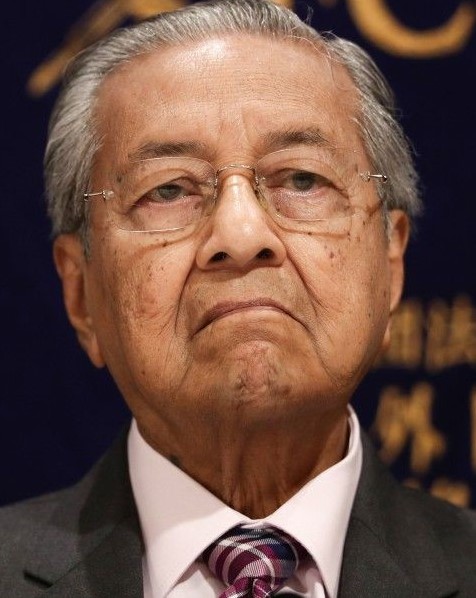


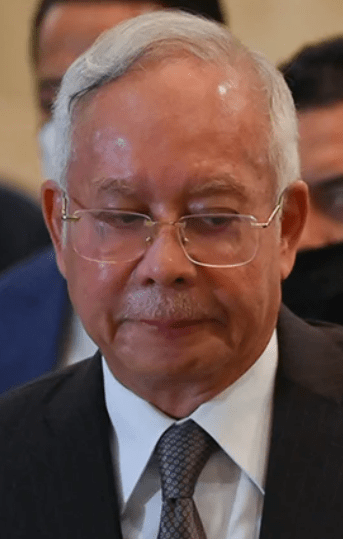
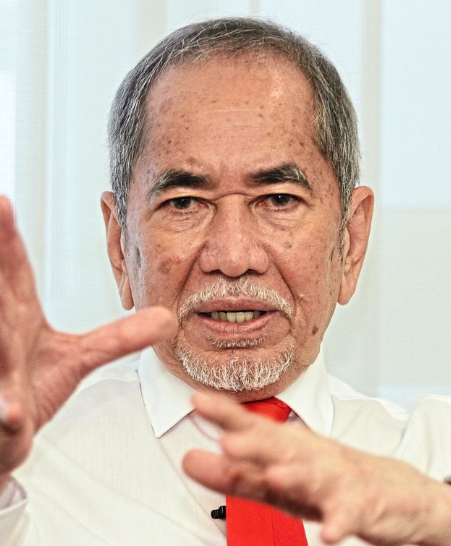



 Political Party Forum Southeast Asia