The Pheu Thai Party released a new marketing ploy: A poster linking each of the 44 letters of the Thai alphabet with one of its attention-grabbing campaign pledges.
A tweet with a link to the alphabet poster received about 1 million views within 12 hours.
The alphabet-campaign poster was uploaded on Pheu Thai’s Facebook page at 8pm on Wednesday, followed by a tweet embedding a link to the Facebook post.
The alphabet-campaign poster mimics the ones used to teach the Thai alphabet to children, but uses rhymes for key campaign pledges.
Pheu Thai uses the first letter of the alphabet, “Kor Kai”, to spell out “Kasettakorn” (“farmers”) and follows with its promise to give them a three-year debt moratorium.
“Khor Khwai”, the third letter of the alphabet, is rhymed with “Kha Raeng” (“wage”). It is followed by Pheu Thai’s promise to raise the daily minimum wage to 600 baht.
“Chor Chang”, the seventh letter, is rhymed with “Charttiphan” (“ethnic minorities”) and explains that they will be given Thai citizenship.
The tweet was retweeted 12,400 within 12 hours, while the Instagram photo of the poster received more than 3,100 likes.
As of Thursday afternoon, the Facebook post received over 9,600 likes and was shared 1,700 times. It received more than 420 comments.
Pheu Thai is by far the frontrunner for the May 14 election, according to national opinion polls. It leaves every other party, except Move Forward, in the dust.
The chances for the Pheu Thai Party explained by Dr Termsak Chalermpalanupap (CNA)
Commentary: Could Thai voters put a third Shinawatra in power after Thaksin and Yingluck?
Winning at the polls on May 14 may not guarantee an actual victory for Pheu Thai favourite Paetongtarn Shinawatra nor her father Thaksin, says ISEAS-Yusof Ishak Institute’s Termsak Chalermpalanupap.
From left to right: Paetongtarn Shinawatra, Pheu Thai candidate (Photo: AP Photo/Sakchai Lalit), former prime minister Thaksin Shinawatra (Photo: AFP/Isaac Lawrence), former prime minister Yingluck Shinawatra (Photo: AFP/Lillian Suwanrumpha).…see more
28 Apr 2023 06:27AM(Updated: 28 Apr 2023 06:27AM)
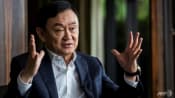
SINGAPORE: Seventeen years after exiled former prime minister Thaksin Shinawatra was ousted in a coup, his youngest daughter Paetongtarn Shinawatra, 36, has been leading opinion polls for the same job in recent months.
Yingluck Shinawatra, Thaksin’s younger sister and Paetongtarn’s aunt, had been prime minister until she resigned in 2014, two weeks before a military coup toppled her government. If election outcomes were to follow the polls, could Thailand soon see a third Shinawatra in power?
PREVAILING ANTI-GOVERNMENT SENTIMENTS
Many in Thailand are unhappy with the political status quo. A large majority of voters in Bangkok and urban areas in the provinces have indicated they want a change in government.
But surveys tend to capture the sentiments of urban respondents – easily accessible to pollsters – and name recognition, which are shaped by media exposure. They usually miss a large majority of voters outside of provincial centres, who may vote with their wealthy patrons or influential village heads.
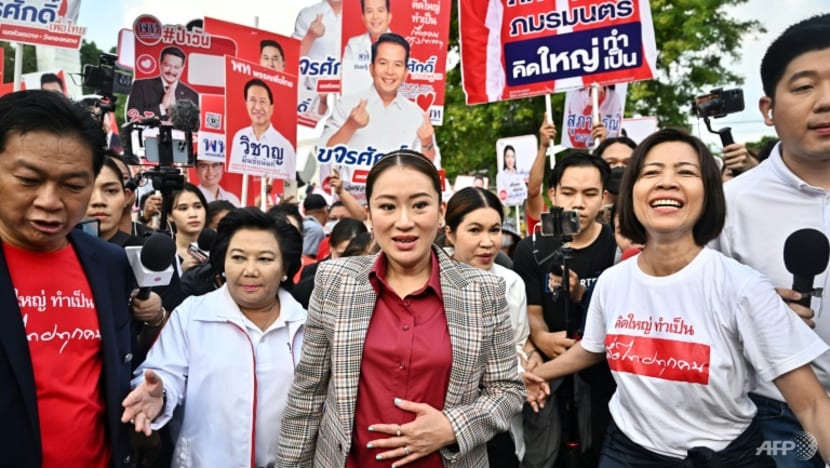
Opposition party Pheu Thai is fronted by Paetongtarn Shinawatra, daughter of billionaire former PM Thaksin Shinawatra (Photo: AFP/Lillian Suwanrumpha)
Veteran politicians in Thailand rely heavily on patronage networks of influential families to win elections. Party label, policy platform and reputation of party leadership are secondary.
Even in Chiang Mai, a Pheu Thai stronghold and Thaksin’s hometown, a sweep of all the seats at stake there isn’t guaranteed. Opposition party Move Forward is also gaining ground in Bangkok and is currently expected to win more seats than Pheu Thai.
NO PHEU THAI LANDSLIDE VICTORY?
Failure to achieve a landslide victory will put Pheu Thai in a precarious position.
Based on the NIDA Poll and The Nation Poll, both released in April, Pheu Thai could win no more than 240 House seats, 11 seats short of the minimum majority in the 500-seat lower chamber.
To form a viable government coalition, it would need support from fellow opposition ally Move Forward. In return, Pheu Thai would have to accept some of Move Forward’s sensitive policy initiatives – including reforming the monarchy.
Alternatively, Pheu Thai could avoid upsetting the conservative establishment by working with some government parties. But doing so would alienate a large number of its supporters who are anti-government.
Pheu Thai already found itself in such a situation after the 2019 general election. Pheu Thai won the most seats (136 seats) but only had 245 seats as a coalition of seven parties. The government was formed instead by a coalition of 19 parties led by Palang Pracharath with 254 House seats.
SENATORS HAVE A BIG SAY IN PRIME MINISTER CHOICE
Winning at the polls in May will not be enough for Pheu Thai to usher Paetongtarn all the way to the next premiership. It still may not have the minimum of 376 votes in the combined session of house parliamentarians and senators.
All 250 senators were hand-picked by the military regime headed by then General Prayut Chan-o-cha before the 2019 general election. In 2019, Palang Pracharath’s candidate easily won nearly all the senators’ votes – and became Prime Minister Prayut.
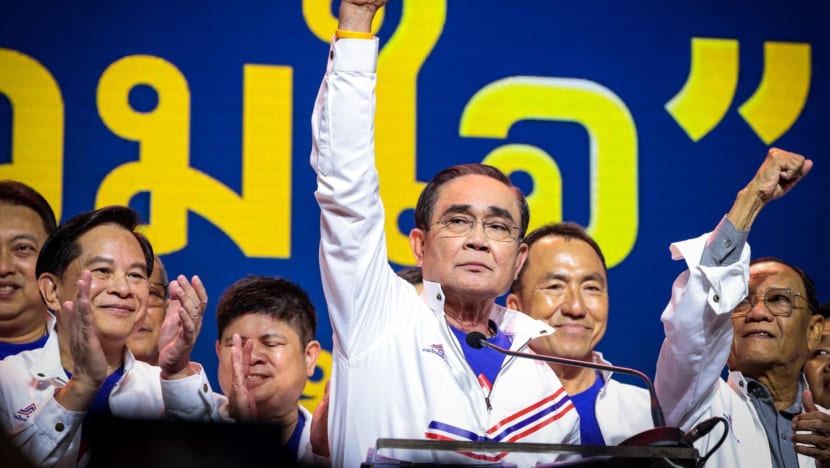
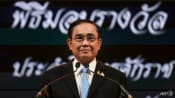
Prime Minister Prayut Chan-o-cha is seeking re-election, after a court ruled in September 2022 that he had not reached the constitutional term limit in office. (Photo: United Thai Nation Party)
Not many of the senators would vote for Paetongtarn or Pheu Thai’s two other candidates, real estate tycoon Srettha Thavisin, and veteran lawyer Chaikasem Nitisiri, in the premiership selection in parliament after the general election. A majority of the senators is expected to support either Prayut, who switched to the new United Thai Nation party, or Deputy Prime Minister General Prawit Wongsuwan, leader of Palang Pracharath.
Even if Pheu Thai can form the majority alone, senators may abstain from the vote. Pheu Thai would need the support of other opposition parties or major government parties to cross over to vote for Paetongtarn to win the premiership with 376 votes. This may not happen.
THAKSIN’S FINAL BET
But Thaksin is probably still pinning his hopes on Pheu Thai’s landslide victory in May that could make his dream of returning home from exile come true. A resounding mandate to form the next government could give it more leverage to overcome the senate vote.
Thaksin had been instrumental in fielding Yingluck as a surprise candidate of Pheu Thai in the 2011 general election. It swept 265 House seats with the slogan “Thaksin thinks, Yingluck acts!”
This time, he has sent in yet another surprise candidate, Paetongtarn. But for now, he has avoided being seen to do anything for his daughter or Pheu Thai.
He has stopped his weekly Tuesday talks on social audio app Clubhouse, where he goes by the alias Tony Woodsome, to distance himself from the election. He is being careful not to make any serious misstep that could lead to the dissolution of Pheu Thai.
With less than three weeks until the election day on May 14, Pheu Thai’s dream of a landslide victory is probably wishful thinking. Thailand may not see the third Shinawatra prime minister after all.
Dr Termsak Chalermpalanupap is Visiting Fellow and Coordinator of the Thailand Studies Programme, ISEAS – Yusof Ishak Institute.
Partyforumseasia: Thailand’s ruling coalition under ex-general Prime Minister Prayut Chan-o-cha may have carefully observed the two recent examples in the immediate neighbourhood: The bad one in Malaysia, where PM Najib Razak was defeated by the opposition and is facing 42 counts of breach of trust and money laundering in court. The other neighbour, PM Hun Sen in Cambodia, has simply eclipsed the opposition and the threat of losing the next election by asking the constitutional court to dissolve the Cambodia National Rescue Party.
Starting after the March 2019 election in Thailand with the proverbial wafer thin majority of his coalition with altogether 19 parties, some of them with one seat only, the Prime Minister did not hesitate to weaken the opposition. The first victim was Thanathorn Juangroongruangkit, leader of the Future Forward Party, the youngest and surprisingly third strongest party winning 81 seats in parliament, behind Pheu Thai with 136 seats, and PM Prayut’s Palang Pracharath Party with 116. Future Forward was a big success among the younger generation, and its leader Thanatorn, a 41-year-old auto part and media tycoon, is most popular. A poll published by Thailand’s National Institute of Development Administration (NIDA) beginning of January, saw Thanathorn and his party as the most promising next Prime Minister and FFP as ruling party, which must have been an alarm signal for the Prayut-Government. Thanathorn lost his mandate for several technicalities prohibited by the Election Commission and was disqualified by the Constitutional Court already in November 2019, but the next hit was already coming:
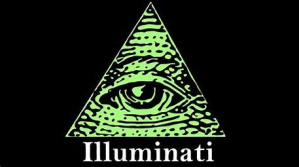
A lawyer had filed a complaint against Future Forward for trying to overthrow the monarchy, and (sic!) alleged that the party is linked to the Illuminati, an occult group seeking world domination. The FFP logo, he argued, looks suspiciouly similar to the Illuminatis’ all seeing eye…
Fortunately for its own and the image of Thailand, the Constitutional Court, yesterday, 21st January, dismissed both allegations. The party was not dissolved, but should be cautious. Immediately after the acquittal, jubilant supporters were chanting “Future Forward Party, fight, fight! Gen Prayut, get out! Dictatorship collapse, long live democracy.’’ The government and the military-monarchist bloc won’t like and won’t forget that.
Partyforumseasia: Calling it election fever would be an understatement. The long-anticipated general election on 24th March is stirring up emotions like never before in the country’s colorful election history. And, no surprise, Prime Minister Prayuth Chan-o-cha, who is seeking election (since he assumed the premiership by ousting Yingluck Shinawatra in 2014 it can not be called re-election) is preparing the ground to prevent a surge of the surviving and diversified Thaksin-loyalists surviving predominantly in the Pheu Thai Party, the third incarnation of the plutocrat’s original Thai Rak Thai Party. The Nation daily published a survey of the election chances on 6th March, which forecasts Pheu Thai as the biggest possible winner:
The survey focuses on the 350 constituency seats in the mixed-member proportional system and does not include the possible results of the 150 party-list members. This new electoral system has been designed to limit the chances of bigger parties to dominate the 500-seat lower house. But party strategists know how to play the piano even if it is not tuned to provide a level playing field. The Thai Raksa Chart Party, founded by many Pheu Thai politicians only four months ago, was therefore widely seen as a mechanism to add party-list seats to Pheu Thai.
These dreams have been shattered yesterday, 7th March, by the decision of the Constitutional Court to dissolve the party with immediate effect. The surprise move of nominating Princess Ubolratana as a prime ministerial candidate turned out to be too risky a strategy. The court deemed it unconstitutional because it abused the Royalty, supposed to be above politics, for electoral advantage. To make sure that they don’t find another loophole, the 13 members of the TRC executive committee have been banned from politics for the next ten years.
Nervousness about a deeply divided electorate is rather understandable and only the third place in the Nation survey for the Phalang Pracharat Party which supports Prime Minister Prayut must irritate the military camp. Interesting as well are the continuing regional party preferences, the Thaksin camp still dominating in the North and North East, and the Democrat Party equally dominating Bangkok and the South. The real question will come up after the votes will be counted, when coalitions will be needed to form a majority in the lower house. The incompatibilities seem to be clearly visible at the moment, but parties and politicians have shown extreme flexibility in the past when the spoils of ministerial power are being up for grabs.
Partyforumseasia: Was it a PR-coup and a calculated provocation of Prime Minister Prayut Chan-o-cha or simply a miscalculation? With obviously launched rumors that the just three months old Thai Raksa Chart Party was going to nominate a very important person as its nominee for Prime Minister in the upcoming election on 24th March, the media attention was guaranteed. The bombshell exploded on the last possible date for the nomination last Friday, February 8, when Thai Raksa Chart’s leader Preechapol Pongpanit opened a brown envelope and presented as a nominee the former princess Ubolratana Rajakanya Sirivadhana Barnavadi, the elder sister (67 years old) of King Maha Vajiralongkorn. Royal Prime Ministers are rare, but Bulgaria’s former king, Simeon II, was PM from 2001 to 2004, and Prince Norodom Sihanouk of Cambodia from 1955 to 1960.
The political bombshell of Princess Ubolratana’s candidacy was the clash in Thai politics between the royalist and military camp and the still strong lingering support for ousted PM Thaksin Shinawatra. Thaksin, PM from 2001 to 2006, perfected money politics and secured faithful voters in the rural areas as the first Bangkok politician to take care of them. Multi-ethnic Thailand has more than 50% dialect speaking minorities which are sensitive to official neglect and reduced job opportunities. They were the key to Thaksin’s stunning electoral successes and the popularity of the serial re-incarnations of his original Thai Rak Thai party.
A special feature in the ongoing election campaign is the split of the Thaksin party reincarnations. It is a strategic move of his followers to maximize their chances in the new electoral system which is clipping the wings of bigger parties. Thai Raksa Chart is fielding 175 candidates, and many bigwigs of the other Thaksinite Pheu Thai Party have joined.
The coup triumph with the royal top candidate was short-lived. The King intervened within the day and declared his elder sister’s candidacy as highly inappropriate and even unconstitutional since she is still considered a part of the royal family though she renounced her title decades ago when she married an American. But divorced and back in Thailand, she has participated in royal ceremonial functions. A singer and TV presenter, she is also popular for chairing and promoting charities. But she is not known for any special qualifications in politics.
As a result of this highly theatrical political episode, the future of the Thai Raksa Chart Party may be threatened by dissolution. As a failed coup, if Thaksin has been behind, it will definitely push the candidacy of former general Prayut, the incumbent Prime Minister.

 “Khor Khwai”, the third letter of the alphabet, is rhymed with “Kha Raeng” (“wage”). It is followed by Pheu Thai’s promise to raise the daily minimum wage to 600 baht.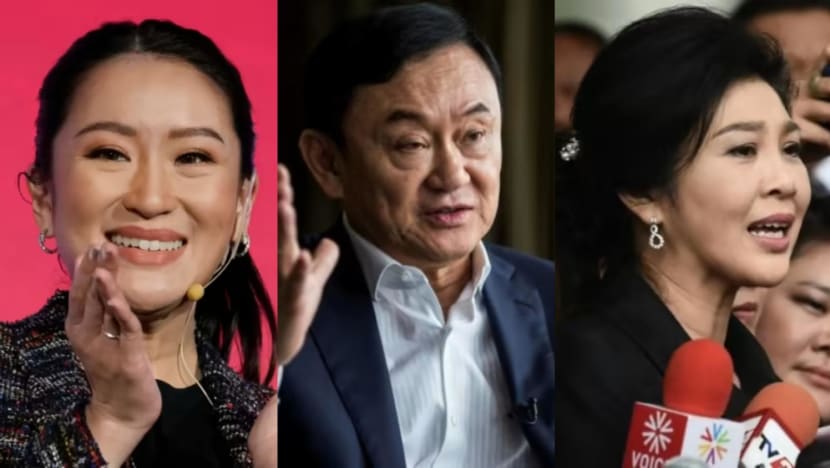


 overthrow the monarchy, and (sic!) alleged that the party is linked to the Illuminati, an occult group seeking world domination. The FFP logo, he argued, looks suspiciouly similar to the Illuminatis’ all seeing eye…
 Constitutional Court to dissolve the party with immediate effect. The surprise move of nominating Princess Ubolratana as a prime ministerial candidate turned out to be too risky a strategy. The court deemed it unconstitutional because it abused the Royalty, supposed to be above politics, for electoral advantage. To make sure that they don’t find another loophole, the 13 members of the TRC executive committee have been banned from politics for the next ten years.
 Political Party Forum Southeast Asia