
Partyforumseasia: With the resignation of Prime Minister Dr. Mahathir and his reincarnation as caretaking PM, his Pakatan Harapan (HP) “Coalition of Hope”, fragile as it was from the beginning, looked rather clueless. Plagued by the succession debate, when and how 94-year-old Mahathir would pass on the baton to Anwar Ibrahim as agreed before the election, and the problems left behind by the corrupt previous government, Mahathir and his government could not deliver fast enough on the election promises to clean up the country and stimulate the economy. The media and the pundits are competing with analyses and probable scenarios, leaving the public guessing and more confused than ever. That is an achievement on the cultural background of wayang kulit, the traditional shadow play, where the audience cannot see what happens behind the screen. Ironically enough, this scenario seems to be back in the era of cacophonic information and disinformation on multiple channels.
But this time the political actors are obviously as confused as the public. This, as well, does not really come as a surprise, on the contrary, it seems to be the new normal in politics, especially in party- and coalition politics in many countries worldwide. First of all, we seem to have arrived in the post-truth era, defined in the Oxford Dictionary as “circumstances in which objective facts are less influential in shaping public opinion than appeals to emotion and personal belief.” The USA being the trend setter, Malaysia has been especially vulnerable with the focus on racial and religious politics for decades which were hiding the rent-seeking interests on the fact side.
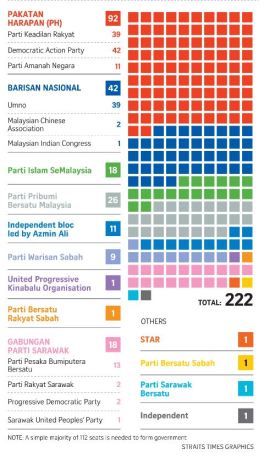 The second big change is the weakening of dominant parties more or less in all democracies, especially in Europe. Italy, Spain, Sweden, the Netherlands, and increasingly Germany, have seen a fast erosion of formerly stable party systems and the rise of fringe parties. This goes hand in hand with a clear loss of confidence in the economic and political elites, caused by all too evident shortcomings in political management and judgement by the leaders.
The Malaysian party landscape, in a recent overview published by Singapore’s Straits Times (27/2/2020) which includes only the relevant parties among the full list of over sixty, seems to show at a glance that coalition building cannot be easy. And the PH coalition was born out of the joint aim of ending the six decades of UMNO dominance and the general perception of its corrupt nature, culminating in the exposure of the 1MDB scandal.
A rough overview of the evolving splinter party scene in other countries:
Italy: 6 major and 30 minor parties
Spain: 14 in parliament, 18 in regional parliaments
Germany: 7 in federal parliament, 43 competing in last election
Switzerland: 15 in parliaments, 17 minor
Sweden: 8 in parliament, 16 minor, 52 local
Thailand: 29 in parliament, 12 with only one mandate
Indonesia: 10 in parliament, about 60 others
Singapore: 2 in parliament, 12 others active, 24 more registered
United Kingdom: Atypical because of the Brexit
Conclusion: Malaysia is far from being alone with a split or hung parliament, unable to decide on majority and leadership but this crisis is extremely serious. After the 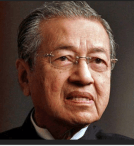 intervention of the King, the choice of a new prime minister might be determined by the parliament coming Monday, 2 March. The pundit and commentator community is puzzled and contradictory from day to day as “old sly fox” Dr. Mahathir seems more and more unable to control the situation. Malaysia needs and deserves a stable government and not the reincarnation of the old regime. And snap elections if the parliament does not come up with a solution may complicate the situation even further.


 The party logo, two white crescents on a blue background, supporters say symbolizes Anwar’s infamous black eye and the eye seeking justice.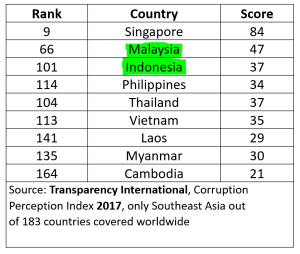

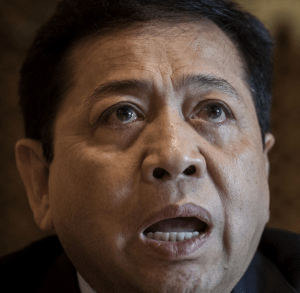


 Accepting gifts is not illegal. Most of the money was for the party, etc. He has asked his lawyers already to start legal procedures to get the confiscated items back. Nevertheless, Najib claims that his party has to reform itself and abolish money politics and payments for internal elections. But the investigations are going on, and bank accounts belonging to Najib as well as UMNO’s party accounts are being frozen. The “new – broom – governmant” under returned Prime Minister Mahathir Mohamad is trying to sweep as clean as possible.
 prison term. His attempt to leave the country immediately after the election defeat was thwarted by concerned citizens, followed by an official travel ban.
 The investigations go back to hundreds of transactions to “a party”, individuals, and organizations since 2011. There is hope that at least part of the lost funds can be recovered for the state budget, though experience with the Marcos and Suharto billions in the Philippines and Indonesia are not encouraging.

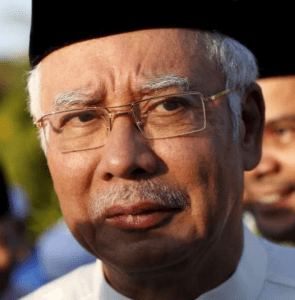

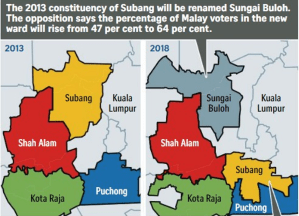
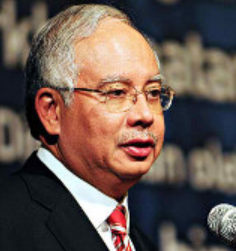 Najib, in his cold-blooded style, declared the Election Commission (EC), which happens to be under his Prime Minister’s department, as impartial and the changes as only for the benefit of the Malaysian people. The critics, on the other hand, call it gerrymandering and they do have a valid point here. While the redelineation of electoral boundaries is common everywhere when demographic changes like urbanization make it necessary, the malapportionment in Malaysia is exceptional. In the 2013 election, the number of voters per precinct ranged from 15,700 for the smallest rural to 145,000 for the biggest urban one. And, not by chance, the most reliable voters for the ruling Bairsan Nasional (BN) coalition live in the small rural districts. This is why, in 2013, and also due to the first-past-the-post majoritarian election system, a shortfall of 4% in the popular vote was changed into a 20% majority of seats. On average, BN constituencies were won with 48,000 votes, while the opposition needed 79,000.
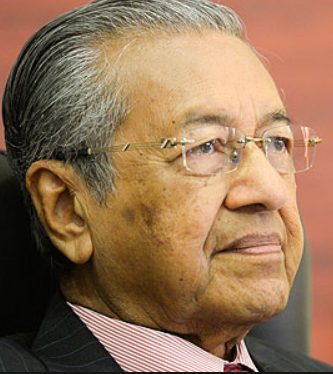 as Prime Minister he was not known for being too choosy with policies and actions against competitors and the opposition. His training background as a medical doctor was often used to explain the surgical precision of his shrewed and decisive political maneuvres.









 Political Party Forum Southeast Asia